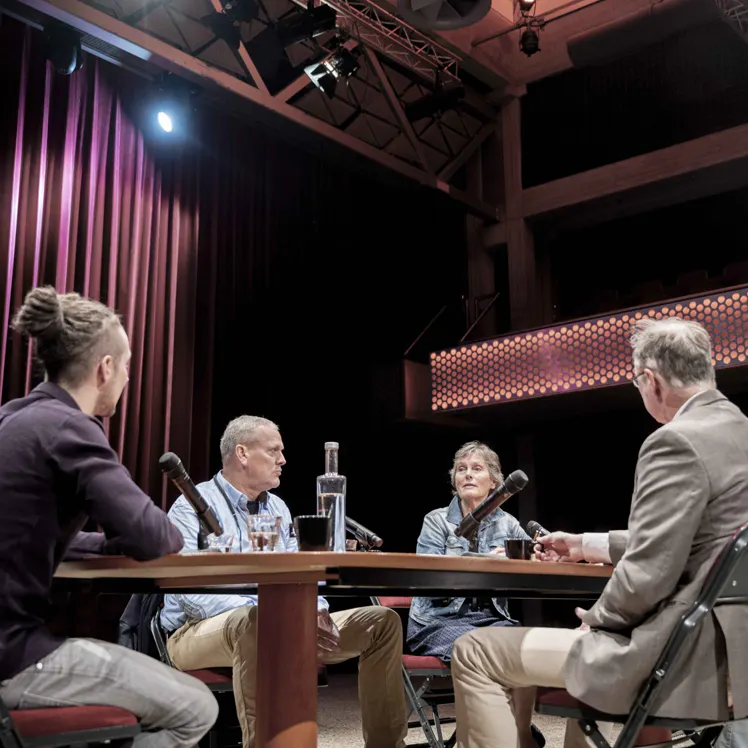
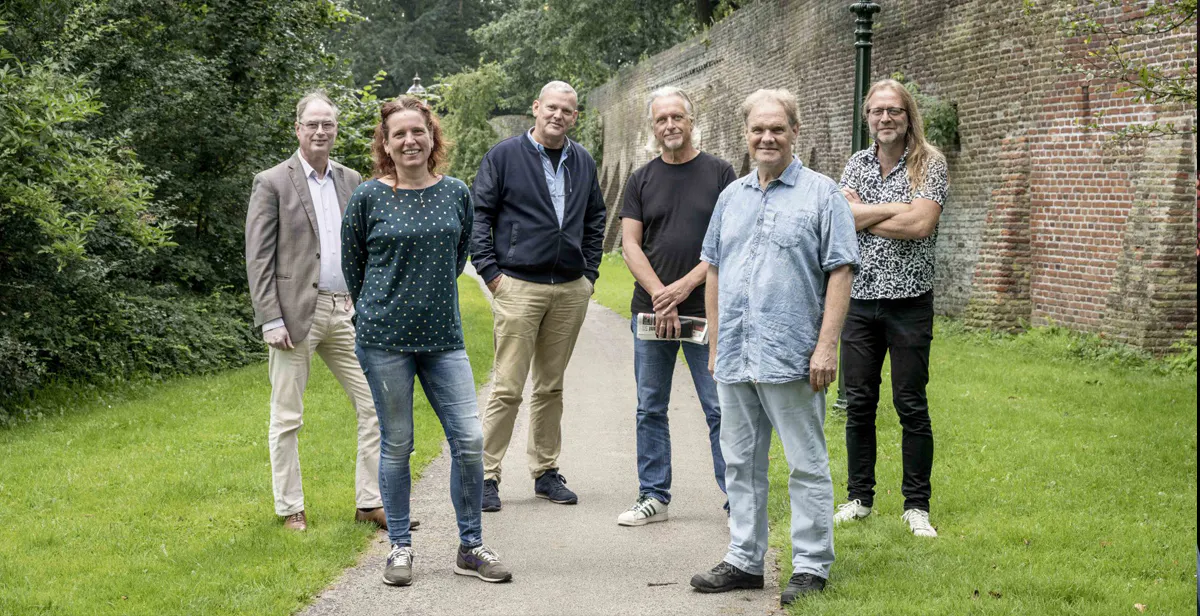
The atmosphere is electric on this Wednesday morning at Flint, Amersfoort’s theater mecca. Five festival organizers gather around a table in the red-walled heart of the AFASzaal, between the stage and the theater seats. The spotlights are on, the microphones are working. It’s time to talk about their shared passion: the Amersfoort festivals.
A round of introductions, moving clockwise. Alexander Beets kicks things off. “I’m the festival director of the 43-year-old Amersfoort World Jazz Festival. In my opinion, it’s the best jazz festival in the Netherlands and Europe—though I’m admittedly a bit biased. We call ourselves ‘Musician’s Paradise’ because it’s all about music, musicians, and jazz in the broad sense of improvisational music. And we typically present that to an audience of about 85,000 visitors.”
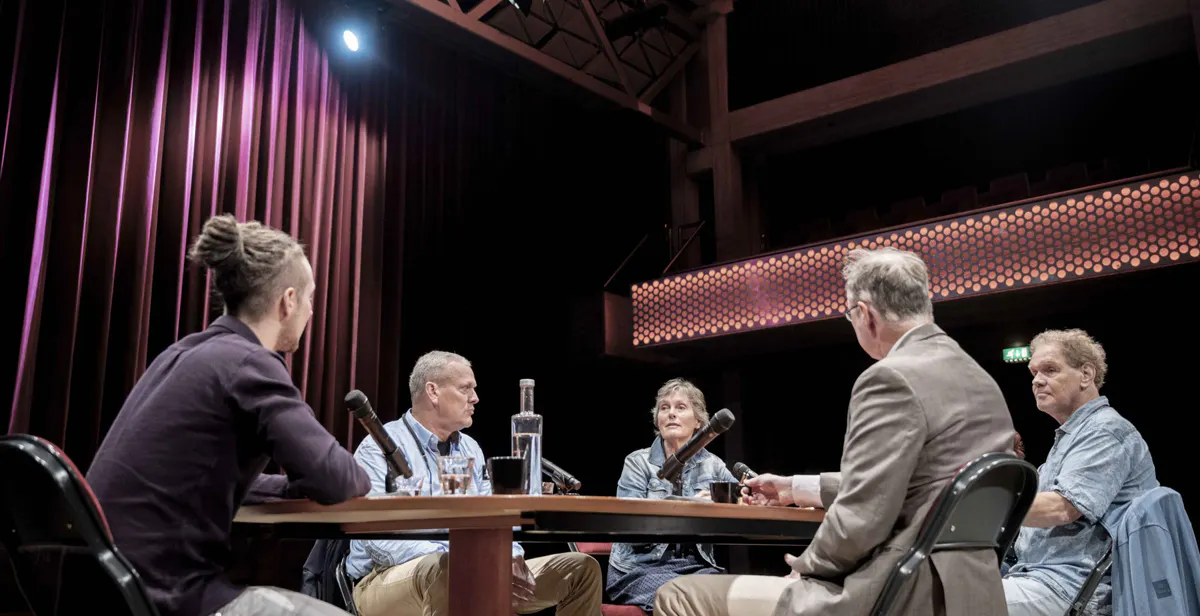
Next up is Jolien Klaarenbeek from Dias Latinos. “Dias is the premier Latin and Caribbean festival in the Netherlands and is celebrating its 25th anniversary. The first weekend in July in Amersfoort belongs to Dias Latinos. That’s when the city comes alive with Latin and Caribbean music. We have a new artistic director, Lucas van Merwijk, who aims to put Dias Latinos on the international map. So watch us, I’d say.”
Her neighbor is Floor Visser, producer of the Amersfoort World Jazz Festival and thus a colleague of Beets. “I’m also involved in many other events in the city and know every sidewalk tile here.”
Next to her is Alfred Konijnenbelt, artistic director of Spoffin. “Spoffin is a festival for street and site-specific theater that, building on the legacy of its predecessors, has been around for 32 years. It’s a festival with a very open atmosphere—anyone can attend. Spoffin is festive, cheerful, summery, and the only theater festival in Amersfoort’s public spaces. That makes it a real defining feature of the city. It’s always well-attended, drawing about 35,000 to 40,000 visitors, and the hotels, restaurants, and outdoor patios are packed, so Spoffin is good for the city.”
Now we turn to Roland Spekle, executive director of September Me. “A festival for classical music and much more—that’s September Me. This year marks our fifth edition, so September Me is a relatively new addition to Amersfoort’s festival scene. We strive for innovation in classical music, linking it to other disciplines such as theater and dance, which fosters greater openness and connection. We focus on musicians with fresh ideas—for example, musicians of non-Western origin or those with a background in jazz or pop music. We strive to broaden the musical idiom, because we believe the classical tradition should be recognizable yet definitely contemporary.”
A fine delegation representing Amersfoort’s cultural festivals has gathered, ready to set sail. Moderator Thijs Tomassen presents them with the topics and questions.
What do festivals essentially mean for the city of Amersfoort?
Konijnenbelt: “Festivals—even more so than theaters and concert halls, where wonderful things also happen—contribute enormously to the city’s cultural profile. Precisely because they’re so open and visible to everyone. That invites people to participate in and be part of that cultural celebration.”
Klaarenbeek: “Accessibility is indeed very important. The fact that you don’t have to buy a ticket and can just show up. That allows us to reach a broad audience, which can experience all kinds of theater, dance, and music. That enriches and adds vibrancy to the city. It fosters diversity on all kinds of fronts.’
Konijnenbelt: “Innovation is also a major factor. Festivals are very good at experimenting and creating crossovers. That’s how you make progress and build your image. September Me is a perfect example; that festival has stripped classical music of its stuffy image. We’re all innovating with our festivals. We’re moving our audience forward without getting four steps ahead of the music.’
Spekle: “Festivals exist precisely to present what isn’t presented in concert halls. We’re here to put on truly special programs that you don’t see anywhere else all year long, featuring up-and-coming and established artists from around the world. This allows us to attract people to the city locally, nationally, and even internationally. That’s how we’re really putting Amersfoort on the map.’
Beets: “To put it broadly: the cultural climate is a major factor in deciding where to live. It’s in the top 5 of deciding factors. In that sense, it’s very interesting to see that Amersfoort is experiencing a massive growth spurt; the city has now become part of the “new Randstad.” That comes with certain ambitions, such as the need for the cultural climate to grow along with it. As festivals, we’re the vanguard in defining and shaping the face of Amersfoort’s cultural climate beyond the province.”
Spekle: “Amersfoort is growing, and its cultural offerings are becoming increasingly professional, diverse, and distinctive. The fact that our festivals attract so many people from all over the country has a major impact on Amersfoort’s visibility as a city. They come for the festivals, but at the same time they discover the city. They stay overnight, visit a museum, and dine at a restaurant. That, in turn, provides an economic boost. There are more and more reasons to come to Amersfoort. That has a major impact on the city’s profile. There’s an incredibly pleasant living environment that makes it attractive for people to come live here. Amersfoort is going through a very dynamic phase, and festivals play an important role in that.”
There’s already a lot going on in Amersfoort, and the festival scene is diverse. What’s the added value of that?
Beets: “There’s an incredible amount going on, and we’re very proud of that. It’s what we’re fighting for. We’re talking about Amersfoort’s cultural festivals—it’s not just about a beer and a bitterbal, is it? We bring culture as part of society, with art forms that connect people. To put it simply: you could book Trijntje Oosterhuis without a jazz festival, and the Hof would still be packed. That’s just a way to fill the weekend. But it’s precisely that other side that’s beautiful. 5,000 visitors to Amersfoort Jazz will say, ‘I’m a jazz lover.’ But what about the other 95 percent? They aren’t the die-hard fans, but they’ll say afterward: “We had such a great time.” Winning over new fans—that’s what we do.”
Spekle: “Amersfoort’s festival lineup is indeed diverse. Take Musica Mundo, founded by Hassan Elammouri of the ArteGanza Foundation. It has its roots in world music and a wide variety of cultures. He presents it in a very accessible way, with parades through the city and open-air stages. He also organizes a concert series at De Lieve Vrouw Theater. Hassan is a tireless advocate for world music and music from non-Western cultures, and he’s very open to collaboration. It helps Amersfoort residents with non-Western backgrounds feel connected to the city—encouraging them to visit downtown Amersfoort to enjoy performances, have a drink, and meet people. ‘Connecting cultures—that’s what ArteGanza does.’
Beets: “Another organization contributing to diversity is Kultlab. They’re the young guns. Young people who think outside the box and are doing a great job. For over ten years now, Kultlab has been able to mobilize and inspire an incredible number of young people for popular festivals like Into the Woods, Wildeburg, and Lepeltje Lepeltje. Young people who are open to experimentation and cultural enrichment—I think that’s wonderful. They show that young people, too, want to be surprised by cultural expressions by creating many combinations, such as visual art, street art, and musical performances.”
Klaarenbeek: “Don’t forget the Smartlappenfestival, either. The landscape is so incredibly diverse and, as a result, caters to a wide range of people. We can be exceptionally proud of Amersfoort’s festival offerings.”
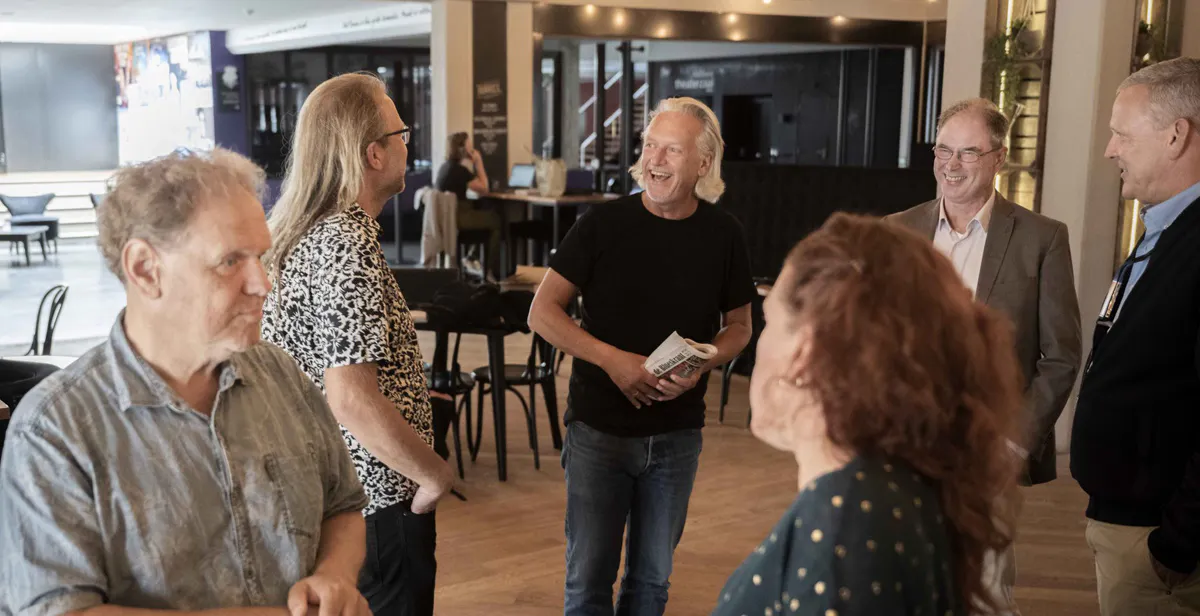
Amersfoort is also known as a breeding ground for talent in the festival and events world, both on stage and behind the scenes. Why is that? And how do you retain that talent?
Konijnenbelt: “Amersfoort is indeed a breeding ground for festival organizers and talent. Take a look at De Parade, the theater festival that, for good reason, has its roots in Amersfoort. People from Amersfoort are still involved in it today. At Oerol, you’ll run into lots of people from Amersfoort, both on stage and behind the scenes. The same goes for Lowlands, Noorderslag, and so on. And almost everyone started out as a volunteer. So when you make the leap to professional work, you know very well what it’s like to rise from humble beginnings, how hard you have to work for it. That’s partly due to the limited financial resources we have in Amersfoort. A lot of talented people have emerged and just gone out and done it themselves.”
Visser: “It’s all about development. You start simply as a volunteer and are given the space to discover what you enjoy. There are different motivations for entering this world. Not to get rich, but, for example, to build social connections and develop skills. We encourage people in this, so they can find what they enjoy and continue to grow. For example, I work with a man who was deemed unfit for work and used to work at a junkyard. He didn’t know what to do with his life, ended up working behind the bar at an event, made social connections, and is now an incredibly good nurse and stage manager. It’s wonderful that festivals give people that extra push to take the next step in their lives.’
Konijnenbelt: “All the festivals represented here have talent development programs. We’d like to expand them, for example by commissioning talented groups of people to develop something new within a festival. It’s very interesting to build loyalty among creators this way, because Amsterdam is so close by.”
Beets: “Amersfoort is growing. That means you need to foster a supportive environment for creators so that not everyone leaves. We need to establish a performance infrastructure and production spaces for small-scale experimentation, so there’s room to grow. The festivals are growing along with the city—and, incidentally, along with the city’s diversity and the variety of voices it encompasses—but at the same time, there needs to be an infrastructure in place to serve as an incubator for talent development. I still see gaps there. There needs to be a shift in mindset among policymakers: this is front-row seating—we need to invest in it—rather than looking for ways to cut costs by a dime.’
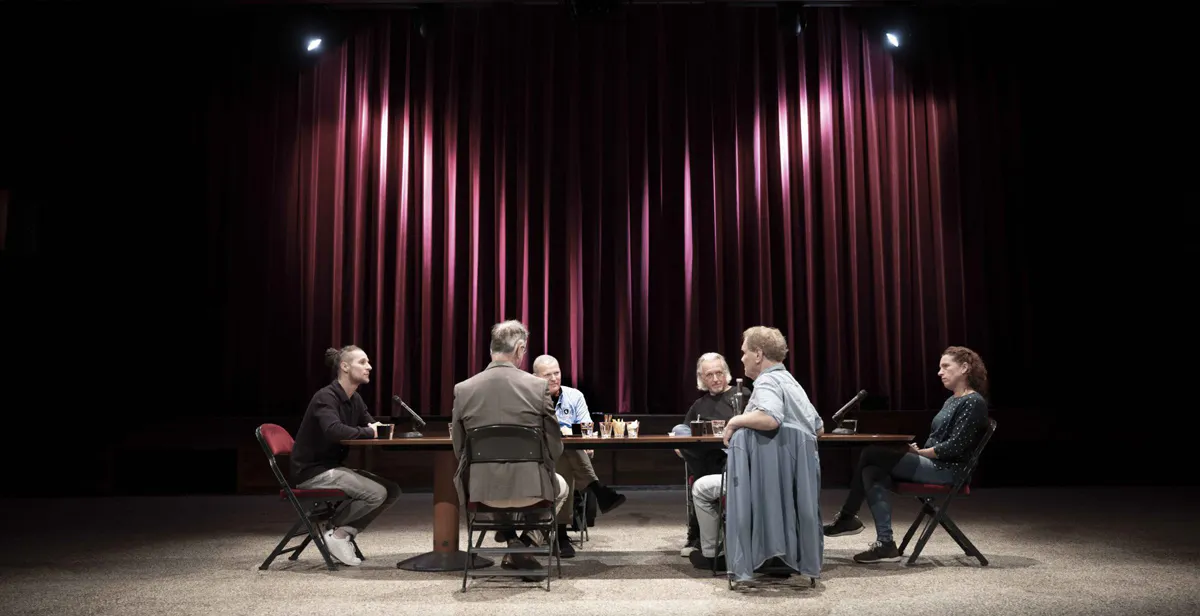
Just as important is collaboration with entrepreneurs from other industries, both locally and nationally. How do you view that?
Beets: “There are all kinds of companies that sponsor festivals. They say: ‘I like what you’re doing; I want to help you grow.’ That’s the approach we need to take. With our festivals, we provide an infrastructure that allows the city to grow culturally. We offer a prestigious platform, a national and even international showcase: look how diverse, fun, and attractive Amersfoort is! As a business, you have to take that into account, but it’s not a given. That’s what I run into. Amersfoort has a lot of free festivals. In practical terms, that means no one asks: “But how are the artists paid?” Except for us. That sense of non-commitment and taken-for-grantedness can be transformed into a kind of proposition where, as an entrepreneur, you do it for the city, for talent development, and perhaps even for your own business. I’m sure you can craft a narrative around it that allows us all to grow.”
Visser: “If you look locally at the collaboration with the local hospitality industry, it’s different than it used to be. In the past, the hospitality industry was thrilled with an event because it brought in serious money. That was back when the downtown squares were still mainly parking lots. Now those spaces are occupied by restaurant patios, and they’re full even without an event. So the question becomes: what is the value of a festival? That’s a different conversation. The hospitality industry is very good at providing hospitality to our guests. I’m sure many of the visitors think: “It’s so nice sitting here on this patio; we were well taken care of and had a delicious meal.” They’ll be happy to come back again. That’s how people discover local restaurants and bars. I’m reminded of the lockdown, when the entire city center was empty. That’s when you realize once again: the hospitality industry and events really need each other. Together, they bring color to the city center and breathe life into it. The same goes for hotels. I was recently looking for a last-minute room during Amersfoort Jazz for two technicians who needed a place to stay. Full, full, full. The hotels benefit from this, too.”
Beets: “Just look at the value festivals bring to city marketing. All the festivals represented here at this table have significant supra-regional value. When we bring large numbers of people to the city—to hotels and restaurants, to parking services, and the entire broad spectrum of stakeholders—the city also comes out ahead. The challenge is for a cultural festival to find a business proposition that capitalizes on that. Rather than just ‘quid pro quo,’ companies need to recognize this as part of corporate social responsibility; they can demonstrate their commitment to the city.”
Spekle: “I love seeing the tremendous progress being made toward professionalization in Amersfoort. Festivals are communicating with one another, collaborating, and sharing knowledge and inspiration. At the same time, we see, for example, how the production company Kosmik is programming talent. We learn from each other, and that creates a dynamic. I’m also seeing more and more collaboration emerge between festivals and, for example, museums in the city. We’re performing arts festivals, so we’re also closely related to the visual arts. Festivals aren’t just a ploy to sell hotel stays and beer; festivals are all about artistic quality and innovation. We want to showcase something special.’
Konijnenbelt: “What’s especially important is this: you have to let festivals retain their own cultural value and not compromise their authenticity. Then we can collaborate very effectively. Let Amersfoort’s festivals soar as high as possible, and we’ll bring the city and the business community along with them.”
Citymarketing Amersfoort is also joining forces with the local festivals. How valuable is that?
Spekle: “I sense that momentum is building between the festivals, the city, and Citymarketing Amersfoort. They recognize the quality of the festivals. Whereas Amersfoort used to be a bit inward-looking, the city is now looking much more outward—to its surroundings, to visitors from across the country, and to the role we can collectively fulfill as a city of culture.”
Beets: “It took some figuring out. We first engaged in a substantive dialogue with each other: what role do these festivals play? They serve as flagship events year-round, not just weekend fillers. Over the past seven years, we’ve made real progress with Citymarketing toward creating a supra-regional impact. We’re running more and more joint campaigns and ensuring that Amersfoort’s proposition becomes incredibly compelling, aimed at people who want to be culturally challenged across a broad range of artistic disciplines. We’ve already taken steps in this direction, and I’m looking forward to the challenge of turning this collaboration into even greater visibility—both nationally and internationally—and even more impact and engagement with the city. So that people say, “Man, Amersfoort is such a great city!”
Konijnenbelt: “I see that positive impact, too. City marketing can be a great partner. I’d like to use Deventer as an example. It promotes itself as a cultural city, and that’s working out very well for it. Deventer handled it very well years ago by expanding four events and providing massive support for them. Three of the four have been a complete success; as a result, Deventer makes the front pages and appears on the news every single year. We should be able to achieve that same leverage here, too. Of course, I’m preaching to the choir, but I think festivals are the low-hanging fruit. By supporting them, you can make relatively easy strides in the cultural sphere.”
Van Merwijk (who succeeded Klaarenbeek): “I believe in quality. And money is incredibly important for that. Without a budget, you can want all sorts of things, but it just won’t work. I’m certain it gives the city a huge boost. I returned to Amersfoort for Dias Latinos because I believe in its potential. There’s still a lot to be gained, but this city has everything it takes to make that happen. The city’s location, the historic center with its squares, the wonderful festivals. Things are going to really come alive here once everything is allowed again.”
Konijnenbelt: “Quality—that’s what you have to focus on. I sincerely hope for a very good collaboration, including with the business community. Because that’s how we can make the city even more beautiful. We’re on the right track, but we can do so much more.”

More Entrepreneur Stories
Uncategorized
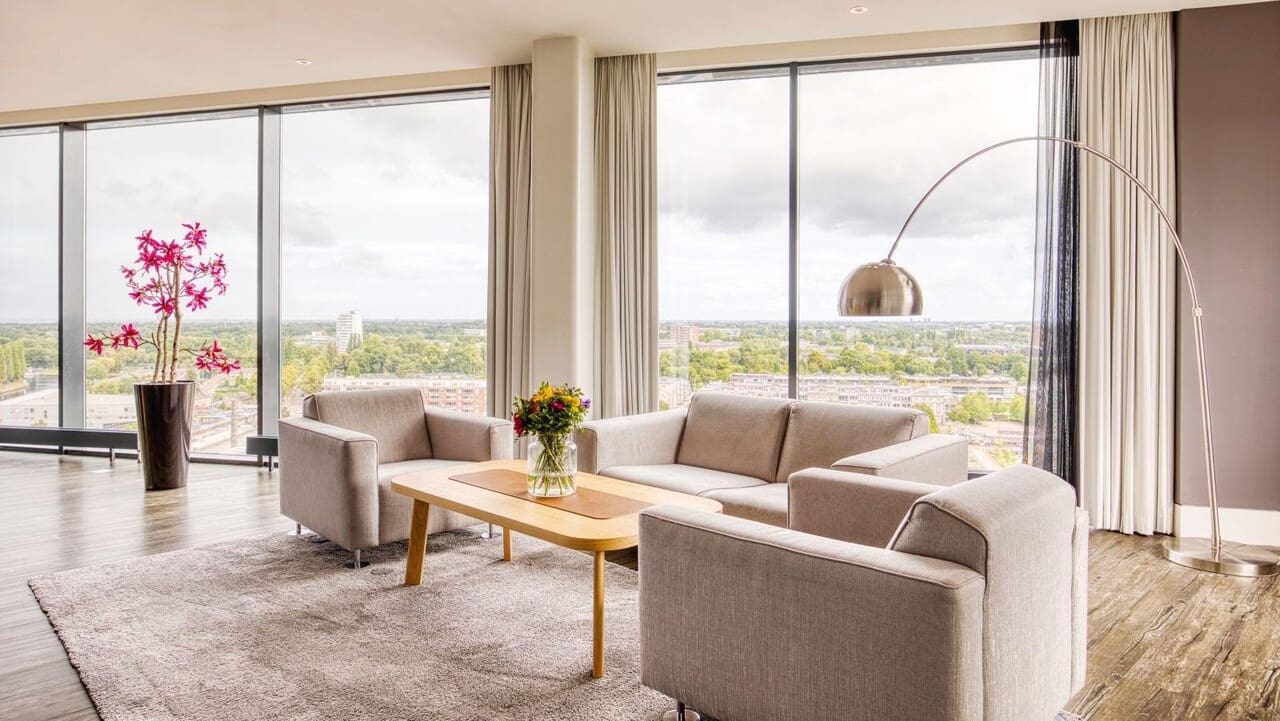
Business Travel Accommodations
Are you looking for a place to stay for business in Amersfoort?
Education
Young talent needs room to grow
How can we give young talent the opportunity today to make a difference tomorrow?
Entrepreneurship
HydroLogic: Smart Water Management
“HydroLogic is doing everything it can to prevent ‘Amersfoort by the Sea.’”
Education
Amersfoort Welcomes New Students and Builds Connections with the Business Community
During KEI-Start Amersfoort, new students explore Amersfoort, meet local businesses, and lay the foundation for their connection to the city.