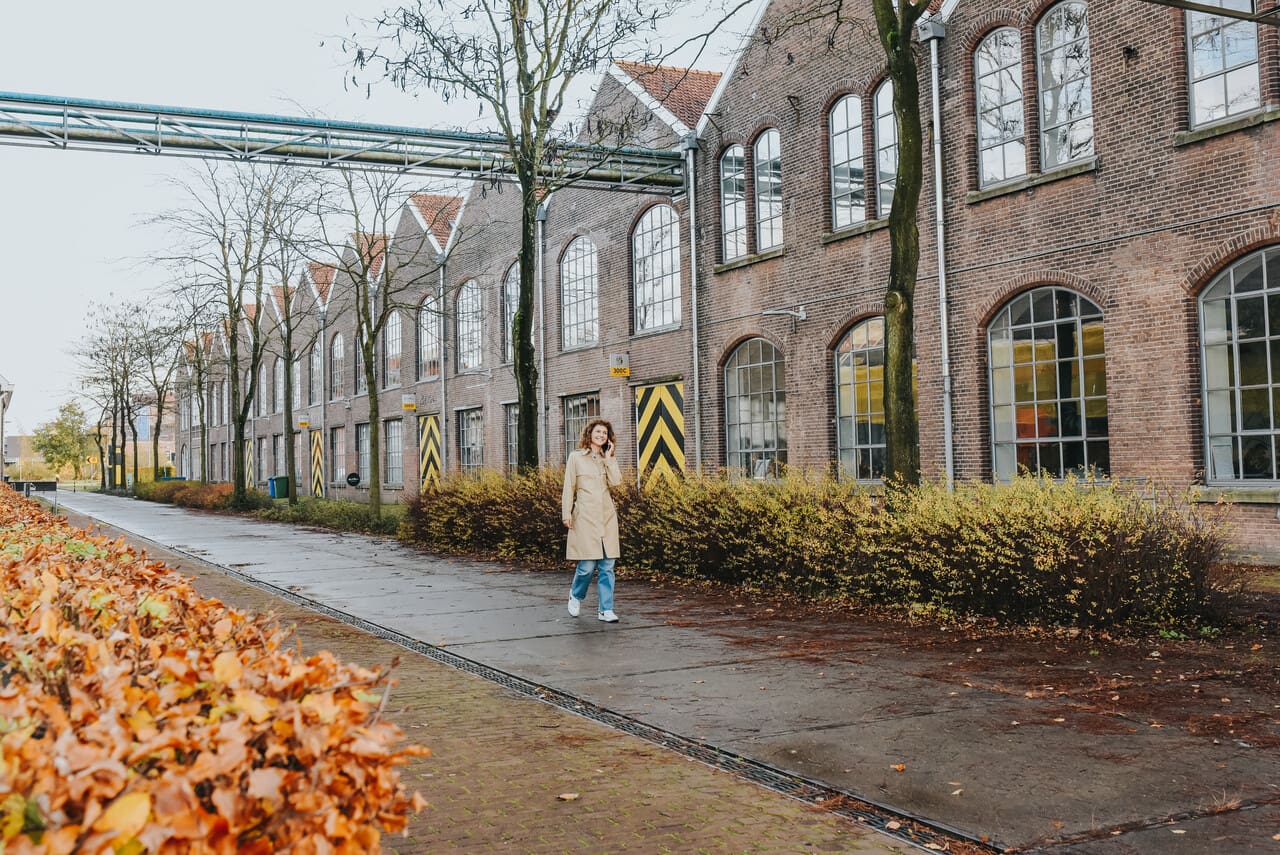
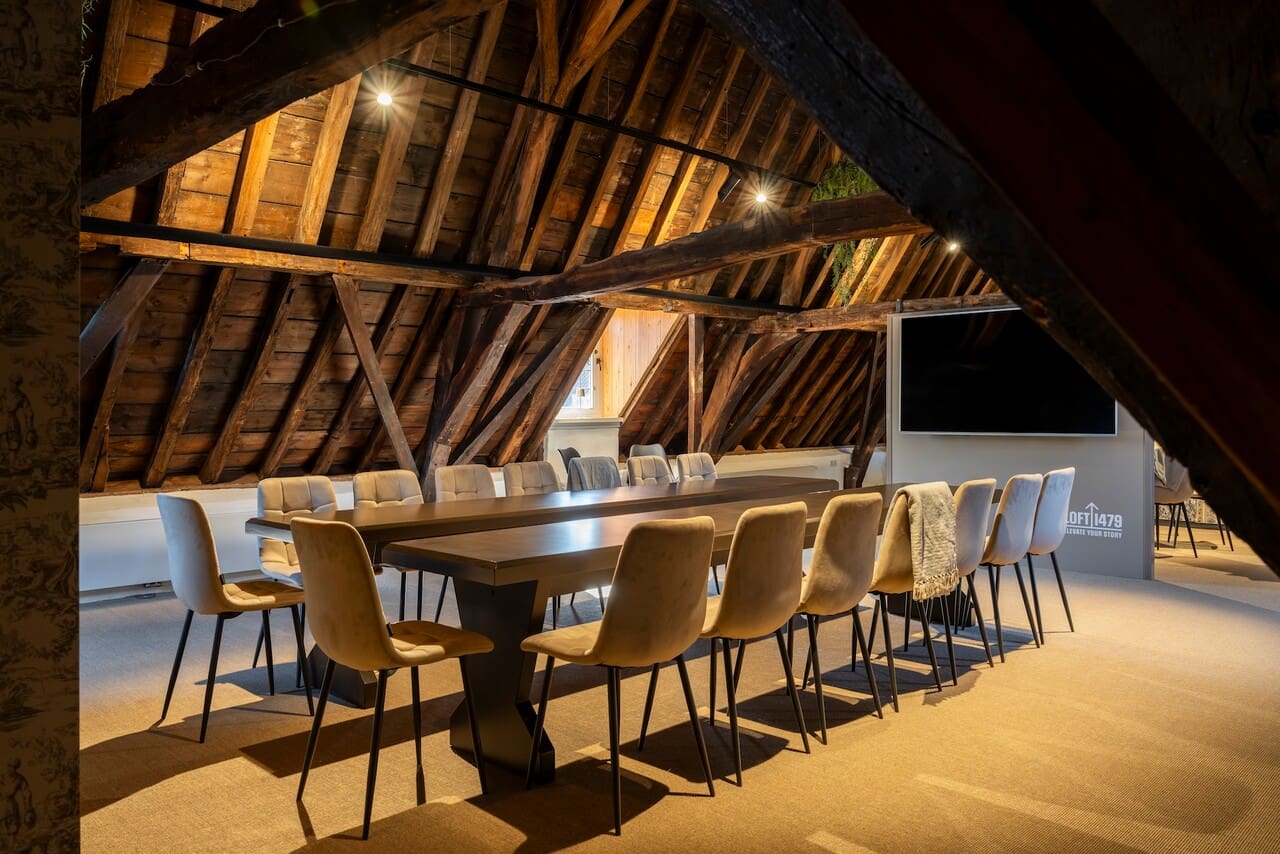


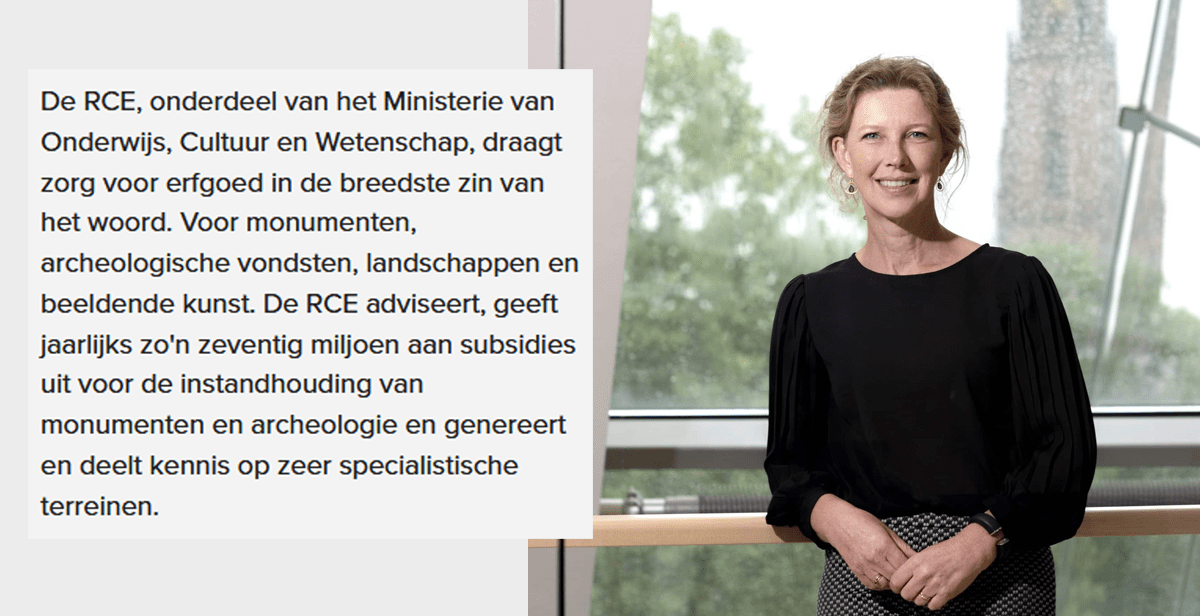
From a beautiful conference room, Lammers looks out through the large glass windows of the RCE building, beyond which glimpses of Amersfoort’s historic beauty can be seen. Just a stone’s throw away, the iconic Koppelpoort is bathed in sunlight. Lammers: “This is a wonderful place for us. It’s really nice to have so much heritage around us. You can practically touch it everywhere. Take two steps outside the city, and it’s no different there. From the primeval forest discovered last year on the Den Treek-Henschoten estate to the maritime heritage in Bunschoten-Spakenburg. No matter which way you look in this region, there’s heritage to be seen.”
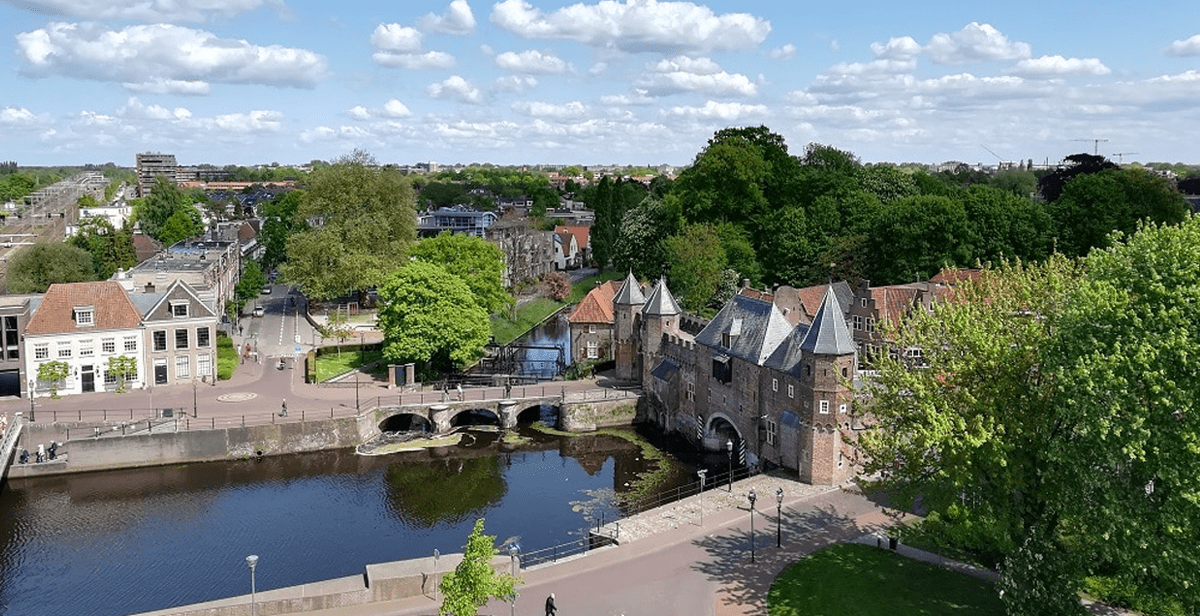
Amersfoort can rightly call itself a heritage city, says Lammers. For several reasons. “First and foremost, of course, because of the historic downtown. The city map that Jacob van Deventer drew in the sixteenth century can be superimposed almost exactly onto the current map of the downtown area on Google Maps. Of course, neighborhoods like Kattenbroek and Nieuwland are missing, but the heart—that city on the Eem—is very similar on both maps. Amersfoort also has a very unique story when it comes to redevelopment. Here, within a small area, you can see all the different phases of redevelopment.’
Partly because of this, Amersfoort is an attractive location for businesses to set up shop. “The presence of heritage has significant economic importance for a city,” Lammers explains. “International companies, in particular, place great value on being located near a historic downtown. It contributes to people’s sense of well-being, to tourism, and to a diverse retail scene. As a city, having a lot of heritage is already a huge asset in various areas. Especially if, like Amersfoort, you make good use of it. Just look at how the city is committed to attracting events and conferences to heritage sites like the former Prodent factory and the Wagenwerkplaats. That’s fantastic, of course.”
In particular, the city is becoming increasingly attractive to heritage organizations. Lammers: “We were one of the first; we now have over 350 employees. The National Restoration Fund has also set up shop here, and the Eemklooster on Amersfoortse Berg is home to BOEi (Preservation, Development, and Exploitation of Industrial Heritage) and the National Monuments Organization. Meanwhile, the restoration programs have also moved from Amsterdam to Amersfoort. Staatsbosbeheer, which is based here, is one of the most important managers of green heritage.”

Historical Duty
Van de Burgt & Strooij, a construction and restoration firm based here that specializes in historic preservation, also makes a significant contribution to the development of our cultural heritage. Van Hoogevest Architects has a leading restoration division. One of the largest archaeological firms is based in Amersfoort. The presence of so many heritage organizations here has also become an important factor in terms of employment. It’s also nice for us: we can easily find each other.”
“The city of Amersfoort plays a unifying role in this,” Lammers continues. “It brings us together by organizing activities. These range from dinners with everyone who leads a heritage organization in the city to business meetings centered on heritage. Just recently, Flip van de Burgt from Van de Burgt & Strooij gave a presentation, and afterward we visited three local heritage sites. The city is really ramping up its focus on heritage right now. We’re happy to contribute to that. That’s why it’s great that my relationships with the mayor and aldermen are open and accessible.”
And starting in 2020, Amersfoort—specifically the Podium office complex in Vathorst—will also be home to the Collectiecentrum Nederland (CC NL). This national art repository will soon house the collections of the Netherlands Open Air Museum, Museum Paleis Het Loo, the Rijksmuseum, and the RCE. This treasure trove will eventually contain some 675,000 objects and will also feature research facilities and offices. Construction on this large-scale project has now begun. On June 14, Minister of Culture Engelshoven drove in the first pile.
“This is a new branch on our heritage tree,” says Lammers. “It will be the largest art storage facility in the Netherlands, from which we will supply the museums. What makes it special is that it’s not just a storage facility, but will also house restoration workshops and research and study spaces. It’s a real asset for Amersfoort. It’s no surprise that the storage facility is being located here. That has to do with its location, accessibility, and the way this city views heritage.”
Preparations for the big move are in full swing. “We’re hard at work getting our entire collection ready for the move. Every item is undergoing a condition check and needs to be packed. It’s a massive undertaking. The great thing is that an Amersfoort-based company is involved in this as well: POT Verhuizingen/Logistiek, a highly reputable art handler.”
Add it all up, and Amersfoort feels like a natural home base for the RCE. Also because of its central location. “It’s great that we’re located in the center of the country. In our field, organizations often engage in highly specialized activities. When we want to meet to exchange knowledge, we talk about national gatherings. Because we’re located in such a beautiful historic city, in such a magnificent building, and right in the heart of the Netherlands, we can be that meeting place.”
On the edge of Amersfoort’s historic city center, the RCE’s iconic building marks the transition to a newer part of the city. This is clearly visible from the rooftop terrace, which offers a truly fabulous view. Old meets new. Therein lies the parallel with its own services: one foot in the past, one foot in the future. It’s no coincidence that Lammers’ motto is: “Innovation is a historical duty.”
“That’s the essence of what we’re trying to do. In the Netherlands, we’re in a highly dynamic area, with a lot of people engaging in a wide range of activities, while there’s very little space. There’s always development and innovation. It’s great when you approach that in a balanced way—when, with every major initiative, you ask yourself: What’s the story of this place? Where do we come from? What’s the history here? Then you gain a better understanding of where you are now, and that helps you take a more logical next step in innovation.”
“That’s how I sometimes realize that here, in one place, you can see the development of the Dutch economy,” Lammers continues. “Because beneath this building lie the remains of previous structures. You can trace back to the era of agrarian society. Above that, you come across remnants of the cookie factory that stood here, from the time when industrialization was taking off. It then evolved into a service economy. Our office is an example of that. So there isn’t a single patch of land in the Netherlands that remains untouched. Everything has a story, a history in which people have played a role. And when you know that, you connect with a place in a different way. Then you treat it with greater care.’

More Entrepreneur Stories

Uncategorized
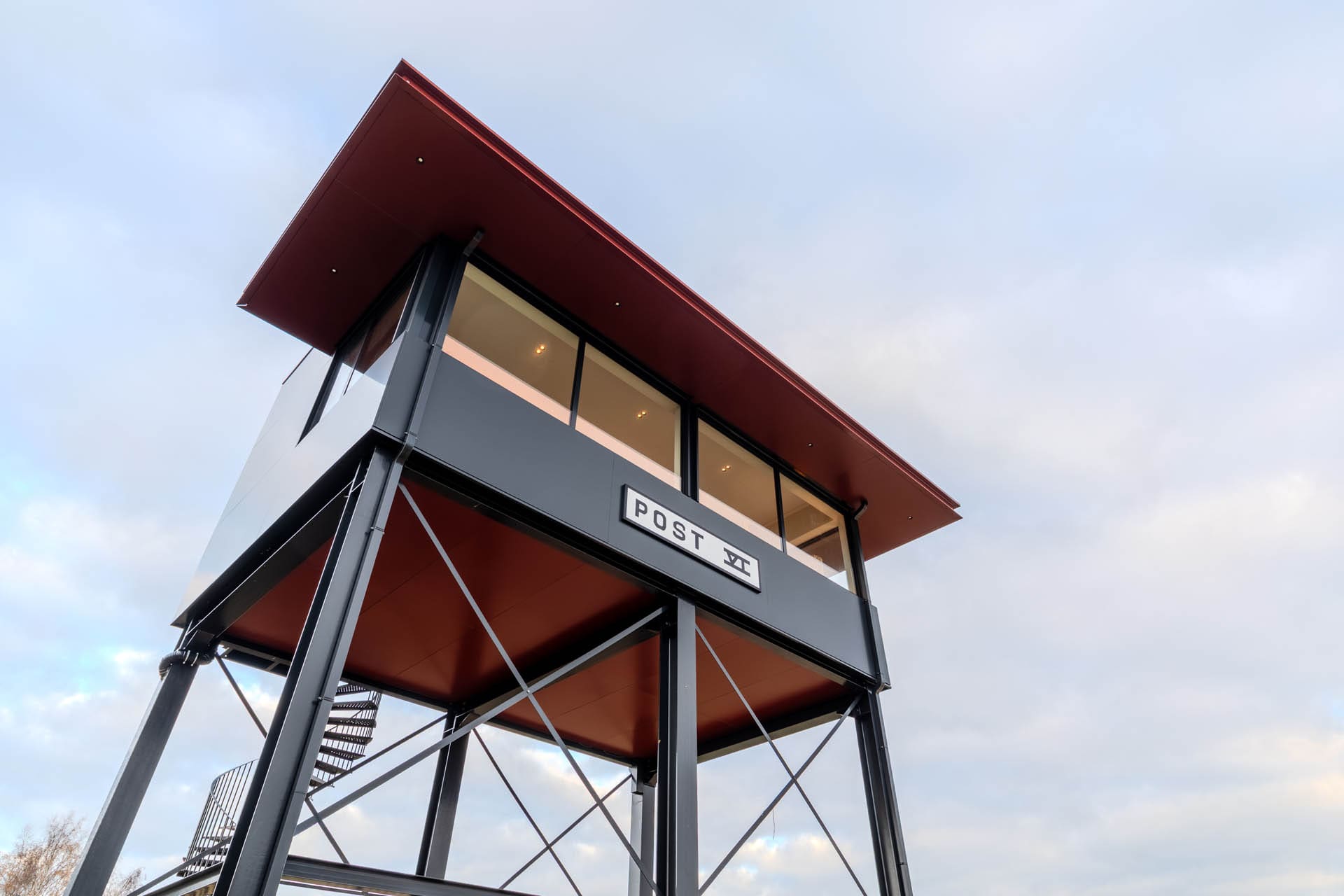
Business Travel Accommodations
Are you looking for a place to stay for business in Amersfoort?

Education
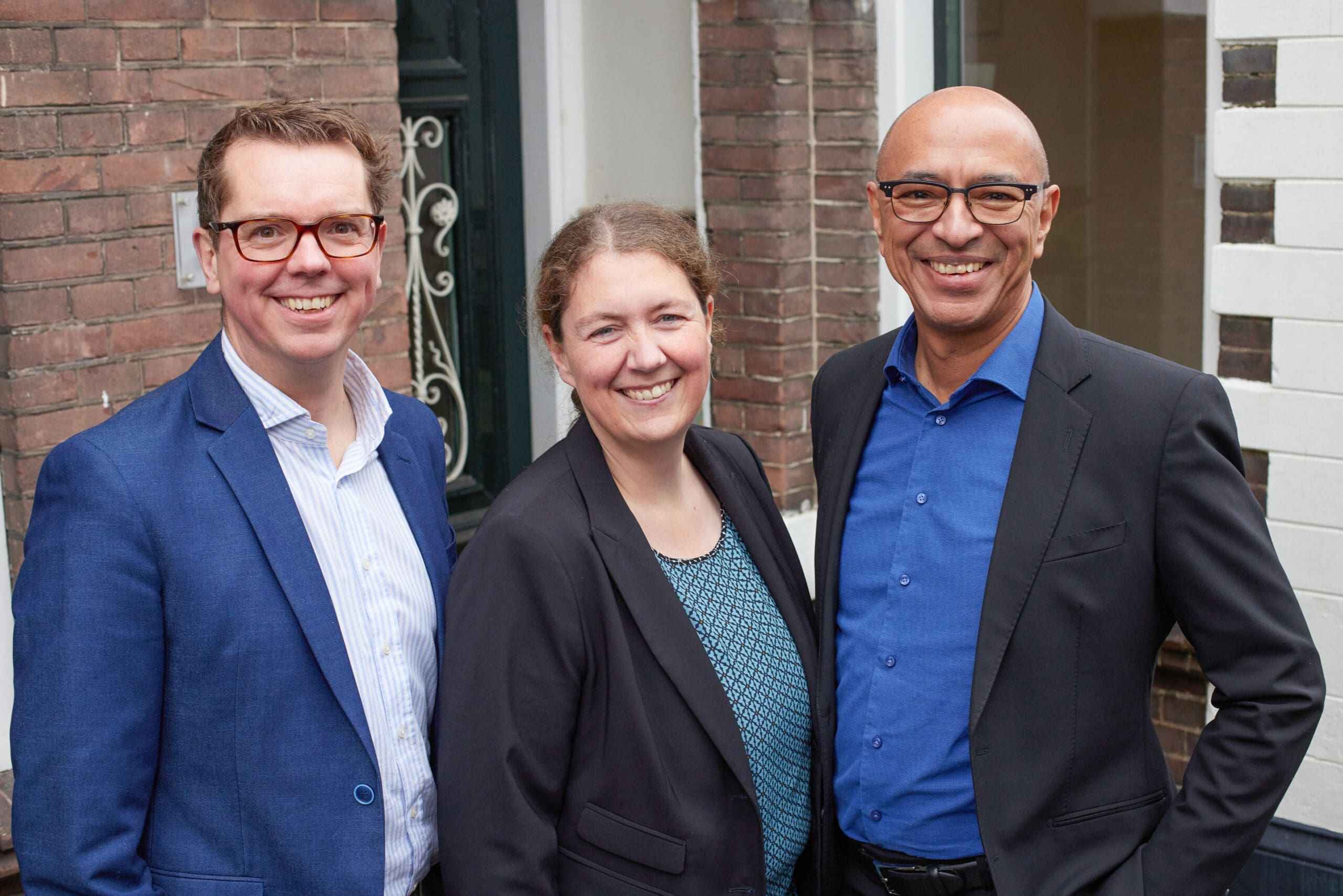
Young talent needs room to grow
How can we give young talent the opportunity today to make a difference tomorrow?
Entrepreneurship
HydroLogic: Smart Water Management
“HydroLogic is doing everything it can to prevent ‘Amersfoort by the Sea.’”
Education
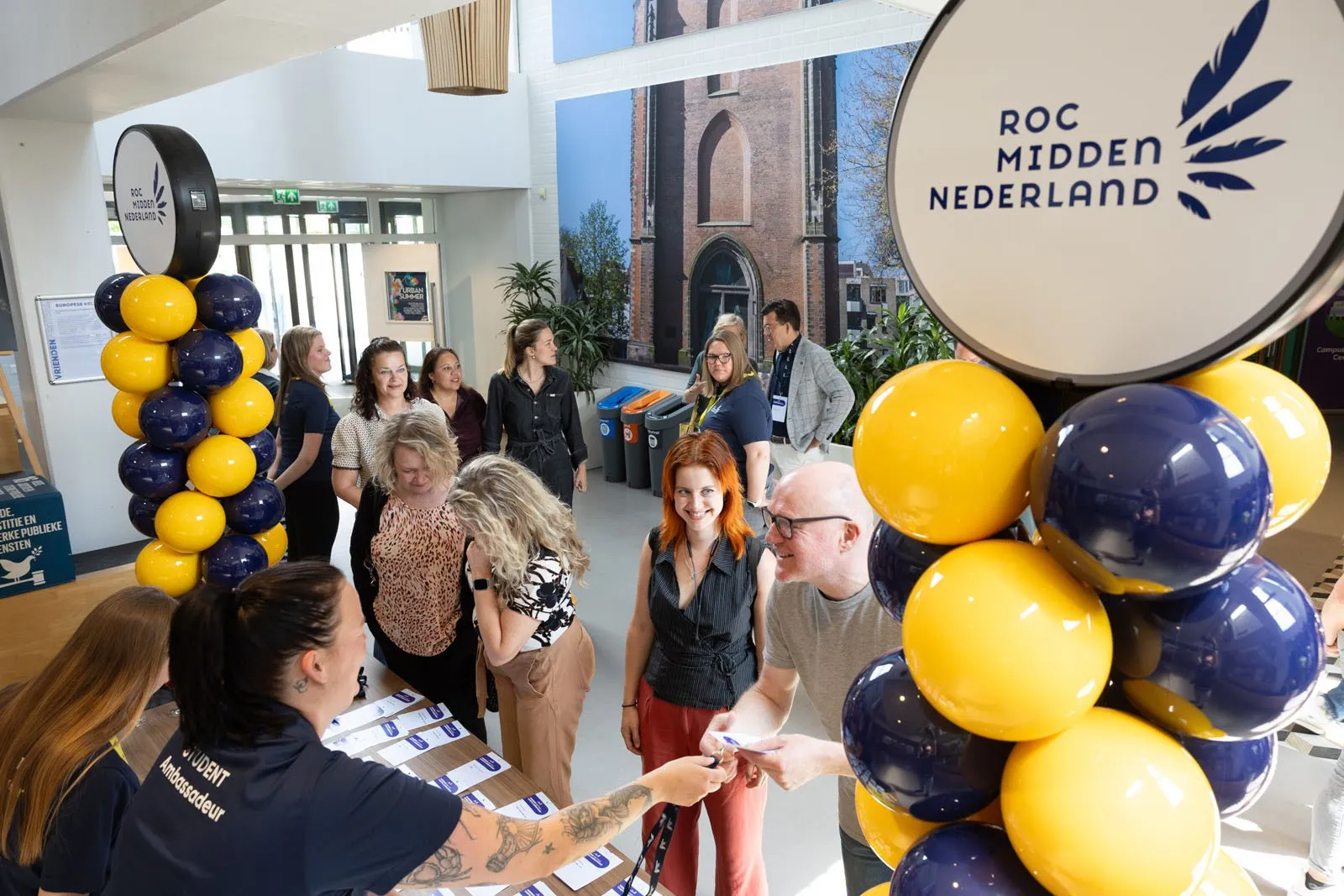
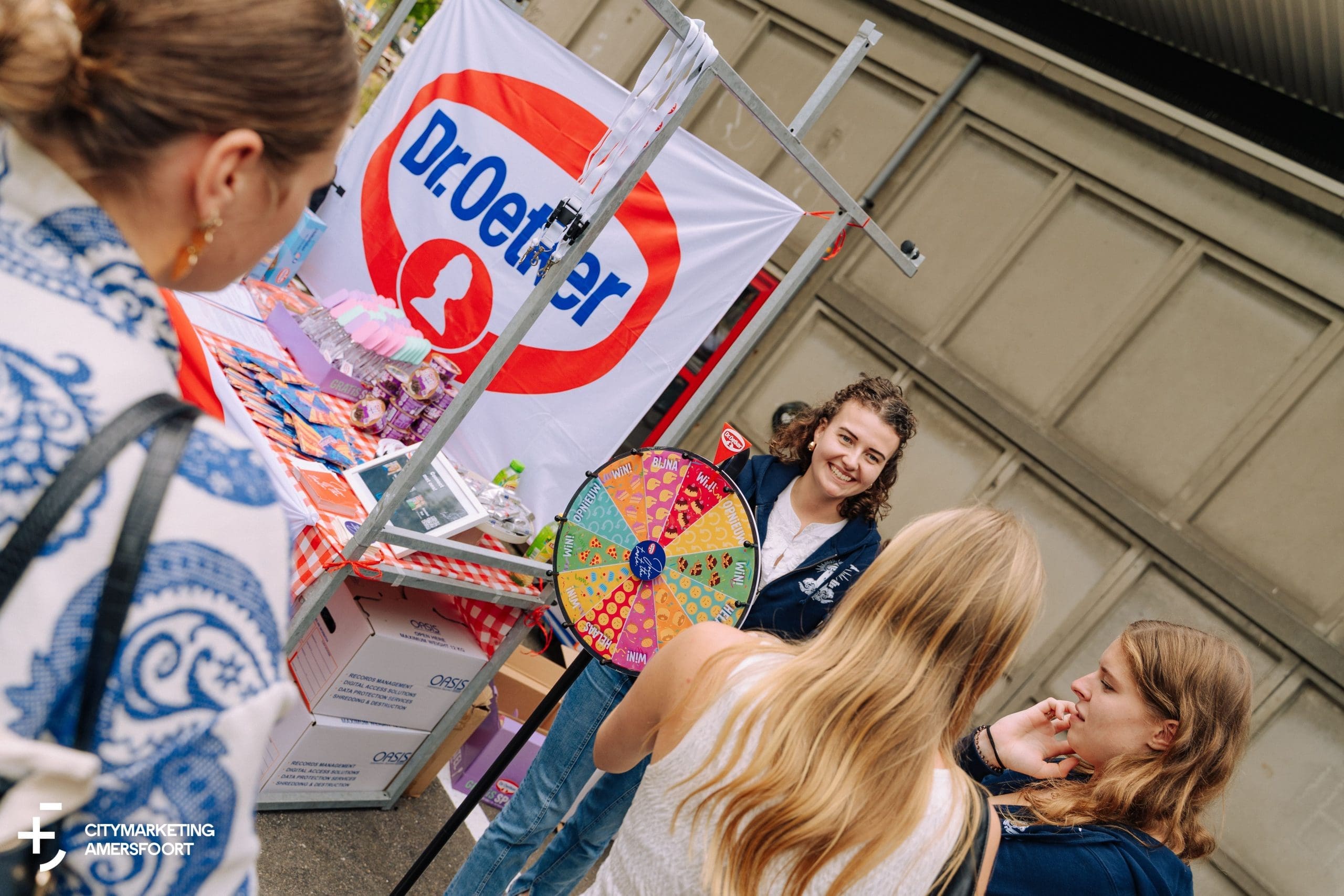
Amersfoort Welcomes New Students and Builds Connections with the Business Community
During KEI-Start Amersfoort, new students explore Amersfoort, meet local businesses, and lay the foundation for their connection to the city.