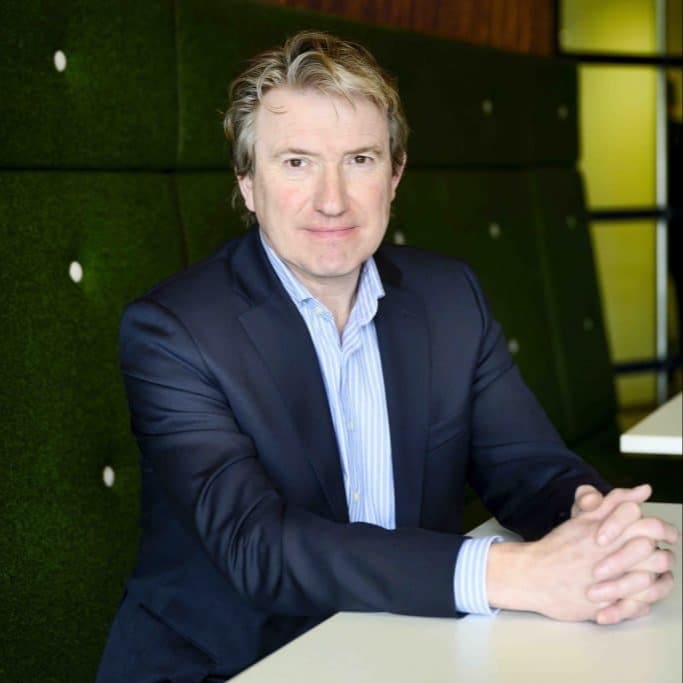
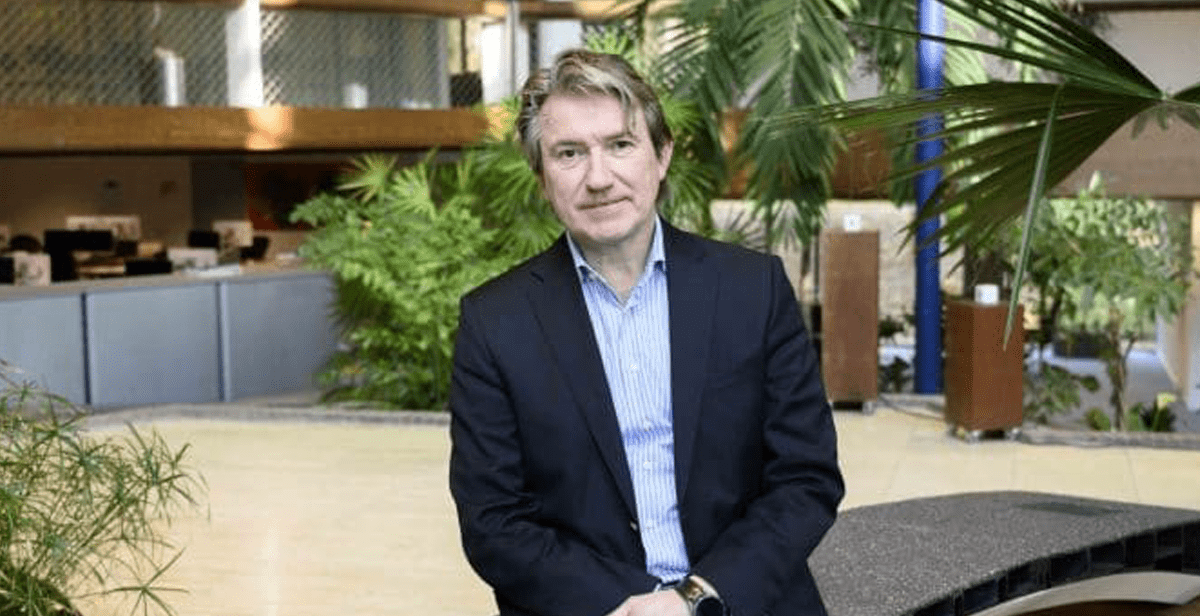
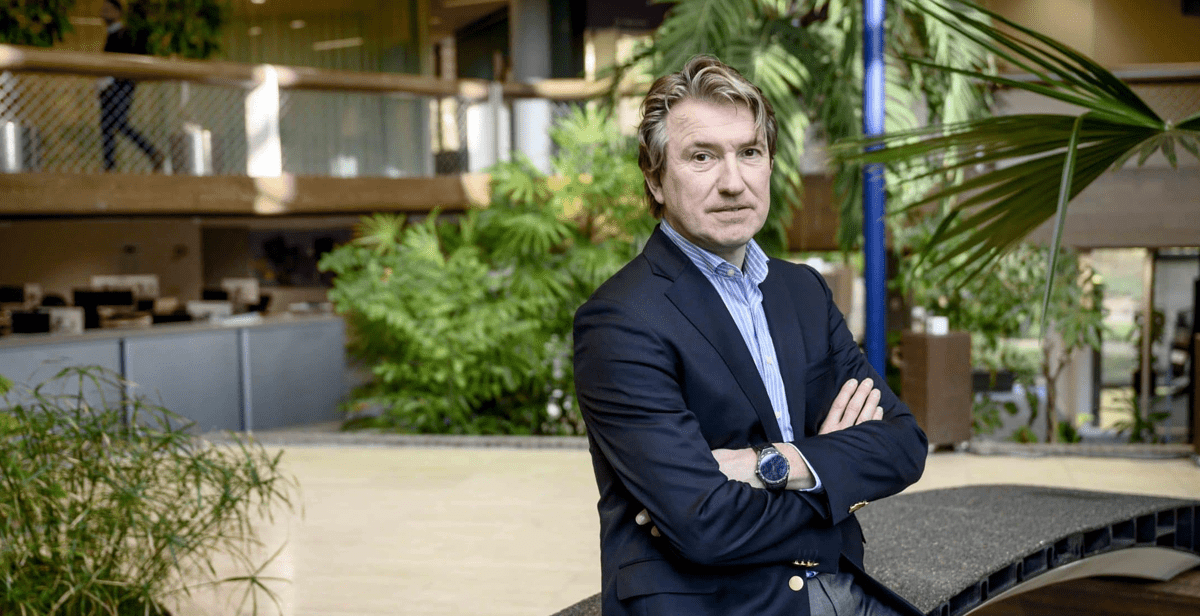
Erik Oostwegel stands proudly on the very first 3D-printed pedestrian bridge, which has been given a prominent spot at Royal HaskoningDHV’s headquarters. He wants to emphasize that while this bridge is lightweight thanks to the use of fiber-reinforced thermoplastic, it is also extremely strong and recyclable. “And because it weighs so little, you could easily transport it by boat to its spot across the water,” says Oostwegel.
Royal HaskoningDHV announced the prototype of the 3D-printed bridge—created in collaboration with CEAD and DSM—last year as the beginning of a new era of sustainability: “We’re pushing the boundaries of bridge functionality.” It’s not just the new 3D-printing technology that’s causing a stir. “By incorporating sensors into the design, we’re able to build a ‘digital twin’ of the bridge. These sensors can predict and optimize maintenance, ensure safety, and extend the lifespan of our bridges.”
Feyenoord City
It is innovative solutions like these for the built environment that the brilliant minds at Royal HaskoningDHV conceive and develop. The engineering firm is among the global leaders in its field across a variety of areas, with numerous offices around the world. Oostwegel has led this organization as CEO since 2013, but he still gets “absolutely thrilled” every day by yet another groundbreaking piece of work delivered by the employees. “I really enjoy that. There are so many intelligent people working here. Because we’re constantly creating new combinations of expertise, more and more exciting developments are emerging. Combined with our goal of making life on this planet a little better and more enjoyable, it’s a real pleasure to lead our team. Of course, we have to make money—we’re a commercial company, and some of us tend to forget that—but we set aside plenty of time and resources for things we believe are worthwhile. For example, we often attend conferences on topics like circularity and the energy transition. Because we want to contribute to the discussion and because we have something to say about it.”
Oostwegel believes in the power of the engineer. In his office, he points to a framed photo on the wall, a scene from days gone by. “You can see the wooden scaffolding used in the construction of one of Heineken’s first breweries. Back then—or take the construction of the polders long ago—we were just as essential as we are today. The relevance of the engineer existed back then, still exists today, and will always remain. What we’re seeing is that we’re moving toward a different application of our knowledge—one that’s much more software-based, among other things; clients receive packages that allow them to get started on their own.”
He cites the aforementioned “digital twin.” “Our goal is to create a digital copy of every design—whether it’s a tunnel, a water treatment plant, or a factory. That way, we can continuously monitor what’s happening, such as how a building or structure responds to use. Even when conditions change—such as floor load, energy consumption, humidity, temperature, or, even more interestingly, combinations of factors. If you know what’s happening, you can learn from it and look to the future. We’re moving toward predictive and proactive models. It sounds like science fiction, but that’s where we are right now.”
Here’s an example, to make it a bit more tangible. “We created a digital replica of an operating room at Maasland Hospital to check whether a new piece of equipment could be added without compromising the sterile air environment. An operating room like that is the heart of the hospital; it costs a lot of money and must remain operational at all times. Aside from all the strict regulations, you can’t just walk in every time to take measurements. So you’d prefer to test new equipment in a different environment. Thanks to a digital replica, a doctor can put on a HoloLens and test whether it works as intended in an exact replica of reality. So you can simulate all of that, instead of having to shut down operations.”
Since Oostwegel is already discussing compelling examples of Royal HaskoningDHV’s projects, Feyenoord City—the prestigious area development project driven by Feyenoord’s new stadium—is another one. “To summarize our work: we’re handling the structural design of the stadium, resulting in a unique, safe, and robust building that will offer the ultimate fan experience. We’ve set this up parametrically: we’ve created a digital model of the design that can be continuously adjusted and refined. Think of it like an Excel spreadsheet. If you adjust the numbers in it, you get a different result from your formula. That’s basically how our parametric design process works, too. We’ve, so to speak, written a formula for the stadium, with parameters acting as sliders you can adjust. On the screen in front of you, you can then see that the stadium starts to look different—for example, the angle of the stands becomes steeper or the structures become taller. By adjusting those controls, we’ve managed to ensure that the distance from every seat in the stadium to the center circle complies with the FIFA guideline that defines optimal sightlines. There’s hardly a stadium in the world that meets this standard to such a high degree. Our approach allows us to achieve this, and we’ve even managed to fit in a lot of extra seats. Thanks to this new technology, you can gain a deep understanding of all the possibilities early on and base your design choices on that. And which one is the best? The computer also helps you make that choice through generative design. The speed and sheer number of possibilities this enables are almost beyond the human mind’s comprehension.”
Oostwegel couldn’t have put it better. It’s mind-boggling, but he presses on. “We have a strong presence in the water sector—from drinking water treatment to wastewater treatment and everything in between. But also the pride of the Netherlands: dikes, polders, and dams. The need for clean drinking water and the smart treatment of wastewater is enormous. A few years ago, together with the Amersfoort-based Foundation for Applied Water Management Research (STOWA), TU Delft, and six water boards, we developed the new Nereda treatment technology. It works entirely biologically: bacteria that grow in compact granules purify the water. This allows us to treat the same volume of water without chemicals, using half the energy and occupying just a quarter of the original footprint of the facility. That means a much faster process and fewer square meters required. There are now more than seventy of these plants in operation or under construction worldwide.”
The bacteria that have done their job are also given a second life. “We reuse the sludge left over after purification—the granules—as raw material for new products. To put it simply: the waste we remove from the water can be used, for example, to make your clothes waterproof. Another example: when added to concrete, it prevents it from hardening too quickly and helps prevent cracking. It’s a highly versatile product made from waste material. That’s why we named it Kaumera: it means ‘chameleon’ in Maori. It’s fully circular: we extract raw materials from wastewater, deliver clean water, and Kaumera can be used as a sustainable alternative to chemical raw materials.’
Healthy Urban Living
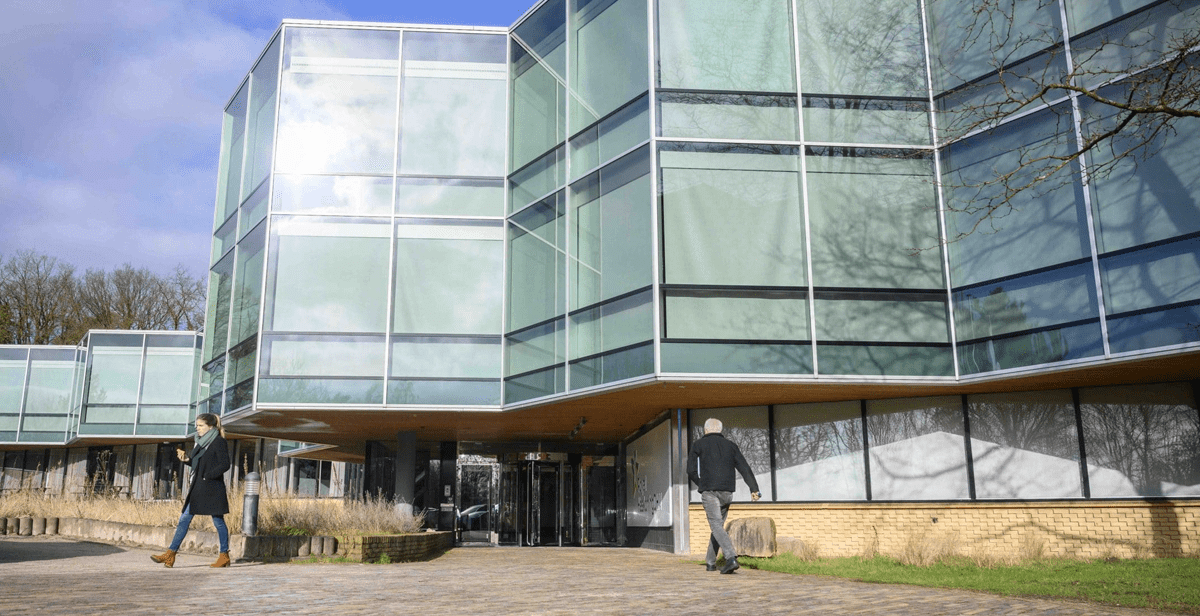
Even though much of our work is done virtually and digitally, all those bright minds at Royal HaskoningDHV need a base of operations. For 600 of them, that’s the headquarters in Amersfoort, which has traditionally been the engineering firm’s largest office. Support functions such as finance, IT, communications, and facilities/ICT are based here. This is also where larger gatherings take place. Oostwegel: “The New Year’s reception, for example. And the International Cross Selling Day, our biggest event with our young professionals. Young people from all over the world come together for that. Amersfoort—and this location in particular—is ideally suited for that: it’s in a prime central location, easily accessible from Schiphol by car and public transit thanks to a shuttle bus from Amersfoort Centraal Station, and there are hotels nearby.”
The wooded surroundings also play a big role, he continues. “You should see it here in the summer. That’s when the lawn is filled with people having lunch. And when you walk through the woods, you’ll run into our employees going for a run during their lunch break. We encourage that: we have shower and changing facilities for people who want to work out during the day. We’re very comfortable at our headquarters in Amersfoort and still have plenty of room to grow.”
It’s a nice bonus for Royal HaskoningDHV that Amersfoort is home to many other geo-related companies and organizations. For example, during King’s Day 2019 in Amersfoort, the engineering firm, together with Hydrologic, presented the Water Control Room to the royal family, who were celebrating the king’s birthday in the city. The Water Control Room helps water managers use insights into local water conditions (too much or too little) to make decisions about the best time to sow, irrigate, and harvest.
“Furthermore, as mentioned earlier, we are working closely with the water boards’ knowledge center (STOWA), based in Amersfoort, to successfully extract raw materials from wastewater, such as Kaumera,” says Oostwegel. “The public-private partnership for Kaumera recently earned us a spot in the finals of the Dutch Circular Awards. And we’re collaborating with Amersfoort-based Dynniq in the Talking Traffic partnership. This initiative aims to transform the traditional traffic light market into a data-driven service that responds much more effectively to individual travel needs. To this end, we’ve developed Flowtack, which is already operating successfully in Deventer, Rotterdam, and Rijswijk, resulting in improved traffic flow and a lower environmental impact. Perhaps this is something for Amersfoort as well,” says the CEO. “We have a good rapport in Amersfoort, but that’s also true of other places where the organizations we collaborate with are located.”
Oostwegel calls Amersfoort “a fun, pleasant city.” “I’m originally from the The Hague area, but by now I’m familiar with the restaurants here as well. I regularly go out to eat in Amersfoort with business associates. There’s plenty to choose from. I’m a big fan of the Bergpaviljoen: it’s easy to get to and there’s parking right out front.”
The CEO of Royal HaskoningDHV focuses on “the world,” but also maintains a good relationship with Amersfoort’s mayor, Lucas Bolsius. “That’s nice. We often have international guests visiting us. The great thing is: if we ever want to host an event at City Hall, the door is always open to us. But it works the other way around, too—the city knows where to find us when they have guests from abroad. Then they stop by our office for a presentation or a tour. We’re happy to help with that.”
The fact that Utrecht Region—of which Amersfoort is a part—is increasingly focusing on Healthy Urban Living aligns well with Royal HaskoningDHV’s mission. Oostwegel: “Although personally, I think ‘Happy City’ is a nicer term. Ultimately, that’s what you want to achieve: happiness. That’s what we strive for. Being smart and healthy are essential parts of that. We contribute to this through our Healthy Citizens Platform, which helps municipalities make decisions to provide residents with a healthy living environment. We intelligently integrate factors that are important to city residents—such as odor, noise, temperature, and air quality. This allows us to quickly establish a baseline: what is the current state of this city or street? We conduct a bottleneck analysis and propose measures. Then we assess: ‘What is the impact of those measures?’
Royal HaskoningDHV has also partnered with Achmea and Nelen & Schuurmans to develop BlueLabel, a digital service that enables residents and property owners (government agencies and businesses) to take targeted measures to prevent stormwater flooding. “At the property level, we can show you, square meter by square meter, how high the water will rise during heavy rain. We also provide this insight for heat, drought, and flooding. In this way, BlueLabel helps design measures that contribute to a livable residential environment, even during prolonged periods of rain or rising temperatures. This, too, aligns seamlessly with our mission.”
Want to learn more about Royal HaskoningDHV? Visit the website.

More Entrepreneur Stories
Uncategorized
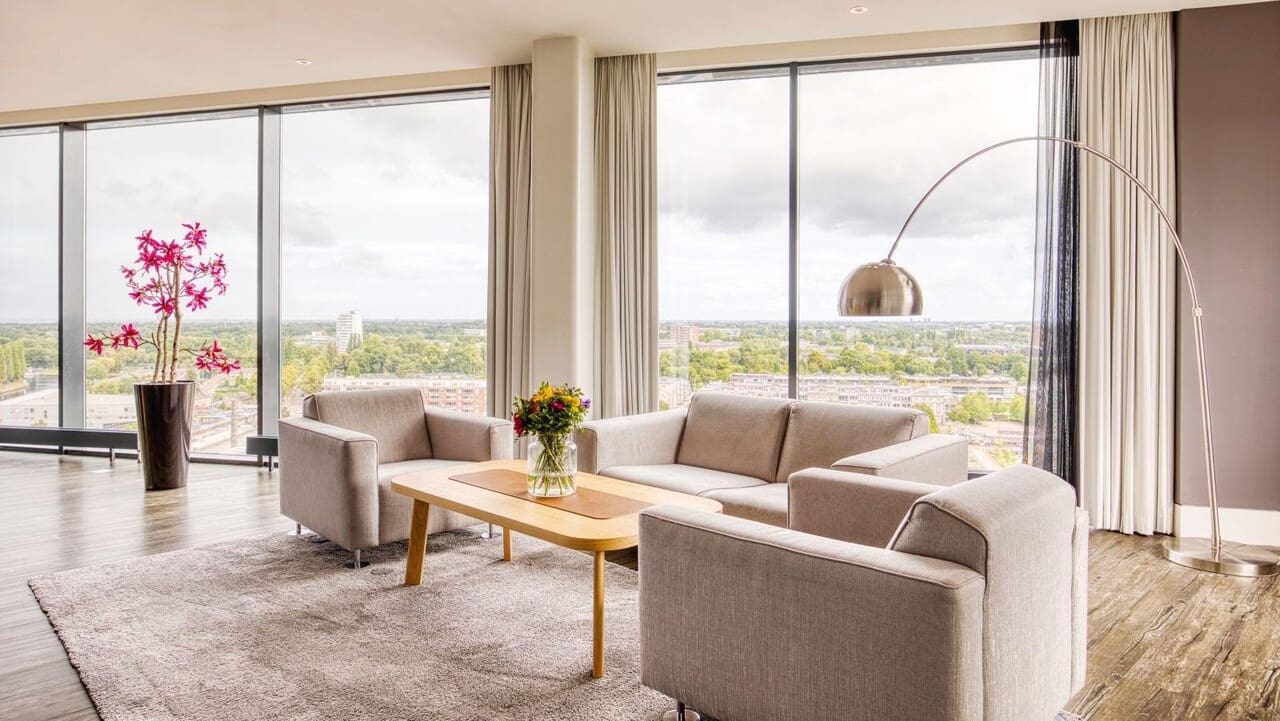
Business Travel Accommodations
Are you looking for a place to stay for business in Amersfoort?

Education
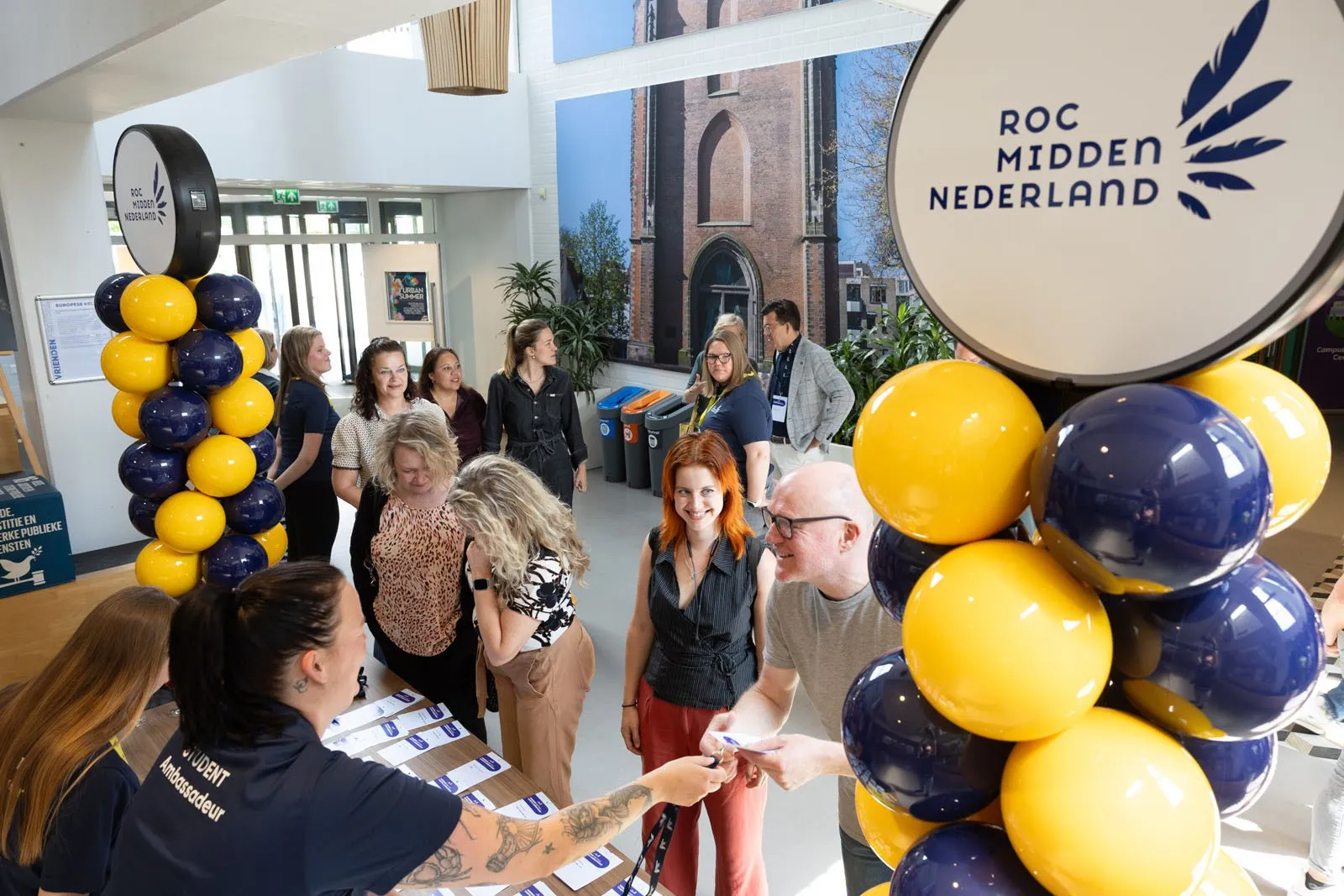
Young talent needs room to grow
How can we give young talent the opportunity today to make a difference tomorrow?
Entrepreneurship
HydroLogic: Smart Water Management
“HydroLogic is doing everything it can to prevent ‘Amersfoort by the Sea.’”
Education
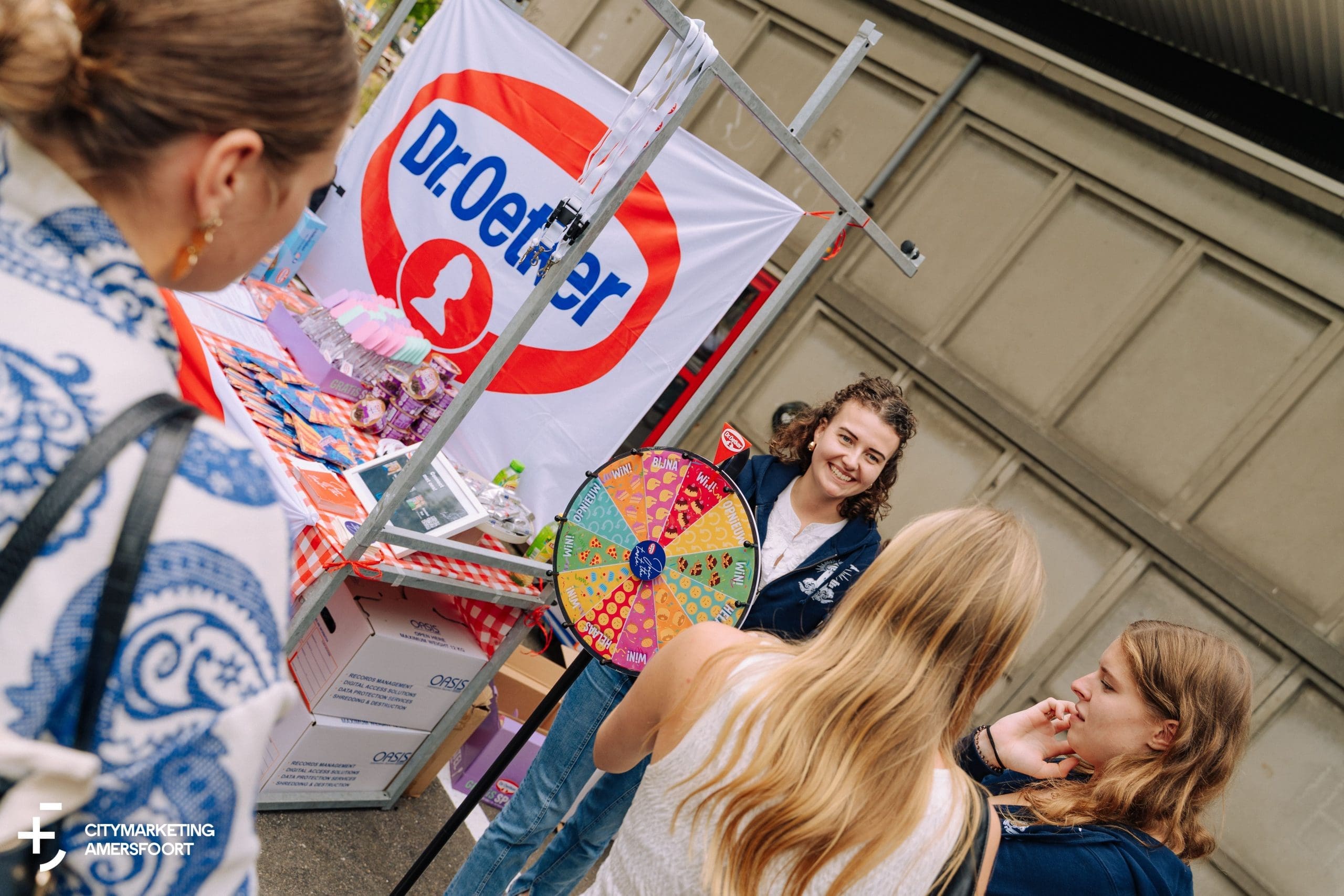
Amersfoort Welcomes New Students and Builds Connections with the Business Community
During KEI-Start Amersfoort, new students explore Amersfoort, meet local businesses, and lay the foundation for their connection to the city.