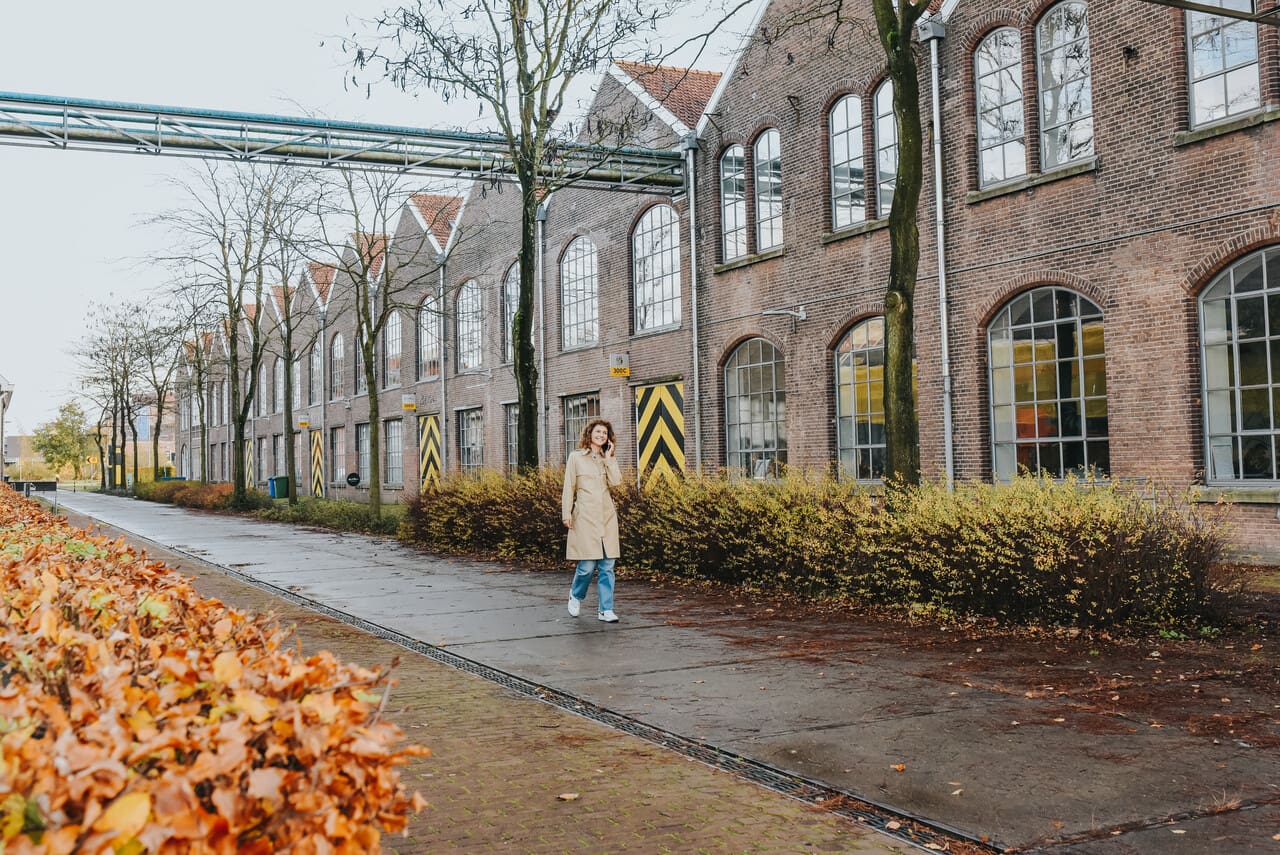

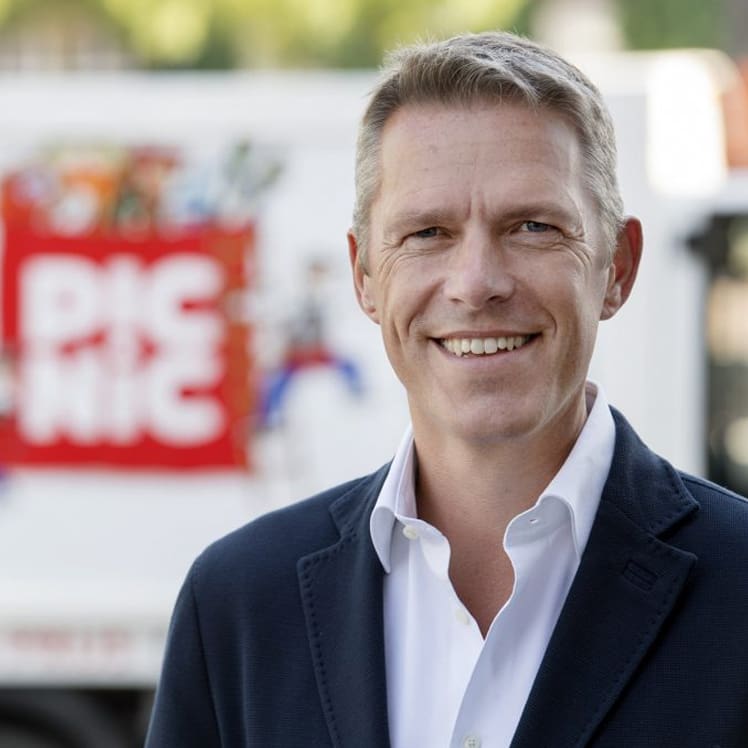
“Amersfoort remains the Picnic capital,” Muller says with a smile. Picnic launched in De Nieuwe Stad—an innovative area in and around the former Prodent factory—after the summer of 2015. In the months leading up to that, Amersfoort had already been the site of the pilot for this innovative supermarket concept; in the Vathorst, Soesterkwartier, and Nieuwland neighborhoods, the electric delivery vehicles logged their very first kilometers.
That wasn’t a random choice, Muller emphasizes. “Amersfoort is a city with neighborhoods that are fairly homogeneous, yet still differ from one another. In some neighborhoods, the children have just left home; in others, they’ve just been born. There’s a suburban neighborhood, there’s an urban neighborhood, and so on. This makes Amersfoort, as a city, a good reflection of Dutch society, with a mix of people and a mix of behaviors. Every segment of the workforce and every socioeconomic class is well represented there. This makes Amersfoort an ideal city to test and roll out a new concept.”
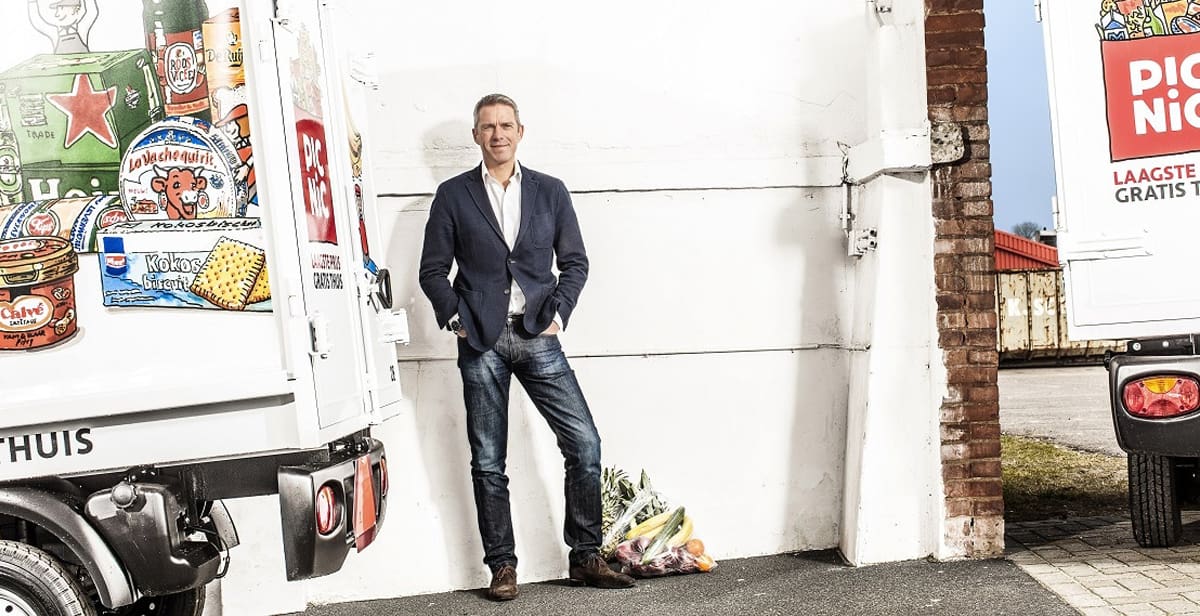
New Distribution Method
And that’s exactly how Muller experienced it. The entrepreneur already has a distinguished career in business under his belt; he previously worked with Marc Schröder to build the unmanned gas stations Tango and Route Mobiel, a competitor to the ANWB. Together with co-founders Joris Beckers and Frederik Nieuwenhuys, he is now working on Picnic’s growth. Muller says that Amersfoort, as Picnic’s first location, “has worked out excellently.” “The city, through its account team, also pays a lot of attention to new companies and is eager to help them get settled. That’s how you quickly get a feel for a city. They focus on what is possible rather than what isn’t. That’s important when you’re starting a new concept somewhere.”
Picnic is off to a flying start. Even before the concept had been fully launched, it had already attracted 400 customers. By the end of 2016, that number had already reached 24,000. The online supermarket now delivers not only to Amersfoort but also to Soest, Leusden, Almere, Maarssen, and Utrecht. At least ten more cities will be added this year, Muller reports. Picnic will definitely be coming to Delft, Rijswijk, Nootdorp, Voorburg, Leidschendam, and Ypenburg. Ede, Veenendaal, Lelystad, and Apeldoorn are also on the list. There are now 90 Picnic delivery vehicles on the road in the Netherlands, and the company has a team of over 400 employees. “Things are going much better than we ever dared to dream.”
The secret to its success? Picnic operates using a new, proprietary distribution method that allows it to deliver groceries directly to neighborhoods without unnecessary intermediaries. Customers choose the delivery slot that works best for them and know exactly, down to the minute, when their order will be delivered, because they can track the delivery vehicle on their screen. Because the costs of this new distribution method are so low, Picnic can keep grocery prices low and offer free delivery.
Muller: “We’ve eliminated two major drawbacks of online shopping. You don’t have to wait hours for your groceries, which means you don’t have to stay home specifically to receive them. Plus, you don’t have to pay for delivery. Combine those two benefits with the low prices on groceries, and you have the ultimate alternative to grocery shopping at a supermarket. In fact, you don’t even have to go there anymore.”
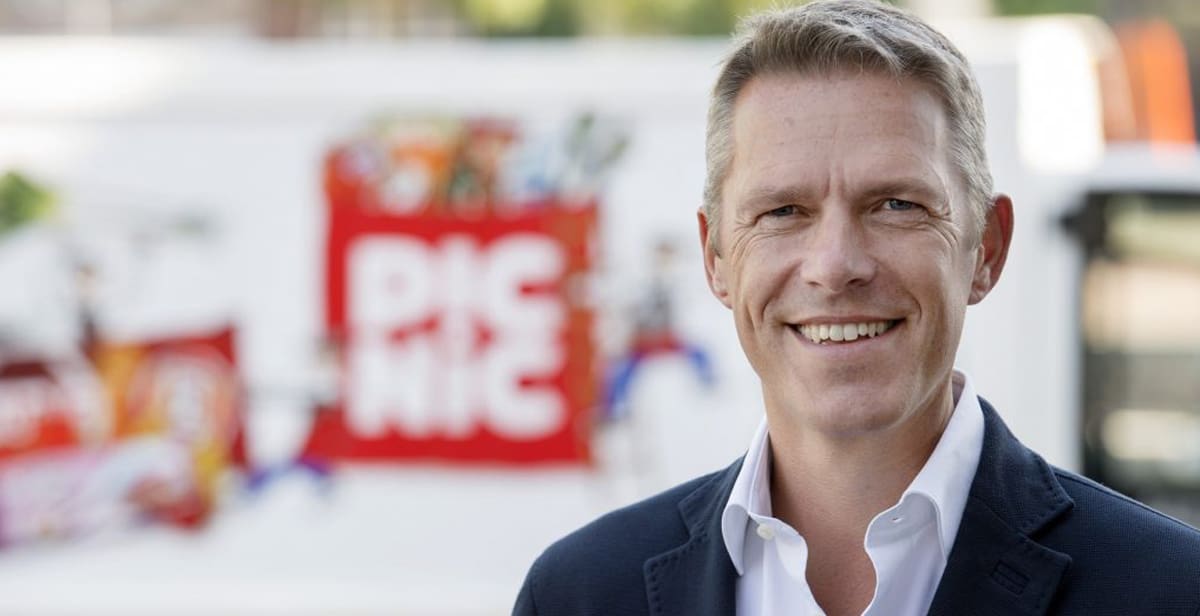
Picnic Capital
Muller knows that the concept’s sustainability is also becoming an increasingly important factor in new customers’ decisions. “Sustainability is sometimes associated with being expensive. But that’s not the case for us. We drive electric vehicles, emit no particulate matter, and reduce food waste. We only place orders with our suppliers once we know exactly how many loaves of bread and steaks we need to deliver. As a result, the products are often even fresher than those in the supermarket, which means you’re less likely to throw them away at home. It’s a win-win situation.”
“The Picnic revolution continues,” Muller agrees with a laugh. The distribution center in Nijkerk has already outgrown its space in just nine months, and a second one recently opened in Utrecht. From the very beginning, Picnic even had to create a waiting list. “On the first day in Amersfoort, we received 5,000 sign-ups. But of course, we couldn’t handle that with just eight little cars. We’re also seeing a lot of new growth in new cities, and we’re now scaling up quickly so we can continue to grow rapidly. Exciting? Definitely! Delft is different from Maarssen. We’re all going to find that out.”
Muller expects Picnic to have reached about three-quarters of the Netherlands within three years. That’s the urban areas, though, because rural areas are difficult to serve with the little cars, which can only travel a limited number of kilometers before they need to be recharged. “We have an incredibly exciting challenge ahead of us.”
No matter how many cities are added, Amersfoort will remain the Picnic capital. “If only because there are no fewer than 40 Picnic cars driving around here. We’ve also done a lot of testing here and learned a great deal. Amersfoort is now in our DNA.”

More Entrepreneur Stories
Uncategorized
Business Travel Accommodations
Are you looking for a place to stay for business in Amersfoort?
Education
Young talent needs room to grow
How can we give young talent the opportunity today to make a difference tomorrow?
Entrepreneurship
HydroLogic: Smart Water Management
“HydroLogic is doing everything it can to prevent ‘Amersfoort by the Sea.’”
Education
Amersfoort Welcomes New Students and Builds Connections with the Business Community
During KEI-Start Amersfoort, new students explore Amersfoort, meet local businesses, and lay the foundation for their connection to the city.