
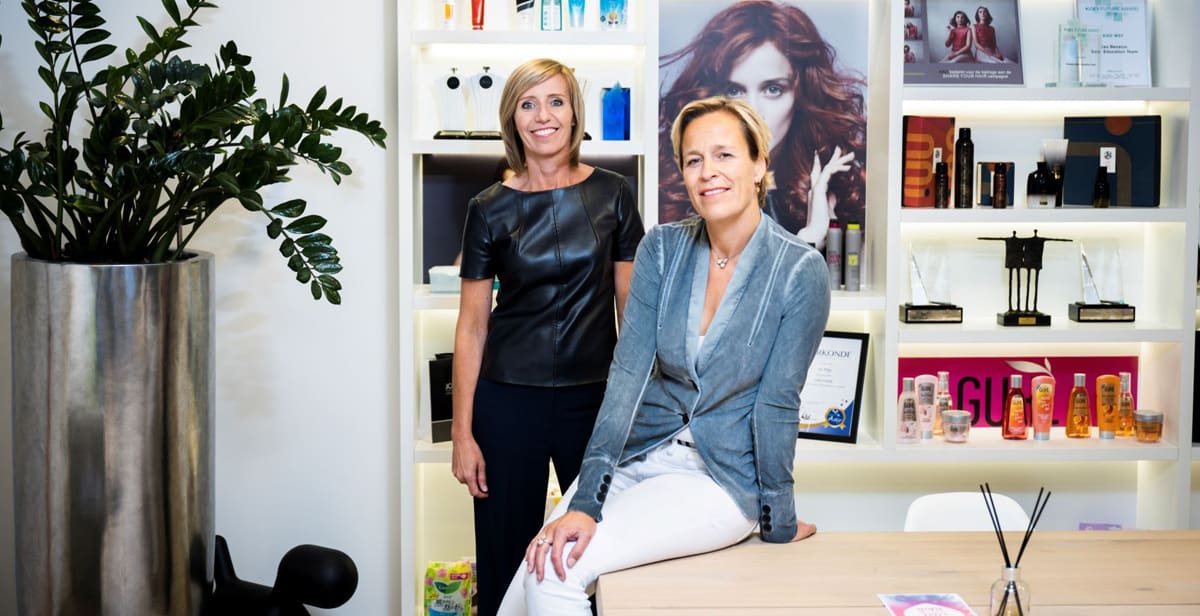
As soon as you walk into the beautiful office building at Berkenweg 7, you can’t miss it: Kao’s large “wall of fame,” filled with products and awards—and there are quite a few of them.
Well-known beauty brands like Guhl, John Frieda, Goldwell, KMS, and Molton Brown are prominently featured here, thanks to bottles, tubes, and masks in every color of the rainbow—many of them, of course, filled with wonderfully fragrant contents. Radiant women gaze at you from large banners. You can feel, see, and smell it in everything: this is the realm of outer beauty.
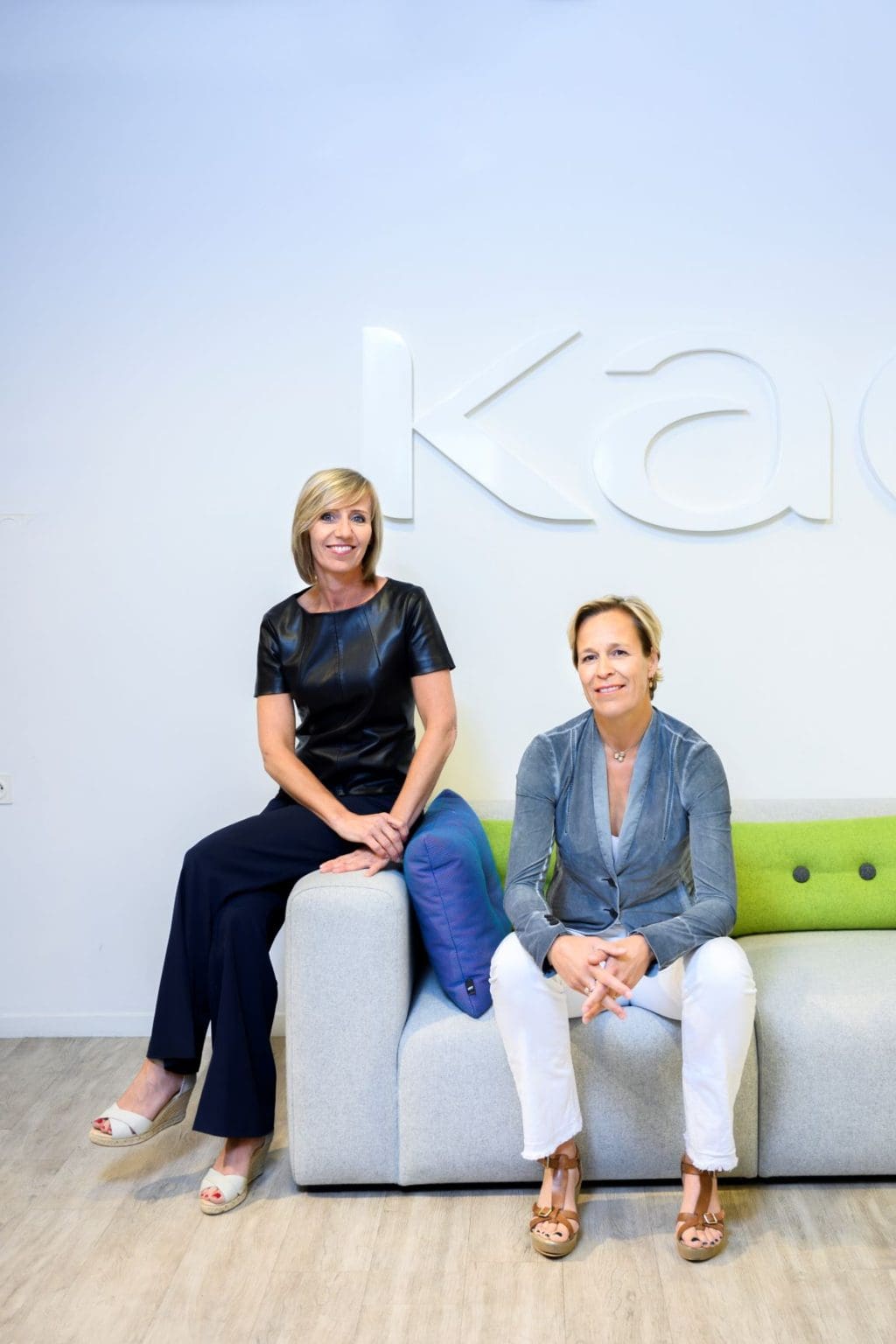
Barbara Holsink (Country Manager at Mass) and Christel Grootentraast (General Manager at Kao Salon Benelux) extend a warm welcome. The ladies immediately prove themselves to be true ambassadors for the beauty brands under the Kao umbrella.
Without a moment’s hesitation, they list their favorite products. “I’m addicted to the sleeping masks,” says Holsink. “They’re hugely popular in Japan.” Paulien Cornelisse describes them in her latest book, *Japan in a Hundred Little Pieces*—it’s a real page-turner. They’re heat masks, set to 40 degrees. You put them over your eyes when you want to relax—for example, while traveling or before going to sleep. We’ve recently started selling them in the Netherlands as well. It’s a product developed entirely in-house by Kao that we’ve had imported directly from Japan. The Netherlands is a great test market for expanding the product line from Japan to other parts of the world.”
Kao. That name doesn’t immediately ring a bell for most Dutch people. But in Japan, everyone has at least one product from this Japanese company in their home. From shampoos and shower gels to fish oil and diapers: Kao has it all in its product line. “In Asia, the average household has 41 Kao products,” says Grootentraast.
“I personally love our hair products—take the dry texturizing spray from our new brand Oribe, which is already an award-winning product worldwide. You’ve got to practice what you preach, right?” Holsink: “Guhl shampoo remains my number one choice when it comes to scent and sensation.”
These are products that stem from the company’s unparalleled drive for innovation. “That’s the cornerstone of our organization. We have more than 3,000 researchers worldwide; we invest not only in product development but also in research. That’s where a tremendous amount of knowledge lies, which sets us apart.”
At Kao, innovation is a continuous process. And everything is about quality; every day we seek to improve our products and ingredients. The Japanese call this Yoki Monozukuri: constantly making the good even better. New products only reach the market if they’re fantastic.”
This ties in closely with the major strides Kao is making in the area of sustainability. Its environmental impact has already been significantly reduced in recent years, and the organization is continuing to make progress. “We’re producing in increasingly sustainable ways and finding green solutions.
A great example is the air-injected refills, a new technology that cuts down on the production of a lot of packaging. Kao strives to do business in harmony with nature. We’re not just here for outer beauty; we also want to be beautiful on the inside.’
Listen, dream, and dare to take the leap
That is why Kao launched its ESG (Environmental, Social & Governance) strategy last year: the Kirei Lifestyle Plan, through which the organization encourages consumers to adopt sustainable lifestyle changes. The Japanese word “Kirei” describes something that is beautiful, clean, and well-organized. “We produce everything in line with that vision.
CO2 reduction and zero waste are currently our top priorities. For example, we’re working on more sustainable packaging solutions. A few examples: the Guhl conditioner bottle is now 100 percent recyclable, and the shampoo bottle is made from 50 percent recycled plastic. The same applies to the shampoo and conditioner bottles from our professional brand, KMS. In our home market of Japan, we already sell 80 percent of our products as refills.”
Since the launch of the new sustainability policy, Kao’s ESG division headquarters has been based in Tokyo. “We believe that ESG must be fully embedded in our business approach.” The company doesn’t do this alone, but in collaboration with partners. The most important one? The customer. “Because we want them to lead a more sustainable life with our products.
We also collaborate with universities, experts, and industry partners to develop ESG-driven innovations. In Germany, for example, where our main R&D facility for Europe is located, our partnership with the Green Dot—a licensing symbol for the recycling of packaging materials—and packaging manufacturers helps us develop more sustainable packaging.”
Ethics also plays an important role in our business operations. In fact, Kao has received several awards for this. For fourteen consecutive years, Kao has been named one of the World’s Most Ethical Companies. Holsink: “Integrity and trust are intertwined with the way we do business; you can only act if you want to do the right thing.
The Japanese word for integrity means ‘walking the right path.’ In the Netherlands, we tend to think: it’s perfectly fine to show how good we are. Kao is very modest and principled in that regard. That, too, is a hallmark of Japanese culture.’
Kao’s story reads like a Japanese fairy tale. It begins as early as 1887, when Tomiro Nagase, the scion of an entrepreneurial family (his father made sake), watched merchants pass by his family’s store. “What he did was listen carefully to people’s wishes. What could he do to make people’s lives better? And then: dream.
He was a champion of daring to take the leap, daring to move forward. Listening closely to consumers, dreaming, and building a network based on trust: much of what Kao stands for today is still rooted in these principles.”
In 1890, facial soap became the very first Kao product to hit the market: Kao Sekken. Grootentraast: “It all started with a little box containing various bars of soap. Over the years, that has expanded into a range of products in Health Care, Beauty Care, Cosmetics, Fabric & Home Care, and Chemicals. Those are Kao’s five current business divisions.
If you look at our brands for hair salons, they include names like Goldwell, KMS, and, since last year, the prestigious Oribe brand. We supply drugstores and supermarkets with brands such as Guhl, John Frieda, and Bioré.”
65 percent of Kao’s revenue is still generated in its home market, while its European branches account for 8 percent. The Amersfoort branch, where Holsink and Grootentraast work, is responsible for the Benelux market. Grootentraast leads a team of 85 employees who supply hair salons with the best hair care products. “We supply everything a hairstylist needs to do their job well in the salon and be successful.
Our back office, marketing, and education departments are based in Amersfoort. A large team is on the road visiting salons, and we provide training to clients, including at our own Kao Salon Academies in Apeldoorn, Amsterdam, and Antwerp.
Holsink: “I lead the smaller sister company we call Mass, the consumer division. We supply products to supermarkets and drugstores, such as Kruidvat, Etos, and Albert Heijn. We do this with a team of fifteen people. Kao’s Finance Shared Service Center, which is responsible for Europe, is also located in our office in Amersfoort. The great thing is that there are at least thirty different nationalities here. Italy, Spain, South Africa—they come from all over.
In total, there are 160 of us in Amersfoort, spread across two floors. Tomiro Nagase’s core values are also reflected on the work floor: relatively small teams with a strong team spirit and close collaboration—even across divisions. Every individual is important and has the opportunity to make their mark on the business. Our people’s opinions matter, and taking ownership of one’s own career is key. For those pursuing an international career, there are opportunities to advance to our Global Salon and Mass headquarters in Germany and London.”
Amersfoort as the Best Option
Amersfoort has been the home base of Kao Benelux since 2014. That was the year the consumer and salon divisions merged. “We were based in Almere and Apeldoorn, respectively. As part of the One Kao strategy, more and more locations began operating under one roof to increase visibility under a single brand.”
A project team tasked with organizing the merger of the two divisions chose Amersfoort as the new location. Its central location, numerous major highways, and a nearby train station were the deciding factors. “You’re moving people from the Apeldoorn and Almere commuter areas to a new environment, so that’s quite a challenge. In that regard, Amersfoort—located in the center of the country—feels like the best option. We also chose this office building very deliberately.
Most employees commute by train, and from here they can walk right into the station—which is absolutely great. Moreover, we were coming from industrial parks and wanted to be among people again. We’ve found that here. As you walk up to it, this building has a certain charm, and it’s right next to a residential neighborhood.”
The Japanese company is doing well in Amersfoort. “First of all: when you move, you expect to lose some staff, but that loss has been minimal because Amersfoort is conveniently centrally located. Accessibility is also excellent for foreign delegations, whom we regularly host. They can get to Amersfoort in no time from Schiphol. Others take the ICE from Frankfurt, which stops in Utrecht.
Our office is very easy to reach by public transportation. Taxis hardly ever stop right in front of the door anymore. Plus, they don’t have to leave the station area to find a place to stay; there’s a hotel just a stone’s throw away. Another plus: there are many major highways nearby; from Amersfoort, you can head in various directions.”
Lively and Accessible
Holsink and Grootentraast describe Amersfoort as a “lively, accessible city.” “Not too big, not too small—just the right size. Our company is all about our customers, so it’s great that they’re nearby. We often pop into stores for store checks—how are our products displayed? That wasn’t possible before.
We like to grab a sandwich at the train station, and we also regularly have Friday afternoon drinks there. It’s fun, but also practical. People from other local companies often join us there, too. It’s great to build our network in Amersfoort this way. Our Japanese colleagues really enjoy visiting Amersfoort. They think it’s a fun, open city. We often take them out for dinner at places like Tollius. The food is delicious. We also occasionally grab a bite to eat in the city center with our colleagues from Amersfoort. Amersfoort has so many great restaurants—it’s almost impossible to discover them all.”
The pleasant interactions with the Amersfoort Business Team also contribute to a pleasant stay in Amersfoort. “They’re very proactive in that regard; we’re always kept well informed. When our Finance Shared Service Center moved into our office in 2017—and people from abroad came to live here as a result—we received all kinds of useful advice and tips. There was a single point of contact where our new colleagues could go—it was organized perfectly.”
Holsink: “Unfortunately, the business event organized by the City of Amersfoort for Japanese companies at Yokogawa Europe—which was to feature, among others, Amersfoort native Siegfried Aikman (coach of the Japanese men’s field hockey team)—couldn’t take place last year. Perhaps it will happen again someday. It’s also nice to mention that our CEO and his wife met with Mayor Bolsius a few years ago. They, too, were impressed by Amersfoort.’
More Entrepreneur Stories

Uncategorized
Business Travel Accommodations
Are you looking for a place to stay for business in Amersfoort?


Education
Young talent needs room to grow
How can we give young talent the opportunity today to make a difference tomorrow?
Entrepreneurship
HydroLogic: Smart Water Management
“HydroLogic is doing everything it can to prevent ‘Amersfoort by the Sea.’”
Education
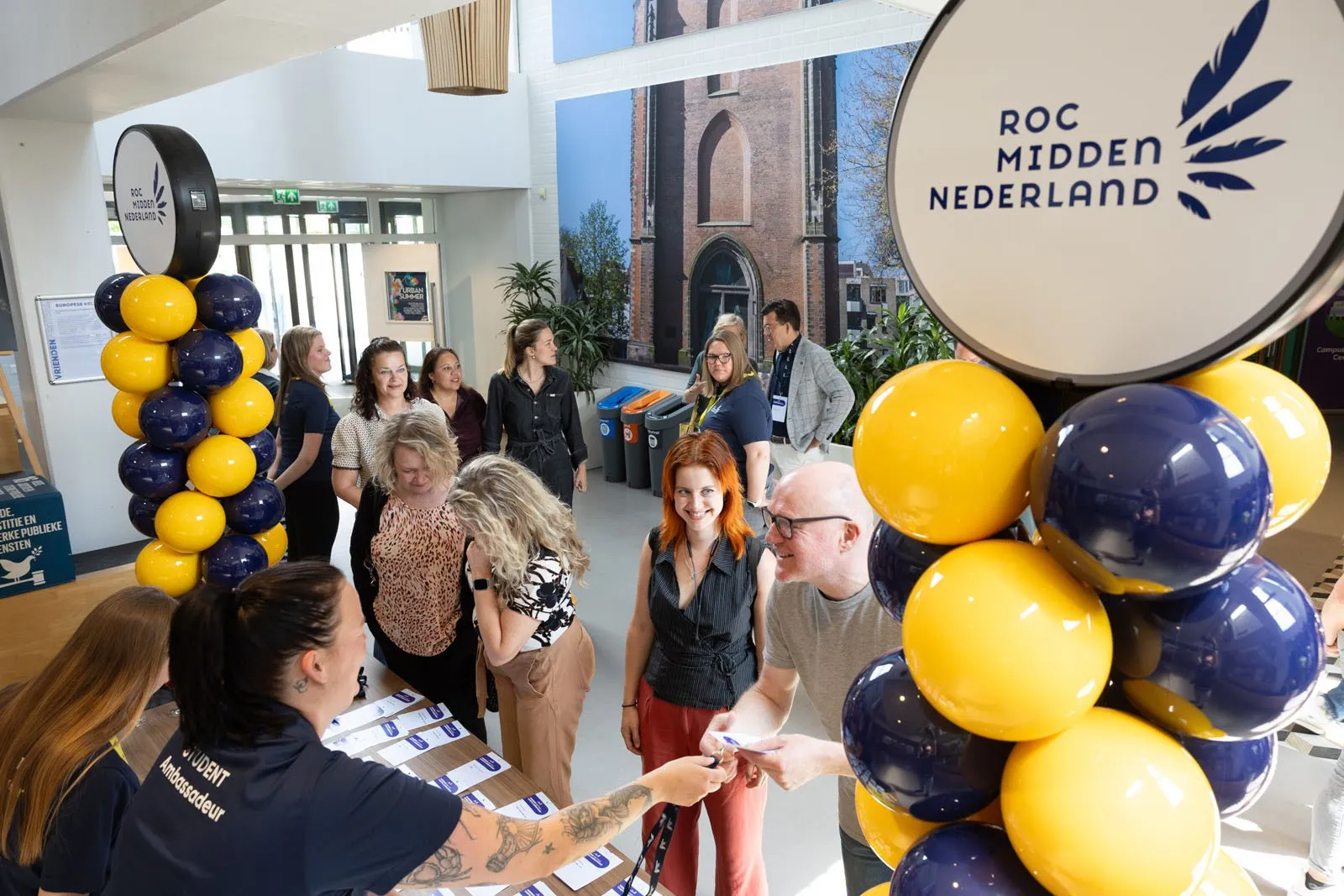
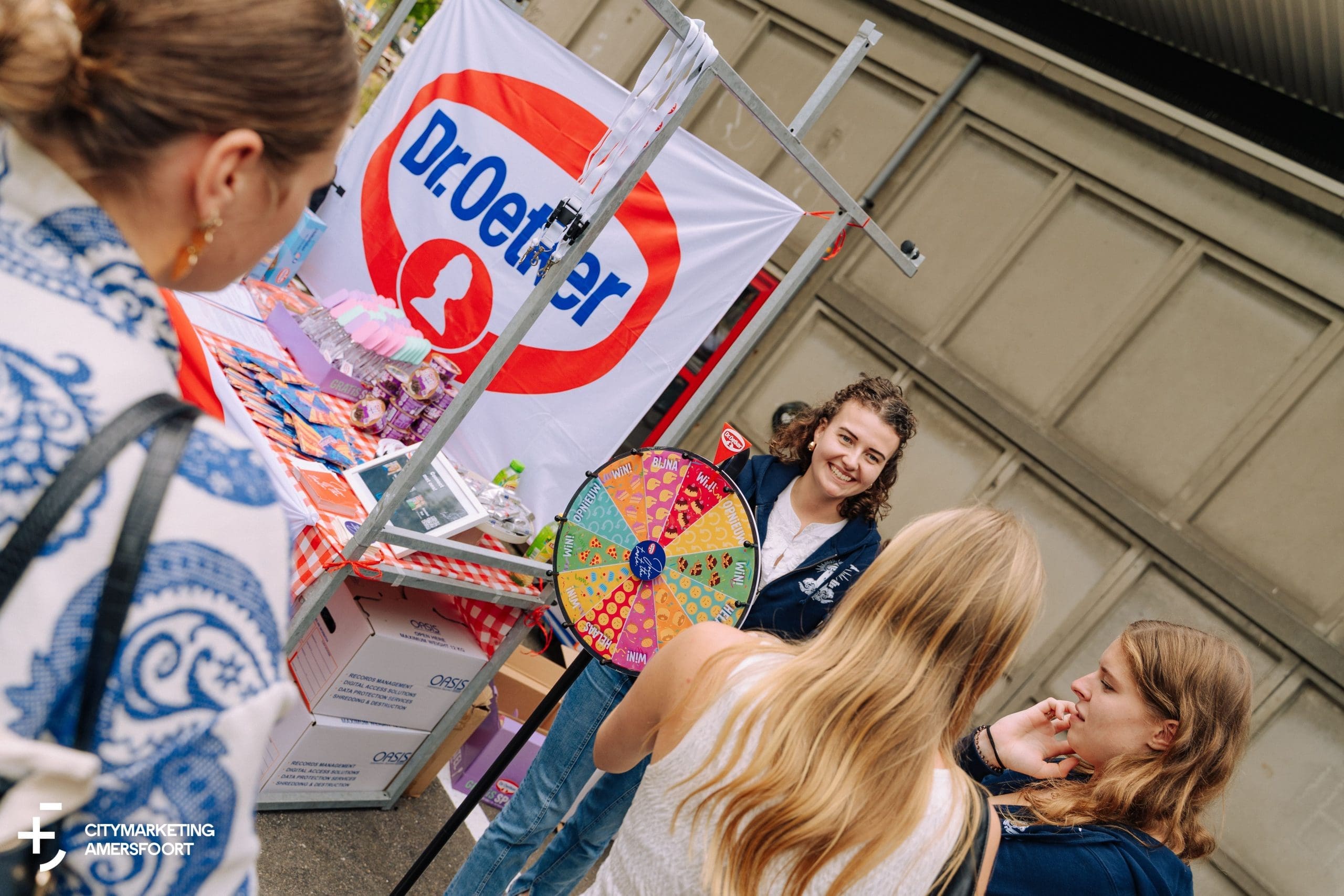
Amersfoort Welcomes New Students and Builds Connections with the Business Community
During KEI-Start Amersfoort, new students explore Amersfoort, meet local businesses, and lay the foundation for their connection to the city.