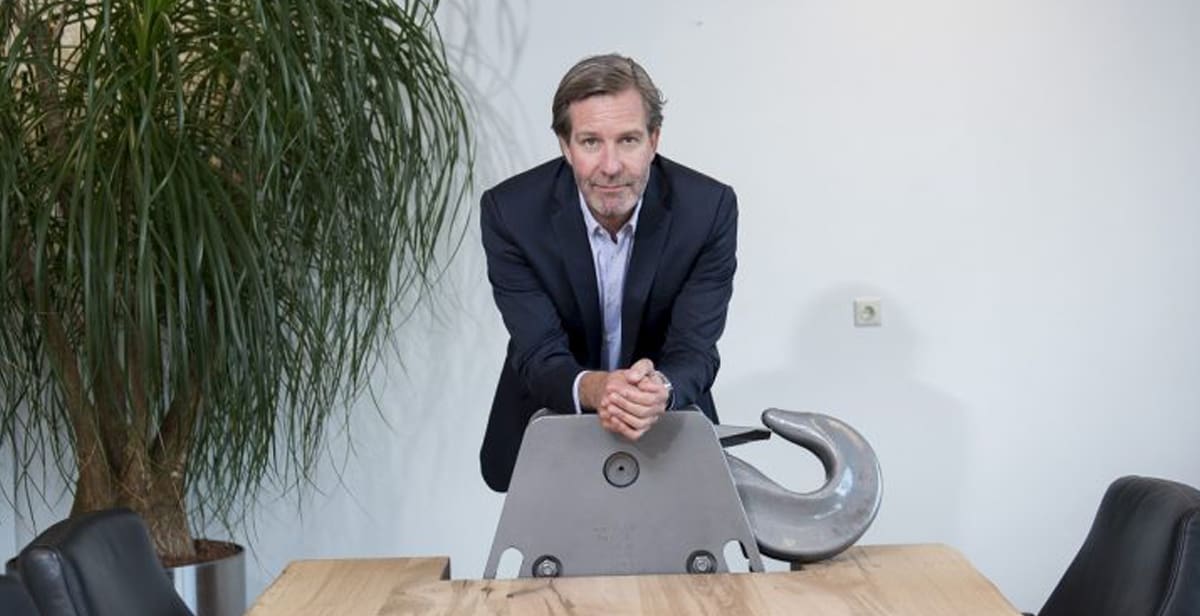
They immediately catch your eye as you walk in. In Rekers’ office, impressive hoists stand on either side of the conference table. They’re massive, heavy beasts—almost impossible to move. When Rekers looks at them, a boyish smile spreads across his face. “I love big-boy toys—tough, robust machinery. When I see a block like that, I think: Wow! And these are just the small ones, you know. There are some that are too tall to fit in this office.”
Welcome to Liebherr Netherlands, a specialized company where mechanics, electronics, and software come together in the most modern designs of cranes. The company holds more than 50 percent of the national market. So it’s no surprise that this Dutch branch is a key location within Liebherr, a diversified company with no fewer than 42,000 employees worldwide, spread across some 140 Liebherr entities. Its production activities range from refrigerators and freezers to earth-moving equipment, engines, aircraft parts, and mechanical components for wind turbines, among other things.
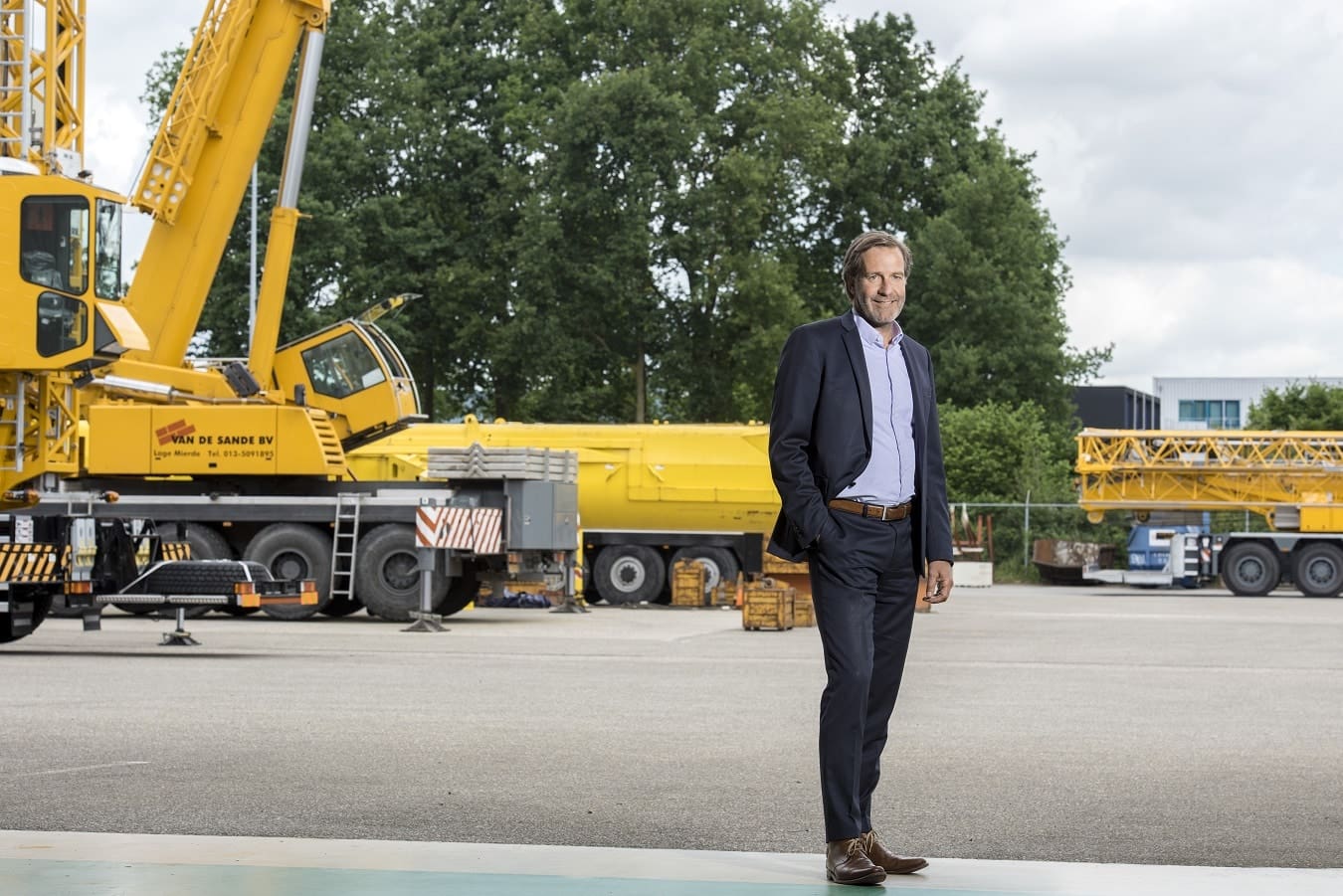
Here in Amersfoort, twenty technicians prepare cranes for delivery to the customer. What they do every day is a remarkable feat of mechatronics—a complex field that brings together electrical engineering, mechanical engineering, and measurement and control technology. Ultimately, it all comes down to providing the best service to the customer, says Rekers. “Apart from perfect products, that’s our greatest strength. And that’s something I constantly emphasize. Things can always go wrong, but that’s when we need to be there. I always say: that crane has to keep running; the customer can’t afford to stand still. The well-known crane company Mammoet, for example, is a major customer of ours. We want to offer them nothing but the best service.
We live by that principle with Liebherr worldwide; we’re known for it. Japan, Russia: Liebherr has people stationed there or sends people there if a customer needs it. That mindset also means our technicians sometimes have to spring into action at less-than-usual times. We strive to make room within our company for individual situations and needs as well. That’s one of my biggest challenges as director. We want to create a family atmosphere, and that’s only possible if employees feel seen and heard. Understanding each other’s situations ultimately leads to people wanting to stay with the company longer.”
Good accessibility
For 25 years, Rekers worked at Nooteboom Trailers in Wijchen, the last 10 of which as commercial director. With his 50th birthday approaching, he began to wonder: should he stay where he was comfortable, or take on one more new challenge? “And then this opportunity came along,” Rekers says with a laugh. “It’s a massive company, but the Liebherr family is very approachable. There’s only one level between me and them. They’re very modest, approachable, and warm people. Liebherr has that typical German thoroughness. We’re not over the top. We have a very neat and well-equipped facility, but it’s not glitz and glamour. We’re a financially sound company. Save first, then spend.”
With that character, Liebherr Netherlands fits right in with the Amersfoort region. It has been that way for 35 years. “Our technicians are mainly from the region. In places like Nijkerk and Barneveld, people still grow up surrounded by the outdoors. There, you have the space to work with big machines and tinker with engines. I used to do that myself; when I was fourteen, I had a dirt track car. That’s how you quickly develop a feel for rugged technology and mechanics. That’s why this feels like a natural environment to me.”
The company was particularly drawn to Amersfoort’s central location. Rekers: “If there’s one city that lies right in the middle of the Netherlands, it’s Amersfoort. Take a map, put an arrow at the most central point of the Netherlands, and you’ll end up in Amersfoort. You simply can’t ignore it. Our customers appreciate that central location and easy accessibility. We never have to apologize to a customer for being too far away.’
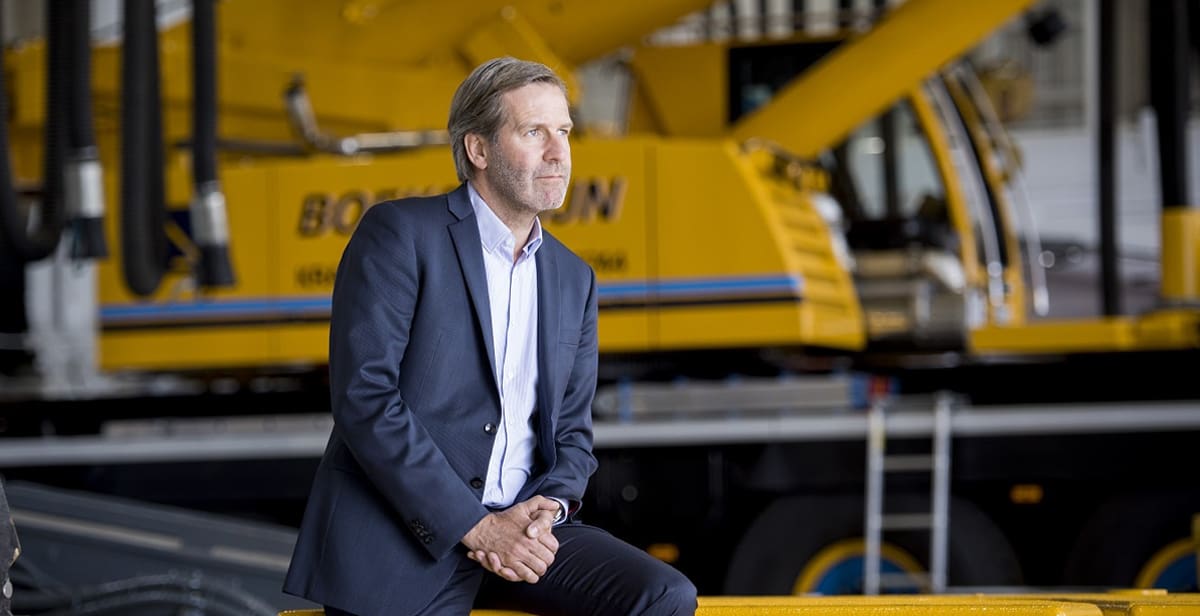
Every month, Rekers travels back and forth to the factory in Germany at least twice. It’s easy to get there from Amersfoort thanks to good transportation links. Rekers: “I fly regularly myself. If I drive during the day, I can be at Schiphol in 40 minutes. But there are also very good, fast train connections between Germany and Amersfoort. And from Germany, it’s also easy to drive via the A12 and the A1. The roads are good all the way to Amersfoort; it’s only after that that traffic can get slow.”
Rekers has a good relationship with the city of Amersfoort. Last year, he joined a bus trip organized by the city and the German-Dutch Chamber of Commerce to Dr. Oetker in Bielefeld, Germany. There, during a roundtable discussion, German companies interested in Amersfoort as a business location were able to ask questions about doing business in the Netherlands and Amersfoort. Rekers couldn’t recommend his company’s home base highly enough. “I took a plunge in Amersfoort, and I’m glad I did.”

More Entrepreneur Stories
Uncategorized
Business Travel Accommodations
Are you looking for a place to stay for business in Amersfoort?

Education
Young talent needs room to grow
How can we give young talent the opportunity today to make a difference tomorrow?
Entrepreneurship
HydroLogic: Smart Water Management
“HydroLogic is doing everything it can to prevent ‘Amersfoort by the Sea.’”
Education
Amersfoort Welcomes New Students and Builds Connections with the Business Community
During KEI-Start Amersfoort, new students explore Amersfoort, meet local businesses, and lay the foundation for their connection to the city.