
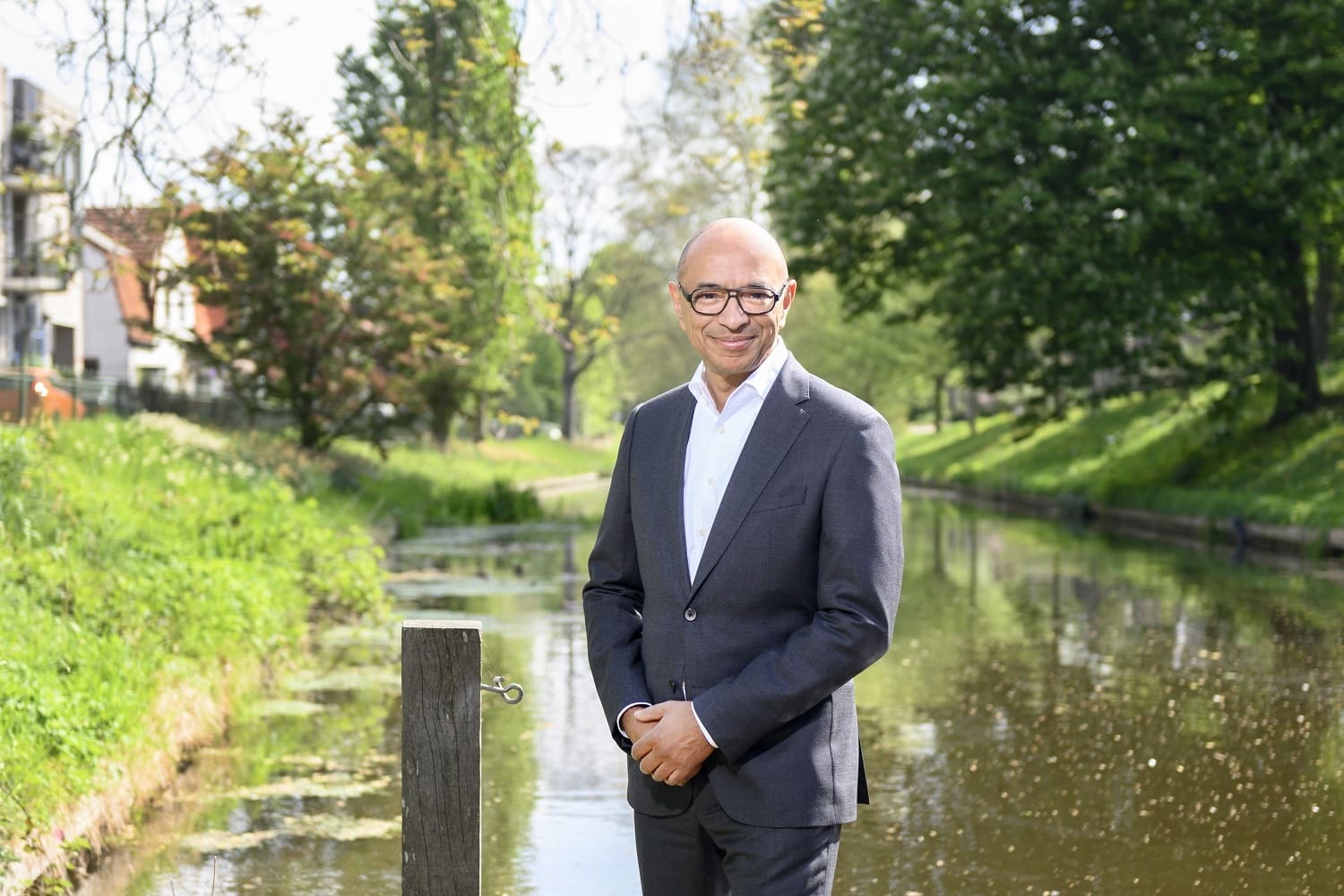
Lobbrecht remembers well how, back in the day, he had to explain over and over again at birthday parties what he actually did. Water management? The term alone raised many eyebrows. How different things are now. First, Willem-Alexander—then still a prince—began focusing on what he called “water management,” and then the effects of climate change came into the picture. The field has been firmly on the radar ever since; water boards, government agencies, and Rijkswaterstaat make good use of the knowledge and expertise of research and consulting firms like HydroLogic, which Lobbrecht started in 2000 from his attic room and which now employs forty specialists.
“In that sense, we’ve been lucky,” Lobbrecht acknowledges. “But on the other hand, we view it as a social responsibility to do our part to promote climate resilience. Our employees are deeply committed to addressing the effects of climate change and everything they can personally do to combat it. Our company thrives on that enthusiasm and, in addition, on customer demand driven by growing problems—such as flooding and drought—that will become increasingly common in the Netherlands in the coming years. Helping to tackle those problems is our greatest passion.”
That sounds like a massive undertaking. How does HydroLogic approach this? Essentially the same way as nearly twenty years ago. Lobbrecht, who earned his Ph.D. from Delft University of Technology and was then an associate professor at UNESCO-IHE in the field of hydroinformatics, was one of the first researchers to see opportunities in the combination of water and ICT. “It’s so commonplace nowadays that no one bats an eye, but back then it attracted a lot of attention,” he says. “Modeling was just emerging at the time—simulations to analyze how water systems behave during heavy rain or extreme drought. You need powerful ICT for those computer models—they involve a huge number of calculations. What we’ve done from the start—and continue to do—is use ICT to constantly take that modeling a step further.”
Great base for exploring
It has proven to be a real asset to Dutch water management. A large proportion of the water boards in the Netherlands, a quarter of all municipalities, and now also Rijkswaterstaat—HydroLogic now uses cloud-based ICT systems to collect water data and information from radars and satellites, big data analysis, water flow modeling, and forecasting water levels up to several days in advance as well as long-term projections in light of climate change. The HydroLogic team has incorporated all of this into a single product: HydroNET, a web-based decision support system that collects and processes data and information using algorithms developed in-house.
Lobbrecht and his colleagues present the resulting information and recommendations to water managers in special Water Control Rooms. These are digital control rooms that provide both a global overview and detailed insights into the status of local water management, such as surface and groundwater levels, water quality, and forecasts for floods and droughts. Based on this information, water managers can make the right decisions at the right time and manage water as efficiently as possible.
Water authorities use HydroNET. Lobbrecht: “Thanks to this information, they save water, prevent damage, and are better able to cope with extremes.” The control rooms also lead to better collaboration across the chain of organizations involved in water management. They support much better coordination, ensuring that the water system’s capacities are utilized optimally and water is distributed effectively. A great recent example: last summer, water boards and Rijkswaterstaat made extensive use of HydroLogic’s control rooms to combat the drought in the western Netherlands.’
HydroLogic is also making a name for itself internationally. “South Africa is facing a massive drought problem. Have you heard of ‘Day Zero’? That’s the day when freshwater runs out and there’s no more drinking water available. That day nearly arrived in South Africa last summer. You can imagine what happens then: total chaos. That’s why, together with a partner firm, we developed the Water Auditing product, which uses satellites to monitor, plot by plot, where too much water is being used for agriculture. The use of such products has already led to a 25 percent reduction in water use in northeastern South Africa, leaving more water available for drinking.’
Thanks in no small part to HydroLogic, the Netherlands is a global leader in water management. “Absolutely,” says Lobbrecht. “We’re doing this with a group of companies working on this issue. We’re also sharing this story internationally. The Netherlands has a vested interest in this, doesn’t it? If the changes continue at this rate, we’ll be the first to face a major problem. People sometimes say ‘Amersfoort by the sea,’ but if sea levels really rise significantly, we’ll soon be ‘Amersfoort in the sea.’”
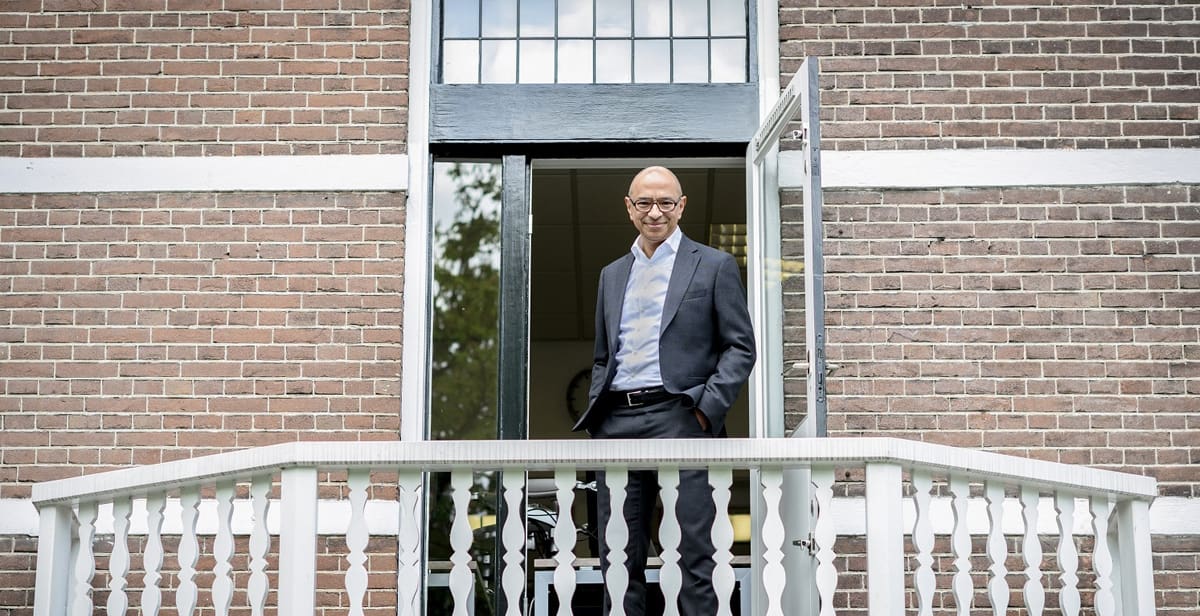
Amersfoort is HydroLogic’s familiar home base. It has been a great place for Lobbrecht—who lives there himself—and his team for nearly two decades. Through his office window, he can see the majestic Onze Lieve Vrouwetoren in all its pride and glory. “The cadastral zero point of the country,” Lobbrecht notes.
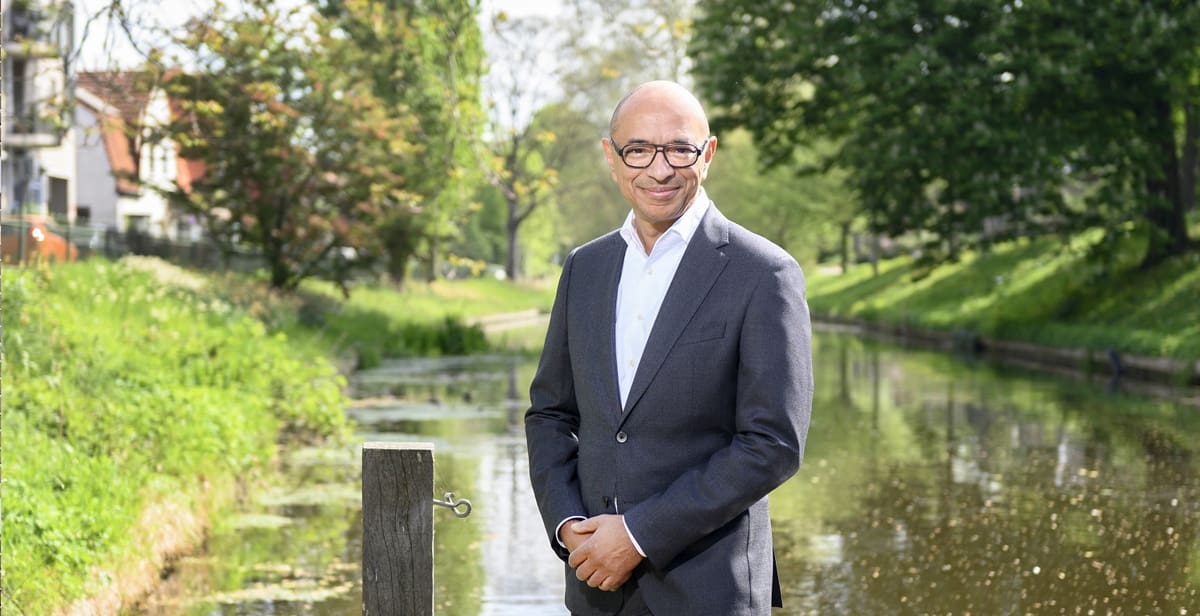
He calls Amersfoort “a beautiful city with a pleasant living and working environment.” “We’ve been able to grow here in a positive way. The central location and accessibility are fantastic; the major transportation routes—both roads and railways—run right past the city. Our location on the south side of downtown, in particular, is an ideal spot from which to serve the entire country. It’s a great base for our people working on international projects—you can get to Schiphol in no time. We can reach virtually all of our clients in the Netherlands within an hour and a half. Conversely, we’re easily accessible to them, and we’re happy to welcome them to our office. For most clients, this is a great opportunity to step outside their regular work environment and collaborate with us on solving a water challenge or devising a water strategy.”
Speaking of collaboration: that also runs smoothly in Amersfoort thanks to the presence of many companies involved in geo, ICT, or water—or, like HydroLogic, operating at the intersection of these fields. Amersfoort can definitely call itself a “geo-city,” Lobbrecht believes. He adds with a laugh: “I’d add ‘water’ to that. For example, STOWA, Het Waterschapshuis, Arcadis, and Royal HaskoningDHV are all based here, and they all deal with water issues.” But it’s striking just how many geo-companies are concentrated in Amersfoort. That creates a magnet effect; it’s relatively easy to collaborate with your neighbors. Aside from the benefits for our work, that presence generates a certain energy. We can join forces, for example, to find a solution to the shortage of young, highly educated technical talent. If Amersfoort were to bring technology programs here, the city could become even more of a central hub where water, geo, and ICT converge and thrive.”
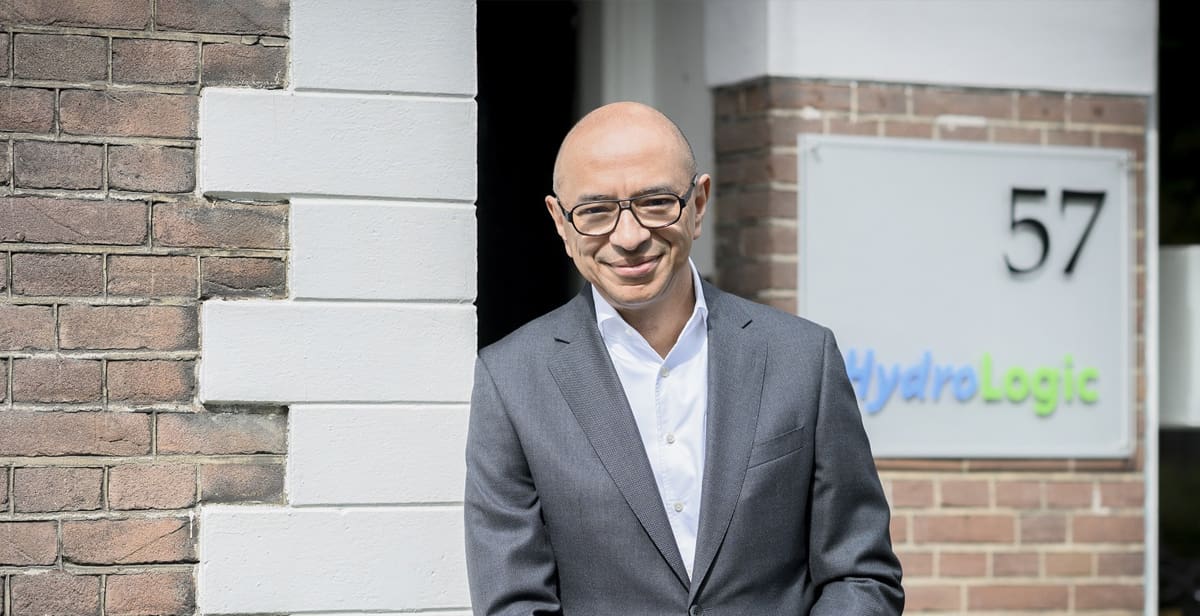
And Lobbrecht knows from experience that Amersfoort is also an ideal testing ground. “It’s a medium-sized city—now growing into a fairly large one—where there are plenty of water-related issues to investigate and for which we can offer smart solutions. That’s very interesting for scaling up to other areas or larger cities.”
The city of Amersfoort supports HydroLogic in this area, in part by making a package of data available for research purposes. “Think of water levels, overflows, water quality, and geoinformation,” Lobbrecht explains. “We make grateful use of that data. We’ve had an excellent working relationship with the city of Amersfoort for years, including when it comes to applied research on climate adaptation.”
HydroValley was the first collaborative project with Amersfoort, launched back in 2011, with the central question: How can we better manage urban flooding? This was followed by HydroCity, a study on the climate-adaptive city in collaboration with the geospatial company Neo. Since then, we’ve joined forces with other governments and companies in the European project SCOREwater. This project focuses on information and analysis products for the climate-adaptive city. In addition to Barcelona and Gothenburg, the study focuses on… Amersfoort.
Lobbrecht: “The situation in Amersfoort is a representative example for the Netherlands, and thus truly a city that serves as a model. We have both flat and sloping areas here, so the challenges faced by cities with both higher-elevation, hilly terrain and lower-lying, flat areas are all present here.” When it rains heavily, water flows rapidly down from the Amersfoortse Berg and collects in areas where the terrain flattens out—roughly here, near our office. I still remember how, for the HydroCity project, we’d go outside during every downpour to measure the water on the street, to verify the results of our hydrological models. In preparation, yellow boots and measuring tapes were kept ready in the office hallway. For us, Amersfoort isn’t just a great city to run a business from, but certainly also a great place to be actively involved in the business community.’

More Entrepreneur Stories

Uncategorized
Business Travel Accommodations
Are you looking for a place to stay for business in Amersfoort?

Education
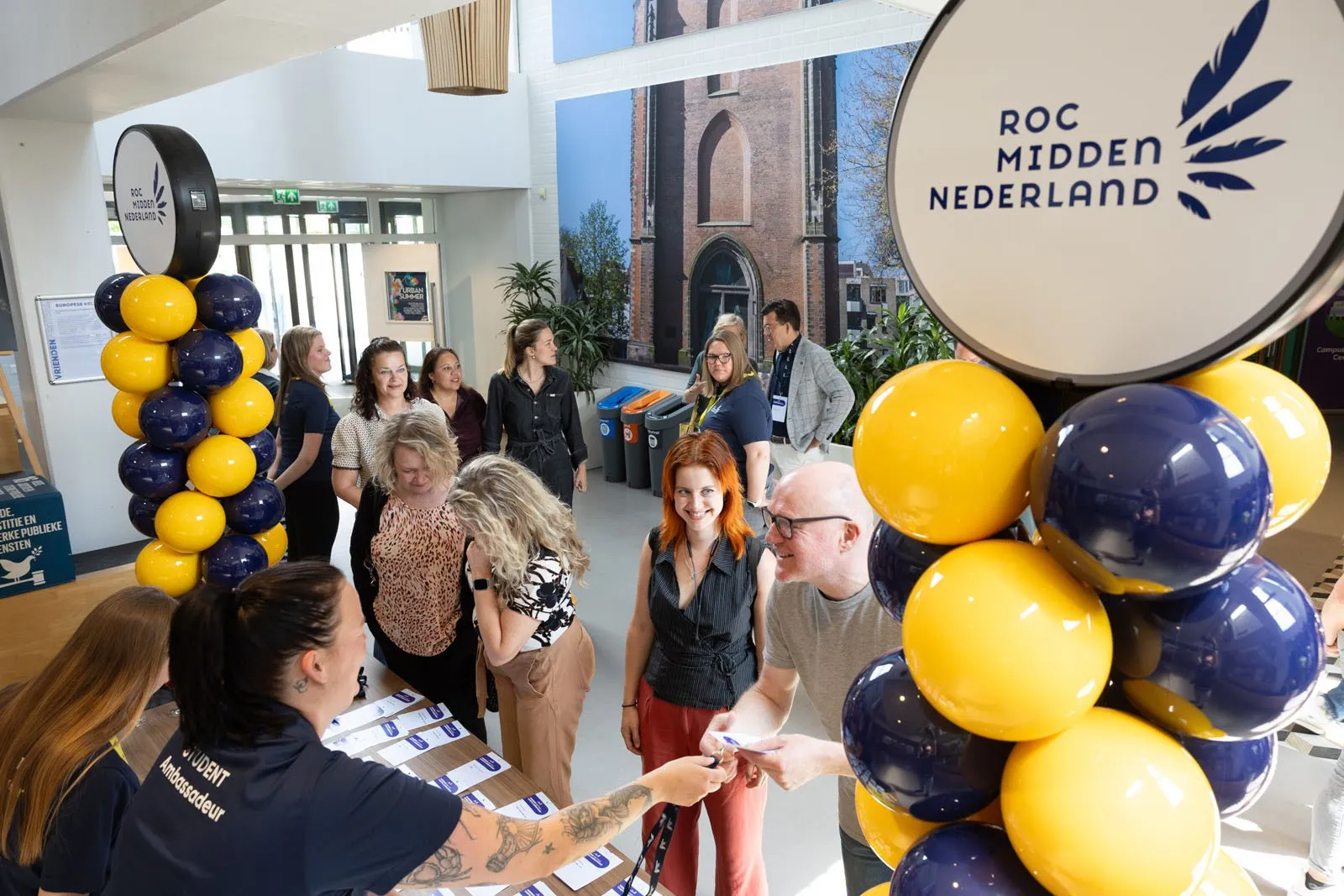
Young talent needs room to grow
How can we give young talent the opportunity today to make a difference tomorrow?
Entrepreneurship
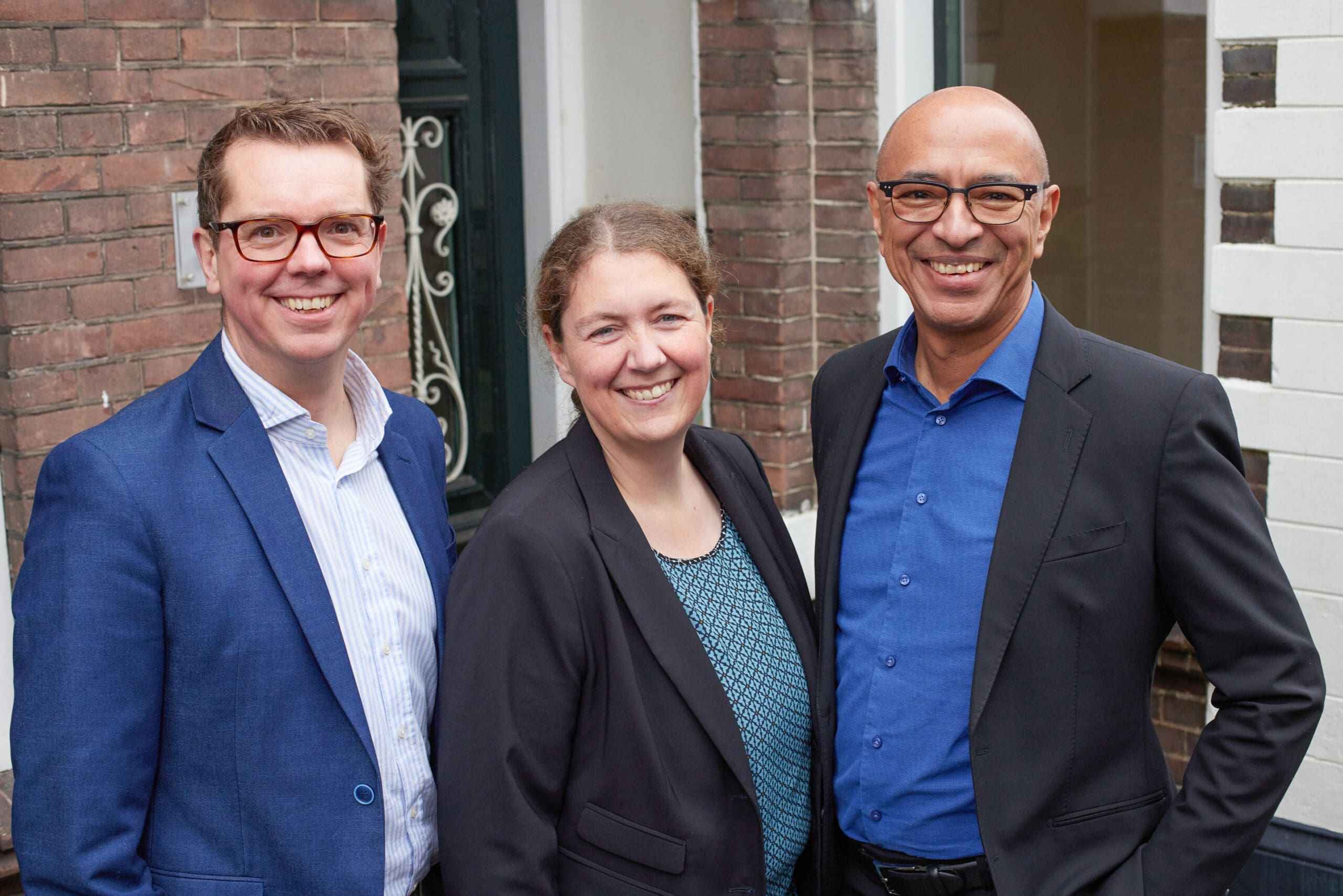
HydroLogic: Smart Water Management
“HydroLogic is doing everything it can to prevent ‘Amersfoort by the Sea.’”
Education
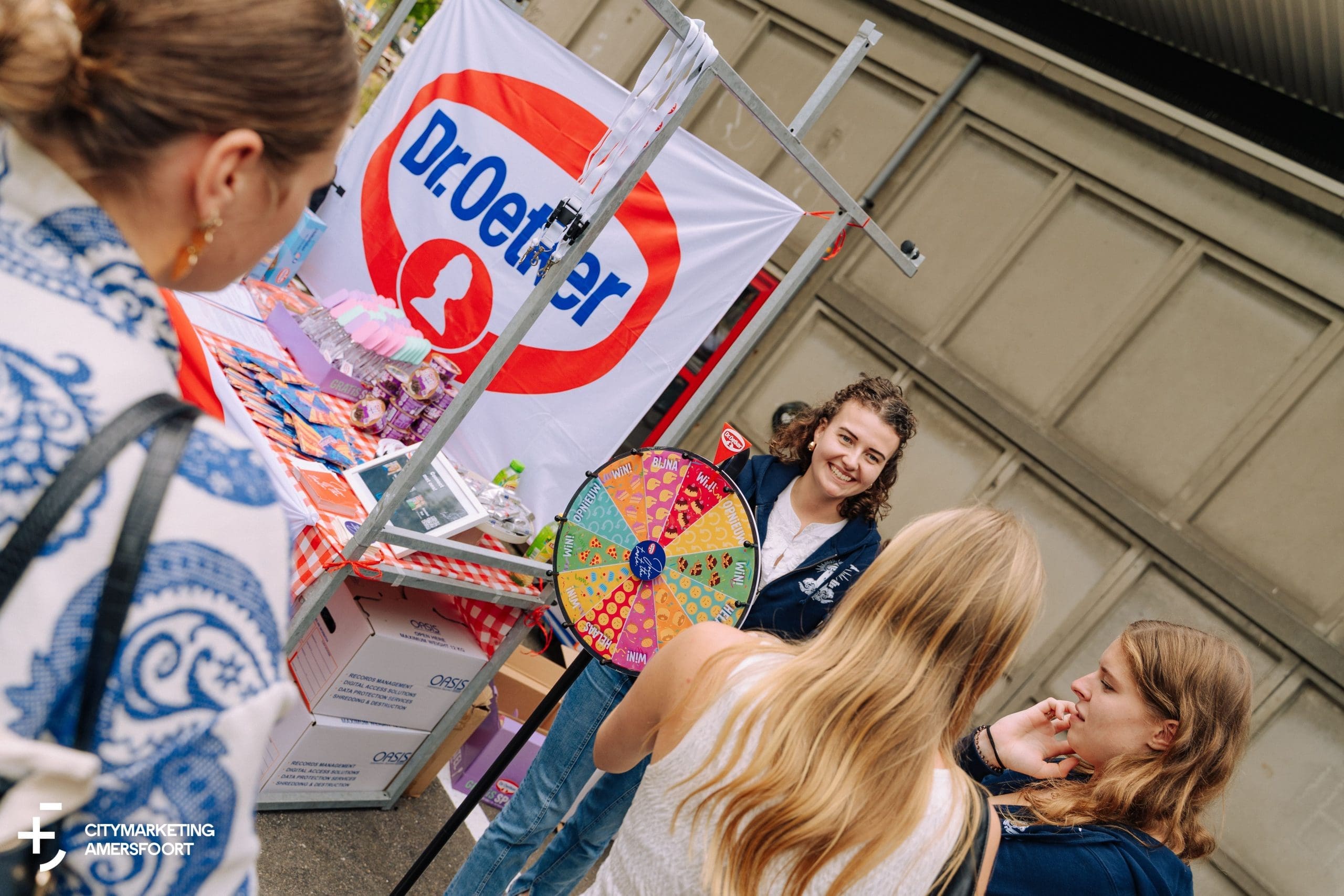
Amersfoort Welcomes New Students and Builds Connections with the Business Community
During KEI-Start Amersfoort, new students explore Amersfoort, meet local businesses, and lay the foundation for their connection to the city.