
Amersfoort has a new “Kei.” Not a sculpture this time, but the Kei for the Bee Foundation. The initiative brings together two pressing issues that, at first glance, seem to have little to do with each other: people who have fallen out of the labor market and wild bees that are finding fewer and fewer places to live in the city. According to chairman Johan Bolt, it is precisely this combination that makes the initiative so powerful.
Two problems, one solution
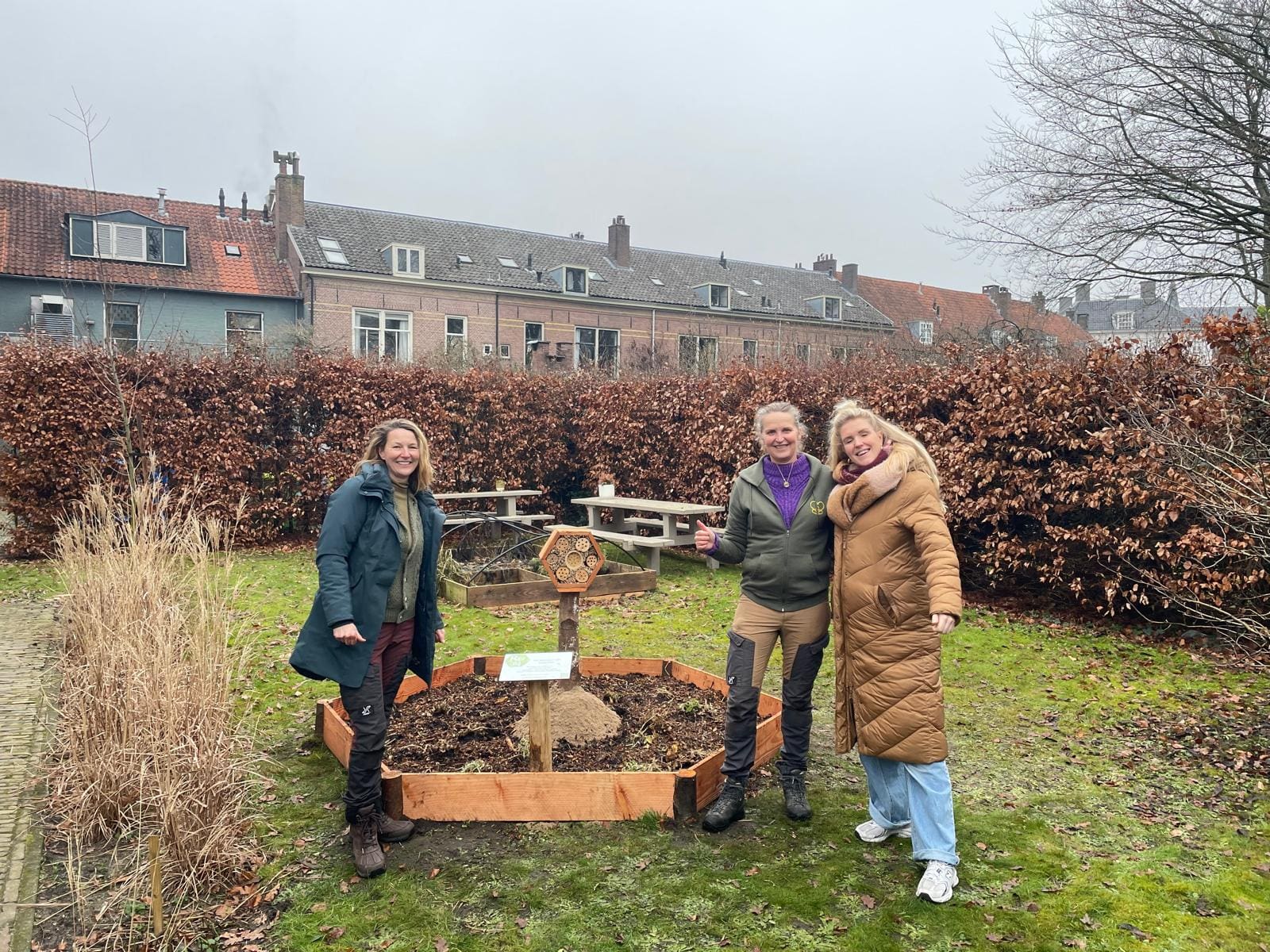
It all started with Karen Burgering and Nanda van Ginkel of BeeWell. A few years ago, they created a natural garden in Hoogland West, on Coelhorsterweg. It was intended as a place where biodiversity and people could recover together. What they saw was compelling: people who had been out of work for some time visibly flourished. The combination of working outdoors, structure, and personal guidance proved to be particularly powerful. At the same time, biodiversity in the garden visibly increased. More flowers, more insects, and many more wild bees.
When their network asked whether this concept was scalable, they turned to Johan. “We started brainstorming together: how do you translate the impact of a single large garden into a model that can be applied to many more locations throughout the city?”
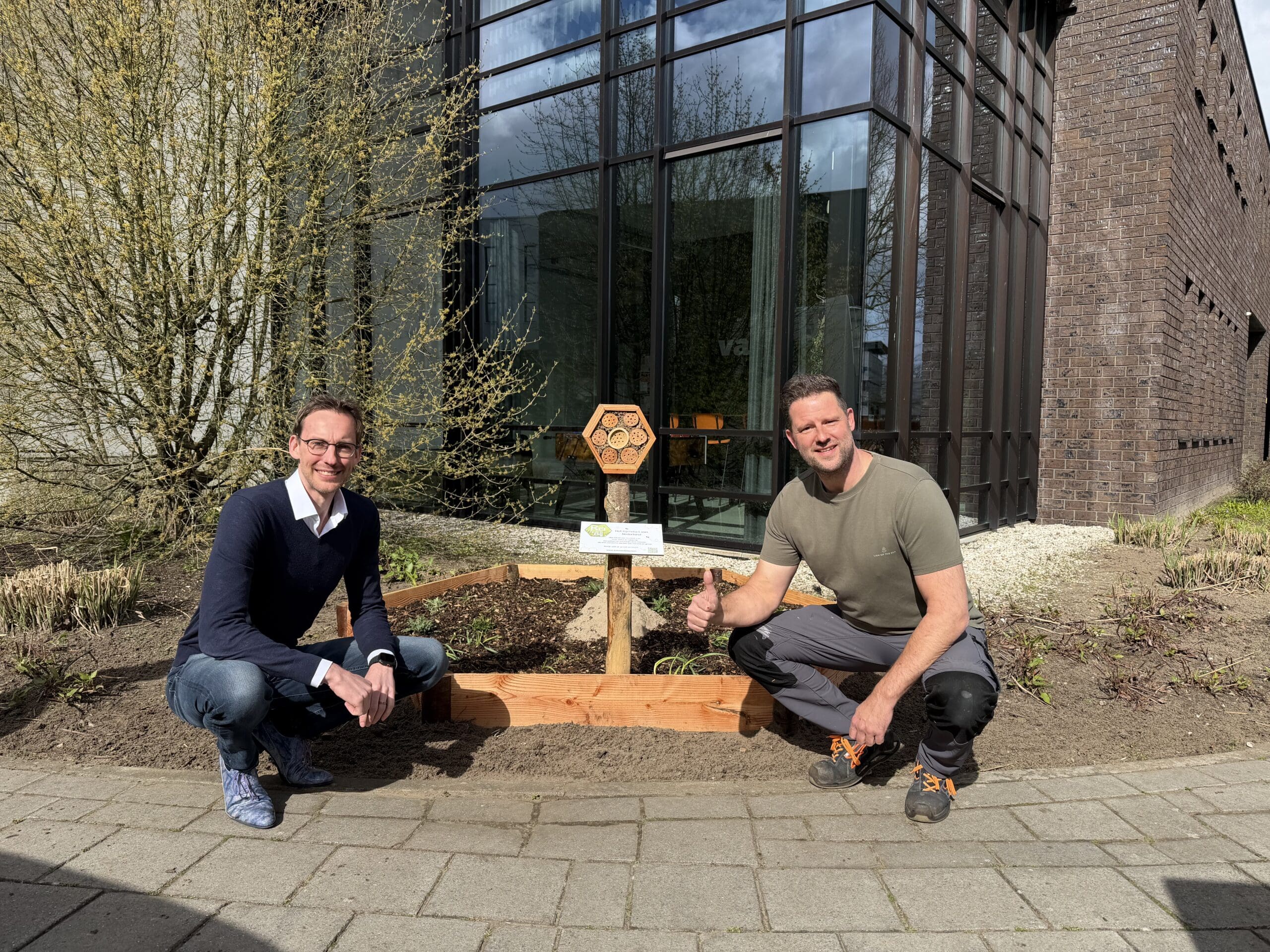
The answer was the 4 m² honeycomb-shaped BeeWell garden. Compact, 100% ecological, and suitable for installation anywhere there’s currently grass, pavement, or empty space. Created, installed, and maintained by people who are unemployed.
Don’t just watch—take
action
Wild bees are struggling, even though they play an indispensable role in pollinating our food. Urbanization and habitat fragmentation mean they’re finding fewer and fewer food sources and nesting sites. On average, wild bees don’t fly farther than 250 to 350 meters. If flower-rich areas are too far apart, populations become isolated.
By strategically placing BeeWell gardens, Kei voor de Bij connects existing flowering areas. They call this network the “Bee Duct.” With the introduction of the European Nature Restoration Act, biodiversity restoration is shifting from an ambition to an obligation. “We don’t want to stand by and watch. We want to contribute by simply taking action.”
033 in the spring, 033 in the summer, 033 in late summer
The goal for 2026 is clear: to create three sets of 33 BeeWell gardens in Amersfoort, spread out over the flowering season. That’s a total of 99 gardens in a single year. There are already beautiful gardens at Mariënhof, St. Pieters and Bloklands Gasthuis, Van Bekkum, De Kosmos elementary school, and Bergpaviljoen. But more locations are needed.
The Amersfoort Challenge is helping with this. They connect the initiative to the local business community, match companies with specific requests for help, and ensure that engagement actually leads to action. This way, it becomes not just an initiative of a single foundation, but a city-wide movement.
Tangible and Lasting
Many entrepreneurs want to make a difference locally but are looking for something concrete, visible, and credible. A BeeWell garden is just that. You can see it. It makes you happy. And its impact lasts for years.
Job Schouten (Van Bekkum):
“A beautiful BeeWell garden on our property that provides a home for wild bees and offers people a new opportunity—I didn’t have to think twice about that. It would be great if more companies signed up for this.”
Companies can help in various ways: by providing a location, donating materials, funding one or more gardens, allowing employees to volunteer their time, or sharing the campaign within their network. Fulfilling an SROI requirement is also an option.
Amersfoort is the first city where this is being rolled out on a large scale, but the focus is already on the rest of the Netherlands.
Get Involved
:
Want to know how your company can contribute? Explore the options at maakmedemogelijk.nl or contact Johan Bolt directly at [email protected] or 06 12 89 89 73.

More Entrepreneur Stories

Uncategorized
Business Travel Accommodations
Are you looking for a place to stay for business in Amersfoort?

Education
Young talent needs room to grow
How can we give young talent the opportunity today to make a difference tomorrow?
Entrepreneurship
HydroLogic: Smart Water Management
“HydroLogic is doing everything it can to prevent ‘Amersfoort by the Sea.’”
Education
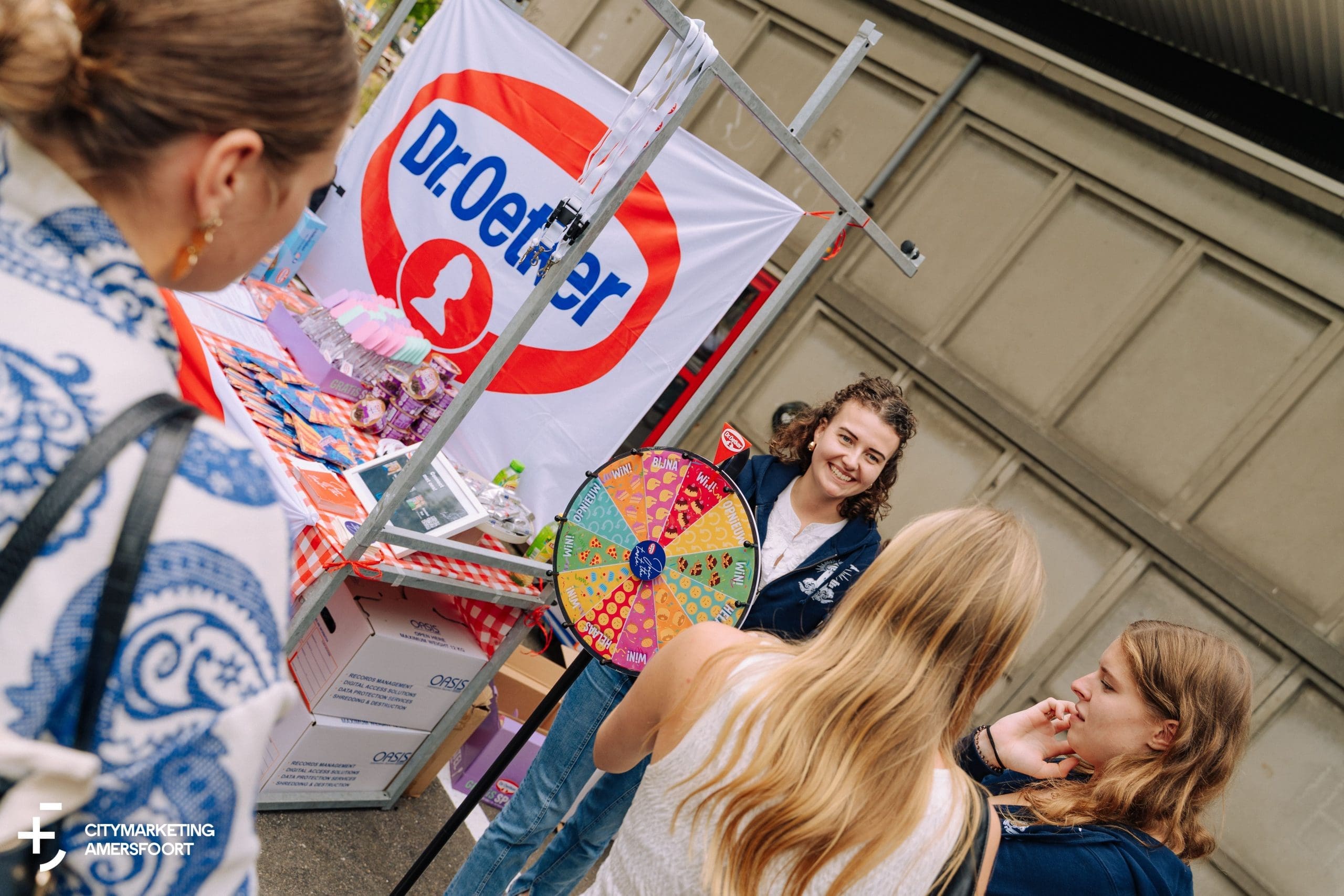
Amersfoort Welcomes New Students and Builds Connections with the Business Community
During KEI-Start Amersfoort, new students explore Amersfoort, meet local businesses, and lay the foundation for their connection to the city.