
Eindhoven is Brainport, the Gelderse Vallei is Food Valley, and the Amersfoort-Utrecht corridor is becoming Earth Valley. What does that mean?
Koşer Kaya: “The presence of so many companies in this region that deal with spatial issues and geodata is unique. Bringing them together is the key. The network that is now emerging will form the foundation of Earth Valley. And we’re linking that network—that ecosystem of innovative companies and research institutions—to key aspects of major societal challenges we face as a government, such as climate change, the energy transition, and the housing shortage. This allows us to develop better policies in these areas. That’s a huge benefit.”

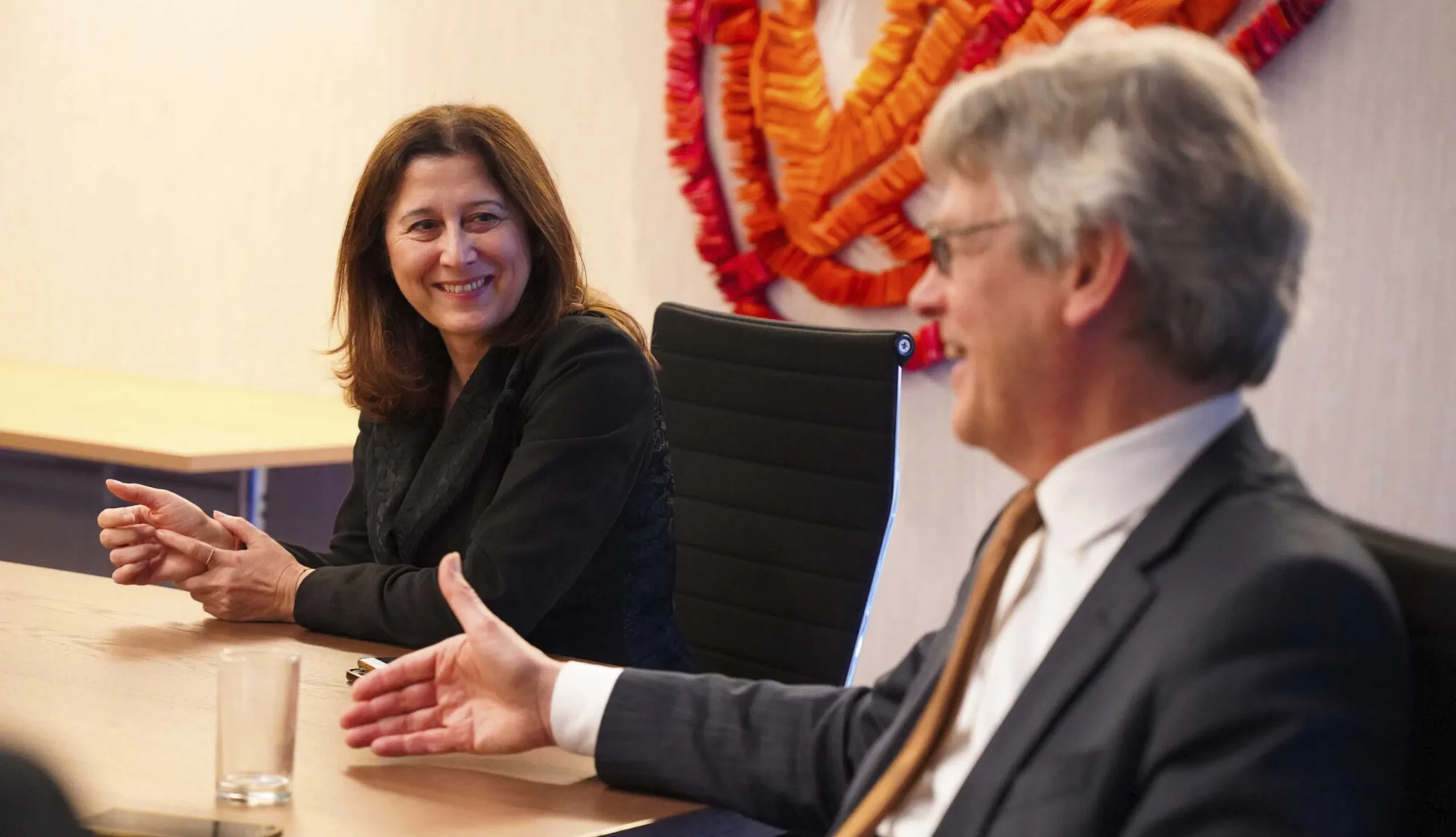
Photo: Councilwoman Fatma Koşer Kaya
Van Daal: “Earth Valley isn’t something we announce today and see materialize tomorrow. It’s like an oil slick that keeps spreading further and further. What’s important is this: Earth Valley is a broad concept, and we need to give it substance. We need a clear, logical proposition that people can understand. A few examples: we’re currently focusing on sustainable built environments, climate adaptation, and mobility. We’re doing this based on a foundation of geodata and digital twins—virtual copies of reality. We need to further refine this: what do we specifically want to do, and what don’t we? Every municipality faces the same heat stress, to name one example. So once we’re clear on where our priorities lie to make a difference, we can connect the right companies and research institutions to the challenges faced by government entities. The great thing is that the government plays a catalytic role. Government agencies are the clients within Earth Valley and ultimately reap additional benefits from it, because the outcomes are of great value to the living environment.’
Why and how did Earth Valley come about?
Bolsius: “To answer that, it’s best to go back to the very beginning. When you become mayor of Amersfoort, you quickly hear: Amersfoort is the cadastral center of the Netherlands. I was then approached to become chair of the Large-Scale Topography Basic Registry, a digital map of the Netherlands that records all physical objects such as buildings, roads, water, and green spaces. That draws you into the world of various data providers—from the Ministry of Defense to Rijkswaterstaat—and you realize that gaps are forming in that map because the data doesn’t align. When building a road, that’s complicated, because the road has to run continuously. Thanks to my work visits, I get to visit many of those organizations, and that makes you think: they’re right next to each other, but they don’t know each other very well. We’ve started connecting those worlds. That process has really gained momentum since we began linking all that digital data to all those societal issues. It’s wonderful to see how things are now coming together in Earth Valley.”
Koşer Kaya: “When I came here from The Hague as an alderman, I had one thing very clear in my mind: Amersfoort is actually an innovative city, so why are they so modest? They should definitely show that off a bit more. Lucas Bolsius had already held a meeting with geo-companies, and when I arrived, we did that a second time. I was struck once again by the same sense of wonder: what enormous potential there is here, and why don’t we know about it? I served in the House of Representatives for a long time, but I never once heard anyone mention how interesting the Amersfoort–Utrecht region is. Even though that’s naturally the case. So, together with GeoBusiness Nederland, we told anyone who would listen about the presence of all those geo-companies, so that the message would really sink in. Subsequently, the Utrecht Region Regional Development Agency and the province became involved, which led us to view this as an extremely important area with great potential, especially in light of the societal challenges we face.’
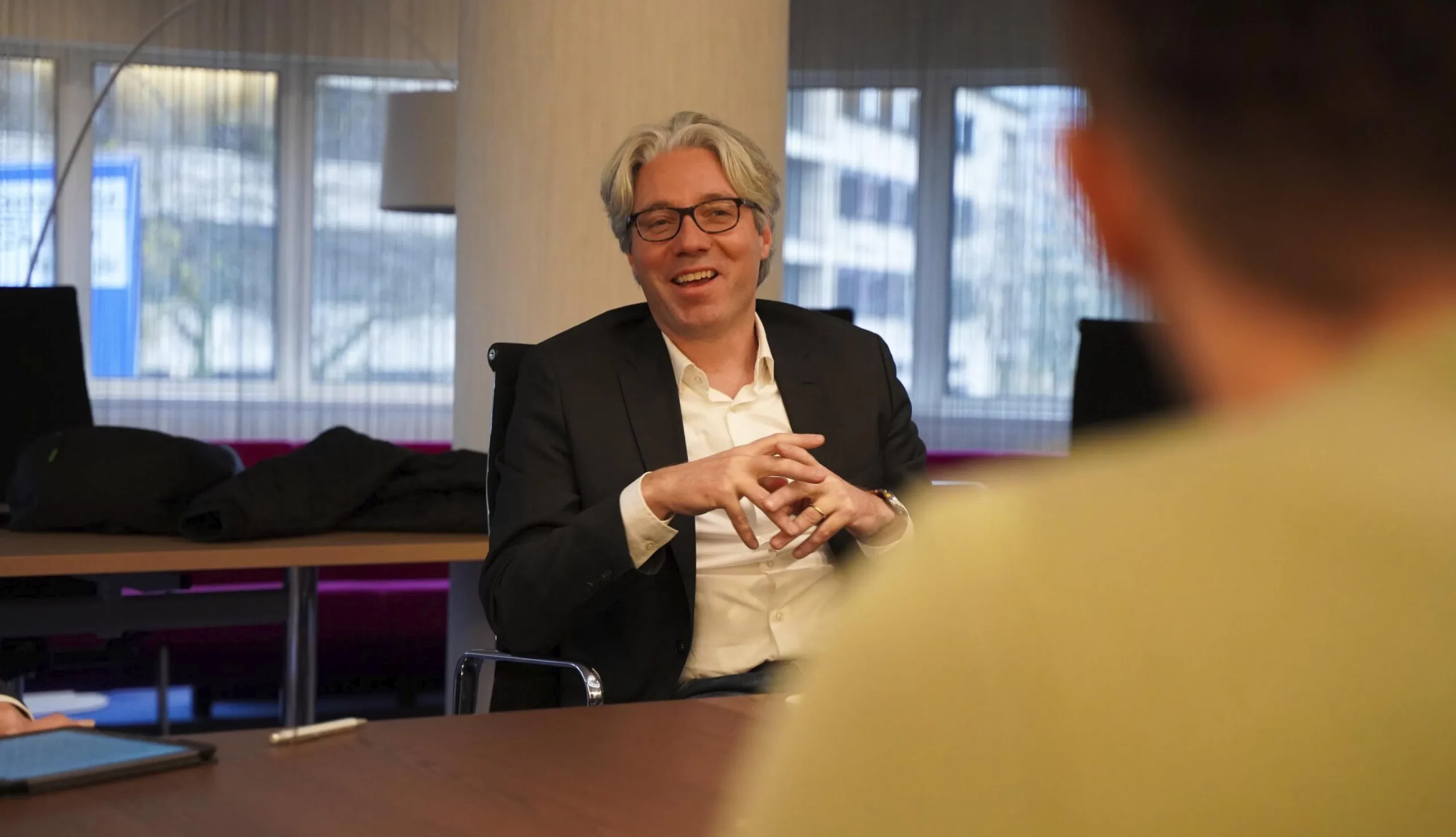
Photo: Wouter van Daal of ROM Utrecht Region
Wouter, you refer to Amersfoort as the “starter motor of the new ecosystem.” Can you elaborate on that?
Van Daal: “Over the past ten years, there’s been a lot of talk in Amersfoort about the presence of geo-companies. Even back then, there was a lot of energy among the parties involved. The second phase began last spring. Following a study by the consulting firm BMC, we conducted our own broader study, which revealed that the knowledge and expertise weren’t limited to Amersfoort alone, but extended along the entire Amersfoort-Utrecht corridor. Our first observation was therefore: Amersfoort is the driving force behind the new ecosystem, but we need to expand its reach. The second thing we noticed: the municipality is often the end customer. Seventy percent of these companies’ revenue comes from government entities. The third finding: government entities are grappling with massive societal challenges, such as climate change, the energy transition, and housing construction. The new coalition agreement has just been presented, and it largely addresses the very issues these companies are tackling. We have therefore linked the sector more clearly to these issues, making the government’s active role more logical. Fourth: companies in this sector are growing so rapidly—because their knowledge and expertise are so essential—that we need educational institutions to cultivate new talent. Amersfoort is home to vocational schools (MBO), higher professional education institutions (HBO), and associate degree programs, and one of the best universities in the field of geoscience is located in Utrecht; so it also makes sense to extend the axis from Amersfoort to Utrecht, thereby creating more momentum around Earth Valley.’
How can the presence of so many educational institutions, engineering firms, and geoscience companies in this area be explained?
Van Daal: “We’ve analyzed that as well. Amersfoort and Utrecht are centrally located in the Netherlands. Many service companies and consulting firms—such as Arcadis, Royal HaskoningDHV, and Sweco—have established their offices here because this region is easily accessible by car for employees commuting from Groningen and Maastricht. The second factor companies cite is that it’s simply a great place to live, with the Utrechtse Heuvelrug nearby and the city centers of Amersfoort and Utrecht offering a wealth of cultural activities. If people want to live in the tranquility of the woods, this region offers that as well. In addition, in the field of mobility, you see organizations like ProRail and NS, and the region is a hub of knowledge with many leading research institutes such as TNO, KNMI, RIVM, and Deltares, with which we can work together to meet the high demand for knowledge and talent.’
Bolsius: “For people from places like Groningen and Enschede who find jobs in the Randstad and want to live there—or at least nearby—Amersfoort is a very attractive place. It’s just a short drive, and you’re right in the heart of the Randstad.”
Koşer Kaya: “And the companies attract each other. Just look at how many of those companies are based in Amersfoort alone. Take NEO, which maps changes in living environments. In a very smart, intelligent way, they generate data that enables us to make better decisions. That’s incredibly important in terms of climate adaptation.”
Bolsius: “And look at Simacan, which devises solutions for the transportation sector based on real-time and predictive information, so that, for example, congested areas can be avoided. It’s incredibly clever how they do that. With its solution, Simacan is able to communicate in real time with a truck driver’s navigation system. Suppose that driver always takes the same route, but there’s a large demonstration taking place on that route. In that case, thanks to the navigation system, the driver is guided to the destination via a different route. So you can directly influence traffic flow. These are examples that are very beneficial to us as a city, including from a safety perspective.’

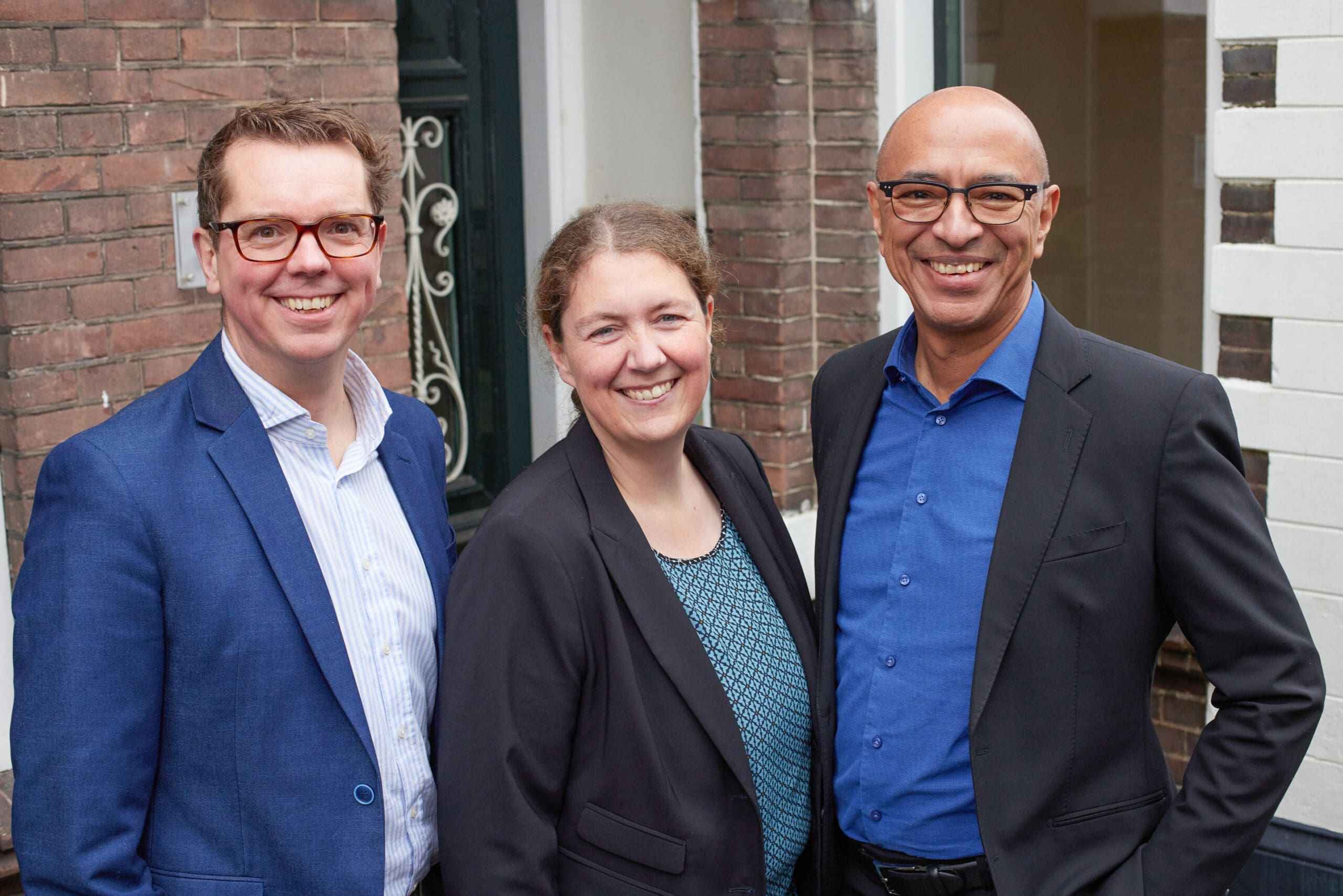
Photo: Councilwoman Fatma Koşer Kaya and Mayor Lucas Bolsius
Looking to the future: what should Earth Valley aim to achieve?
Van Daal: “In five years, this region will have an incredibly strong network of Earth Valley companies that all know each other and collaborate on major projects. Every student in Europe will then know: if I want to contribute to the major societal challenges facing the world, I need to be in the Amersfoort-Utrecht region. Companies will be able to pitch their plans more effectively across Europe, because they’ll have the Earth Valley system behind them. Earth Valley will have become a brand, an institution, making it easier to access European funding for projects. When European cities are looking to collaborate on a pilot project, they’ll call Earth Valley. We’re creating a magnet, and with that magnet, we can make an above-average contribution to all those major societal challenges.”
Koşer Kaya: “It’s no coincidence that Amersfoort is already a testing ground for Europe. The fact that they came to us for the SCOREwater project is no accident. Alongside Barcelona and Gothenburg, we’ve become the city where we’re conducting research on groundwater, precipitation, soil moisture, and heat—and how we can better adapt public spaces. Imagine if, for all those major issues at play, we could draw important conclusions from all the data we’re collecting here, using all those smart devices we have here. Not only the Netherlands can benefit from this, but the whole world. To make that happen, we do need a government that increasingly recognizes us and acknowledges us as a driving force in this effort: empowered by Amersfoort. Then we’ll really start making significant strides. Why shouldn’t we be the Silicon Valley of spatial issues and geodata? I’ve been saying this all along, but now it’s really going to happen.’
Does the old adage to measure is to know apply here?
Koşer Kaya: “That’s an important foundation, but you then have to put it into practice. You can measure and think you know, but you have to apply it and see if it works. That’s where the true value of Earth Valley lies.”
On October 27, the Earth Valley kickoff meeting took place in De Nieuwe Stad; what are the concrete next steps?
Van Daal: “We’re fortunate to have Amersfoort as the driving force; there’s a lot of enthusiasm. At the kickoff event, broad support was pledged by Provincial Executive Member Robert Strijk and several directors from Arcadis and Royal HaskoningDHV, all of whom emphasized the importance of the ecosystem. Sweco also supports the initiative. The same goes for Wilco Hazeleger, dean of Geosciences at Utrecht University, who spoke at the event. And there are many more examples like that. The great thing is: everyone we present our pitch to in just a few minutes says, “That’s right—we have a wealth of this expertise in our region.” It’s wonderful to get that confirmation—and then to hear them say, “We’re in.” It feels like a new piece of the puzzle falls into place every week.’
Bolsius: “The trick is to inform all those people in the field who may never have thought about it that way before and suddenly have a ‘eureka’ moment.”

Photo: Lucas Bolsius, Mayor of Amersfoort
Van Daal: “We’re entering a new phase to raise Earth Valley’s profile nationwide. Larger companies, in partnership with government agencies and research institutions, will play a particularly important role in this effort. But the innovative power that will drive Earth Valley’s growth will primarily come from specialized companies. Together, we will create leading consortia of companies that can tap into larger funds being set aside to address societal challenges, with substantial amounts allocated for innovation.”
Koşer Kaya: “There will be an official kick-off in March, but at the kickoff meeting, it was clear just how much positive energy all these companies and research institutions have. The underlying attitude is: we’re going to pull this off together. One of the entrepreneurs came up with a nice analogy involving the galaxy. In the past, it provided the data we used to determine time and find our way. Now we have all these companies together, and they are our stars—with all their specialized knowledge and cleverly conceived innovations—allowing us to assess societal challenges in a holistic way. That is the new galaxy we have here.”

More Entrepreneur Stories
Uncategorized
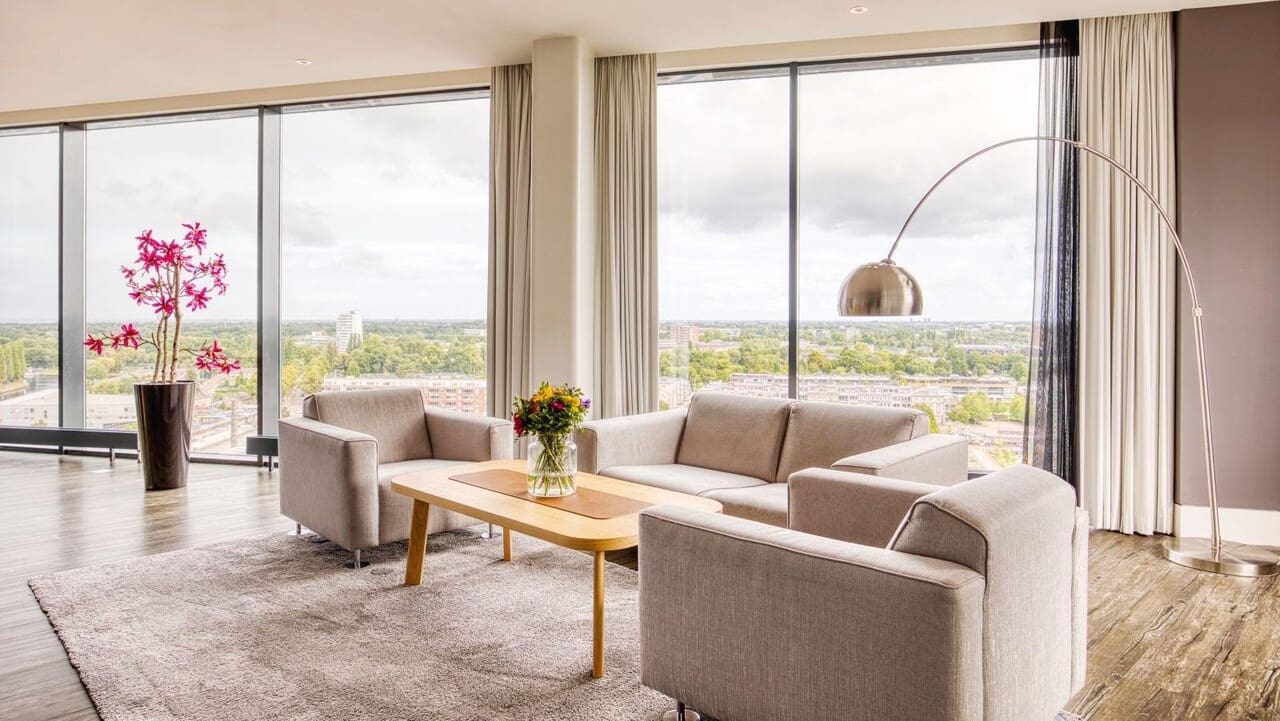
Business Travel Accommodations
Are you looking for a place to stay for business in Amersfoort?

Education
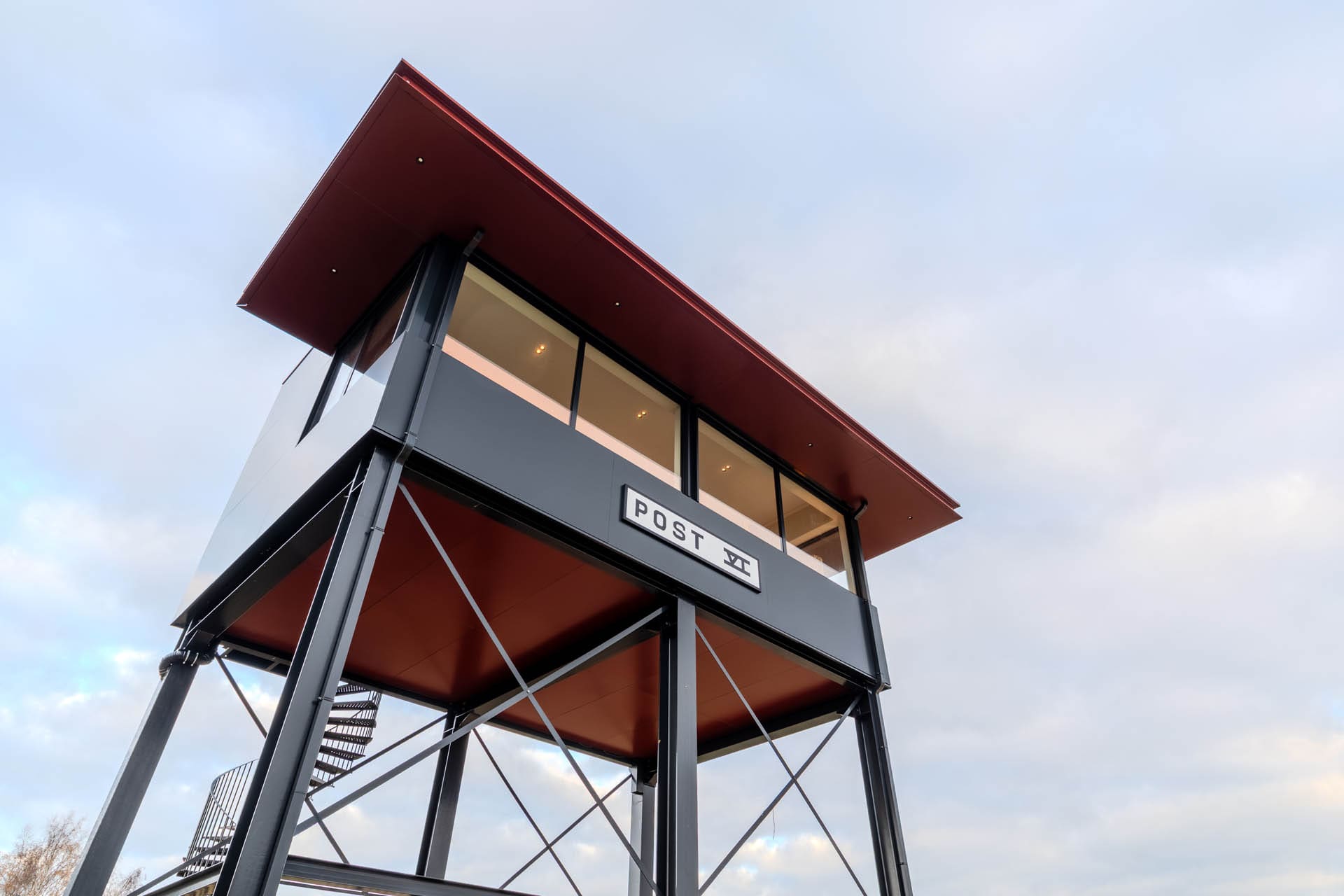
Young talent needs room to grow
How can we give young talent the opportunity today to make a difference tomorrow?
Entrepreneurship
HydroLogic: Smart Water Management
“HydroLogic is doing everything it can to prevent ‘Amersfoort by the Sea.’”
Education
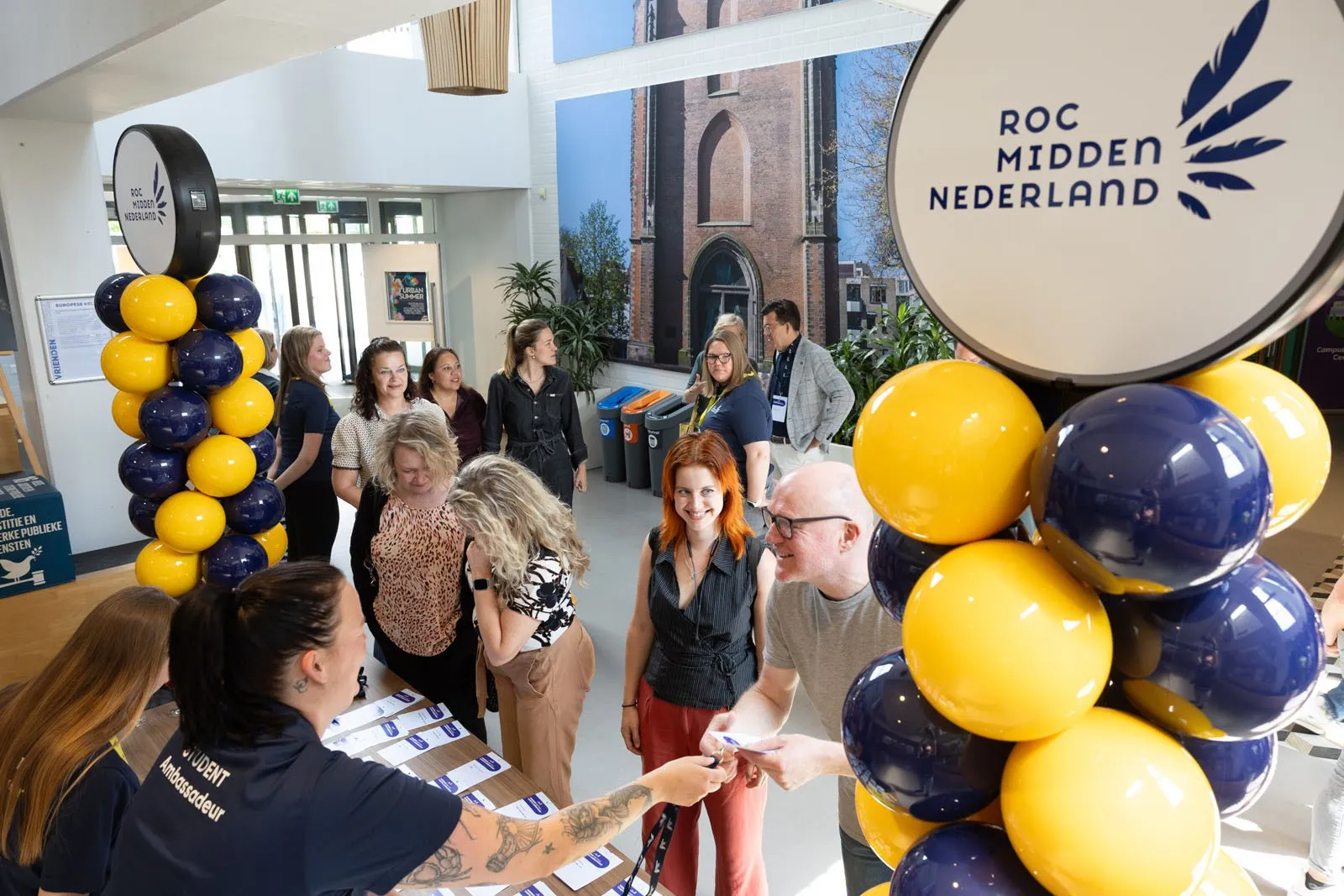
Amersfoort Welcomes New Students and Builds Connections with the Business Community
During KEI-Start Amersfoort, new students explore Amersfoort, meet local businesses, and lay the foundation for their connection to the city.