
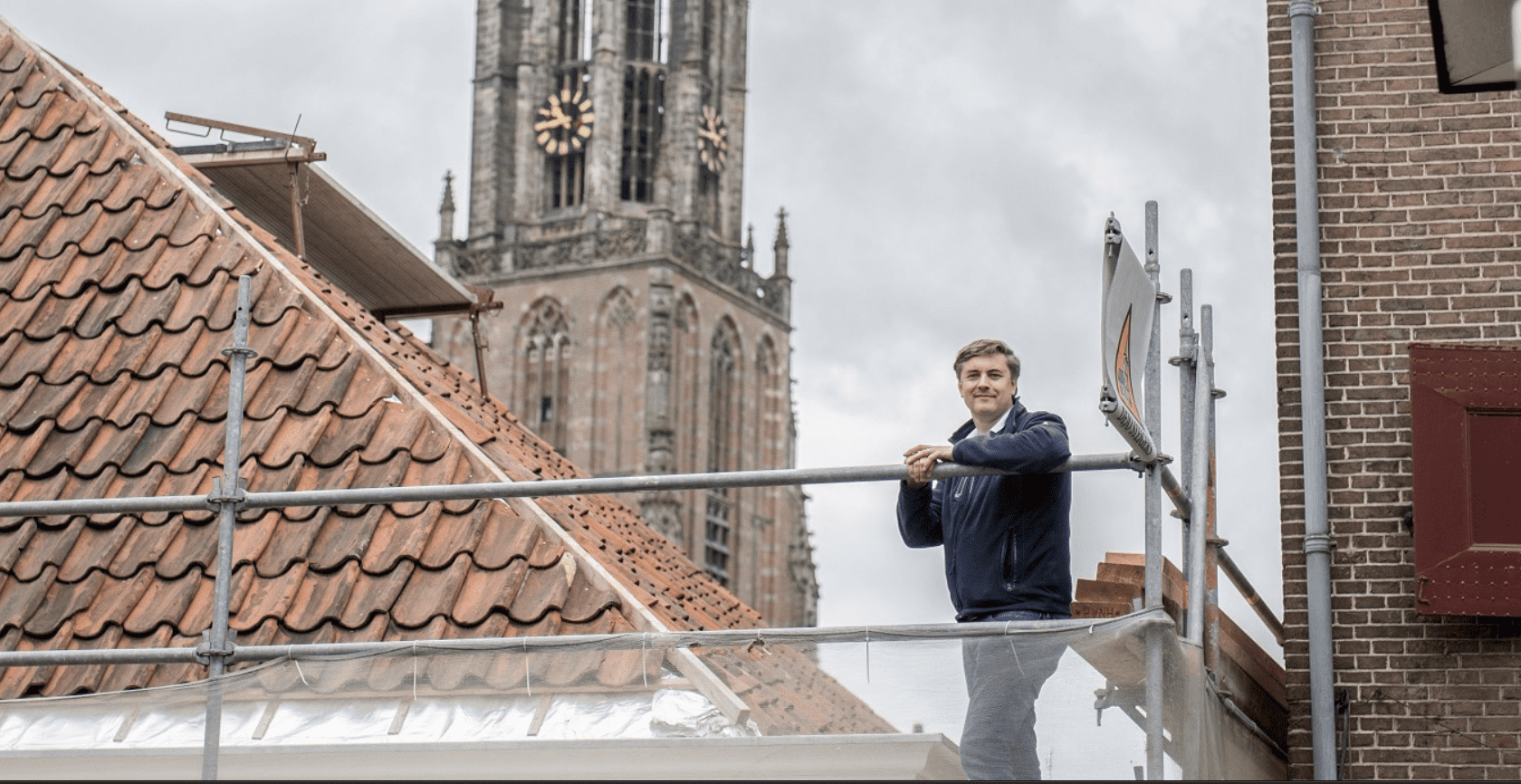
That may well be the most important reason why the restoration firm Van de Burgt & Strooij fits in so well here. “In everything we do, the common thread is that we want to foster collaboration and build bridges,” says co-owner Flip van de Burgt, who also serves as chair of several boards, including the Restoration Professional Association and the National Center for Heritage Education (NCE). “Don’t go it alone—we have to do this together. We believe in leveraging each other’s strengths. So it’s wonderful that so many heritage organizations are based in Amersfoort. For example, the National Restoration Fund, the National Society for the Preservation, Development, and Exploitation of Industrial Heritage (BOEi), and the National Center for Heritage Education (NCE) are also based here, and Staatsbosbeheer has its headquarters in Amersfoort as well. It’s truly unique to have so many specialized organizations gathered in one place. We can easily connect with one another. Amersfoort has grown into a hub for historic preservation. Its central location has undoubtedly played a major role. Once a number of organizations settled here, others followed suit. It exudes a strong appeal.”
It’s also no coincidence that it’s all centered in and around Amersfoort’s historic downtown. Thanks to its medieval character and historic landmarks, the city is a natural home for heritage organizations. For Van de Burgt himself, this is certainly true; he was born and raised here and still considers himself fortunate to live and work in this environment. “It’s stating the obvious, but just take the Onze Lieve Vrouwetoren, for example. In the Netherlands, we have the Cunera Tower and the Dom Tower, but to me, the Amersfoort tower is the most beautiful of all. Its slender silhouette, its design, the openwork lantern, and the crown: these are elements we can be proud of. If you look further, we have unique water gates like the Monnickendam and the Koppelpoort, as well as the beautiful medieval city center with its canals and connecting waterways.”
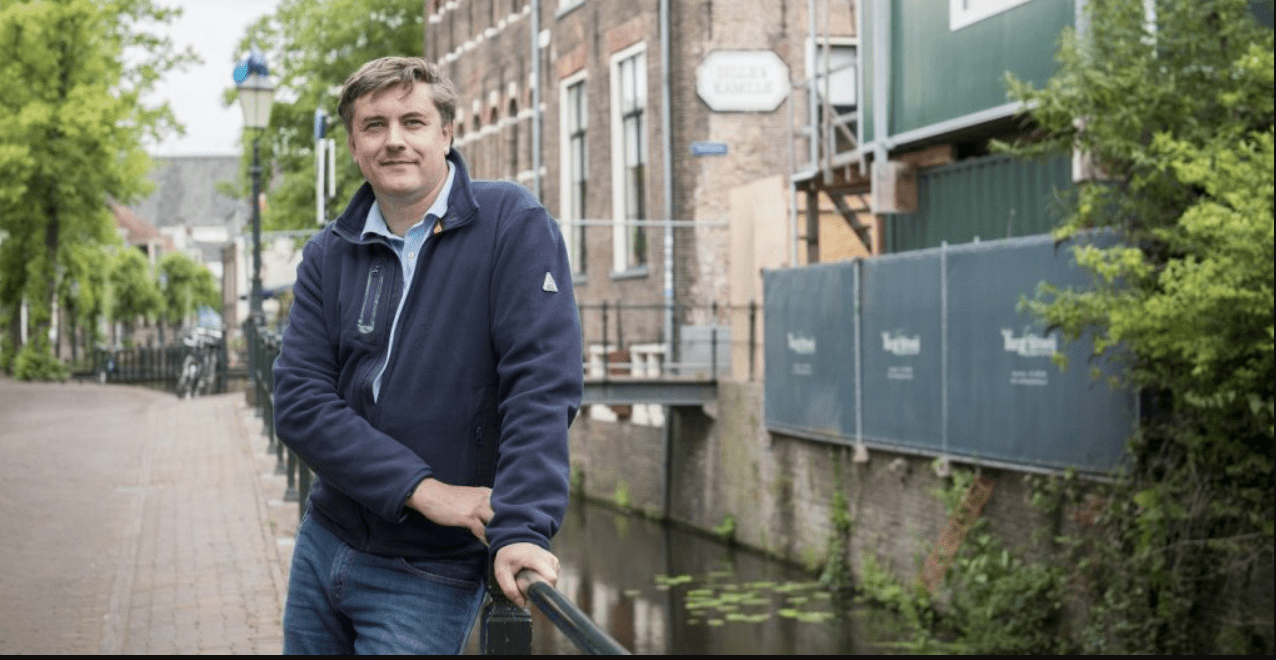
In this magnificent setting, the company run by Flip van de Burgt and Remco Strooij carries out restoration projects commissioned by the municipality of Amersfoort and Stadsherstel, among others. It accounts for only five percent of Van de Burgt & Strooij’s total revenue, but jobs like these in our own city are just that little bit more special. “Remco and I are both Amersfoorters through and through. We still marvel at the beauty of this city. That’s why it feels so special that we’ve been able to restore, for example, the Monnickendam, the Kamperbinnenpoort, and the Dieventoren. We had the privilege of installing the bronze entrance doors in the Onze Lieve Vrouwetoren. We’re currently working on the restoration of the building at Krommestraat 32, next to Dille & Kamille. It will house a restaurant and a delicatessen. It’s a fairly complex, challenging project that will be completed this summer. And in the coming years, here in our own city, we’ll be working on the restoration of the De Mariënhof monastery complex, among other projects. These are, of course, very exciting projects.’
The wider area around Amersfoort also has a lot to offer when it comes to heritage. “We’re located at the foot of the Utrechtse Heuvelrug, close to towns like Doorn, Leersum, and Amerongen. There are many historic estates and country homes there. And the Veluwe region also boasts a wealth of heritage sites, just as there are plenty in the direction of Utrecht and Amsterdam. We’ve been responsible for the maintenance of Soestdijk Palace and its associated buildings for quite some time now. Here, we find ourselves at the center of a work area with a wide range of heritage sites.’
Municipality involved
In 1998, Van de Burgt and Strooij founded the restoration company, which now consists of more than thirty craftsmen with a deep appreciation and passion for heritage. They all have their own specialties: from restoration carpenters, masons, and jointers to furniture makers and staircase builders. Surrounding them is a network of specialists. “We have about sixty people out on the job every day,” says Van de Burgt. “We primarily focus on the restoration, maintenance, and management of historic structures, including churches, towers, country estates, bridges, quay walls, and so on. Heritage in the broadest sense of the word: that’s what we’re good at. This makes us part of a select group of independent, certified restoration construction companies in the Netherlands that specialize in this field.”
Talk to Flip van de Burgt about historic buildings and he can keep you entertained for hours. He laughs: “But I don’t want to tempt you into that now, because then we’d still be sitting here tonight.” It’s simply his passion. It has been since he was a child. “You’re not just working on the buildings; there’s a whole history attached to them. It’s always exciting: what will we find? What stories go with them? There’s something magical about it.”
He also knows his place in that history. “It’s a snapshot in time. Sooner or later, you pass it on. We restore and refurbish, but as soon as we’re done, the decay begins again. The beauty of it is that this means you’re constantly working to preserve and pass on that knowledge and expertise.”
A great example of this is taking place in Amersfoort. A pilot program has been launched there to train junior guides. On the upcoming Open Monument Day, high school students will give tours to elementary school students. As many as 800 students will visit this year on the day when the doors of numerous monuments are opened. The pilot is an indirect result of the establishment of the Open Monument Day Amersfoort Foundation, in which local organizations such as Siësta, Waterlijn, Gilde Amersfoort, VVV, Stadsherstel, and the Municipality have been represented since 2015.
Van de Burgt: “Getting young people involved energizes everyone. It’s not that we want to train them for our profession, but it’s about the realization: where do I live, spend my life, and work? Where was I born? It’s wonderful when young people develop a deeper sense of that. Heritage derives its context from history and the stories behind it. But it also takes shape through the input from your own DNA.’
Flip van de Burgt -07When it comes to heritage, he’s pleased with the municipality’s commitment and approach. “Amersfoort, of course, has a fantastic collection of monuments. The great thing is that the city has its own monuments department. In many other cities, they have only limited time available for historic preservation. In addition, the city has been more active in recent years in engaging with local businesses. Especially since they started using teams of account managers. They contribute ideas and have become more accessible. It’s a powerful approach that I, too, am happy to adopt: always looking at what we can do for each other. Especially when it comes to heritage, we’ll always need to keep seeking dialogue with one another. Our sector is so specific that it’s almost impossible to capture in a set of rules. That’s why it’s important for a municipality to be willing to listen and contribute ideas.”
Amersfoort has everything the construction sector needs, Van de Burgt knows from his professional experience. “The city is a mix of old and new—from areas ripe for new development to opportunities for repurposing. Old buildings that no longer function within their original context are awaiting demolition or transformation. There are so many opportunities here for construction companies! And all this in a pleasant business climate, with a manageable scale. All the ingredients are in place to make this city a great success.”

More Entrepreneur Stories

Uncategorized
Business Travel Accommodations
Are you looking for a place to stay for business in Amersfoort?

Education
Young talent needs room to grow
How can we give young talent the opportunity today to make a difference tomorrow?
Entrepreneurship
HydroLogic: Smart Water Management
“HydroLogic is doing everything it can to prevent ‘Amersfoort by the Sea.’”
Education
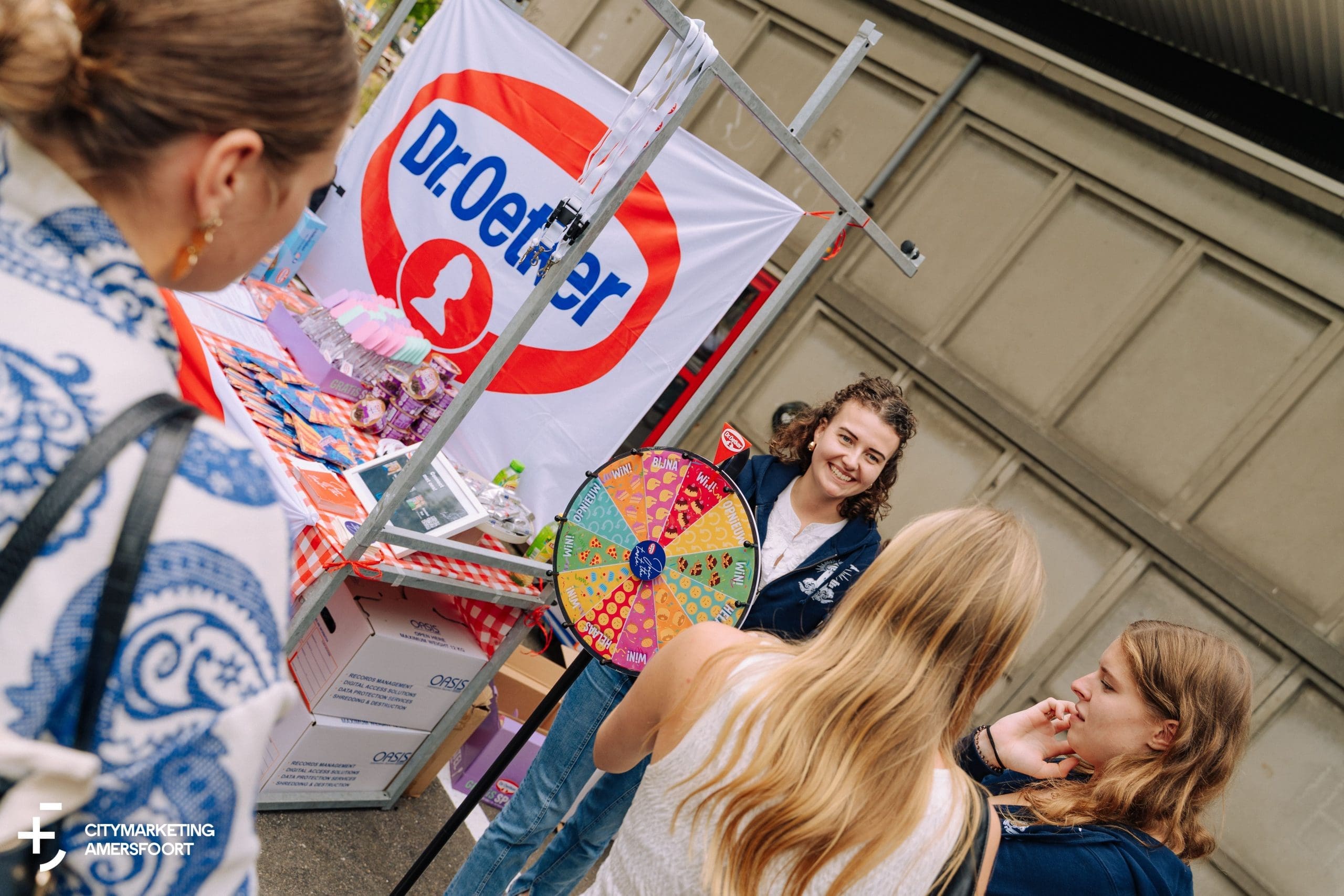
Amersfoort Welcomes New Students and Builds Connections with the Business Community
During KEI-Start Amersfoort, new students explore Amersfoort, meet local businesses, and lay the foundation for their connection to the city.